




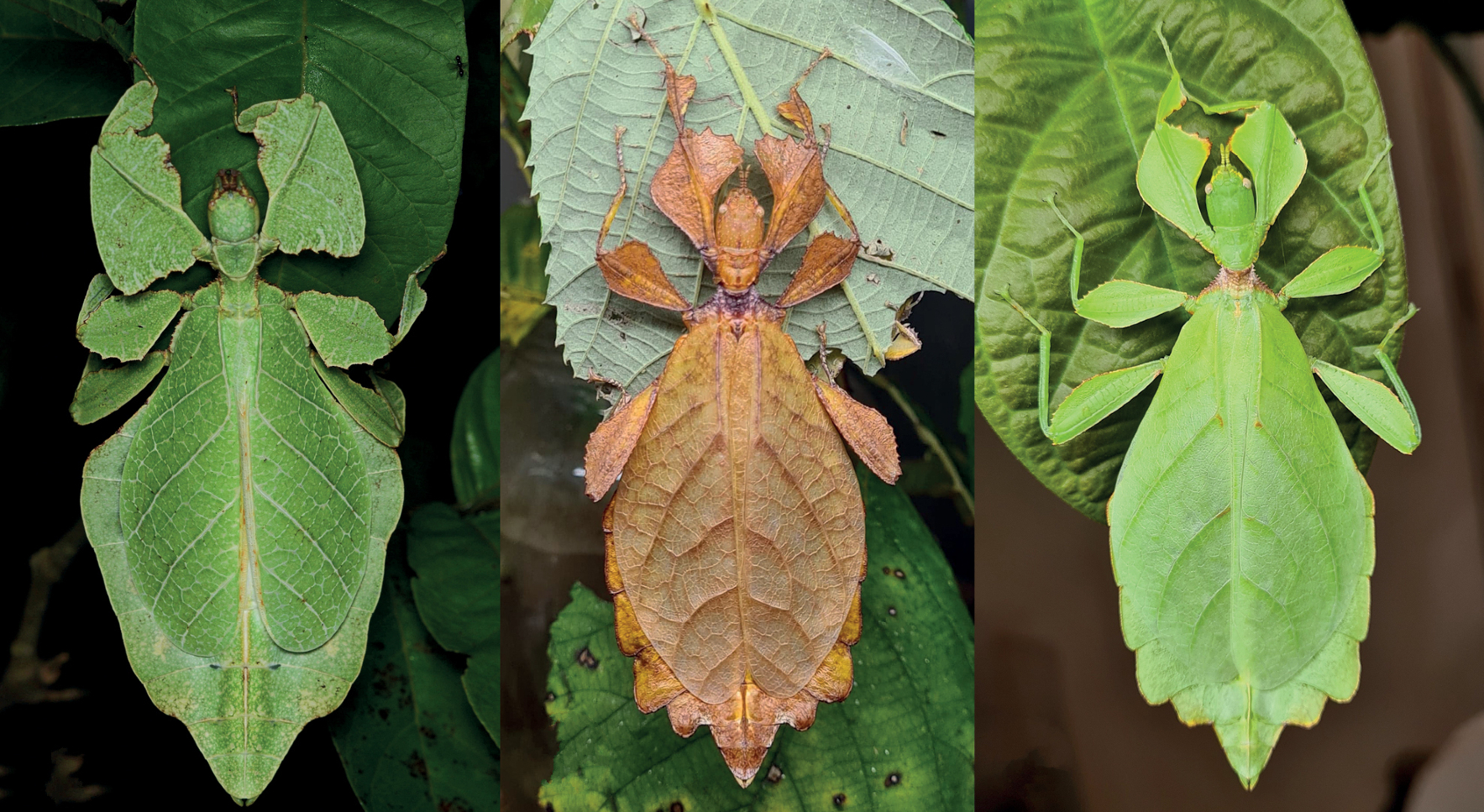
The Phyllium leaf insect is one of the most extraordinary examples of natural camouflage found in the animal kingdom. Known for its uncanny resemblance to a real leaf, this insect has evolved a body structure, color, and even movement patterns that make it almost impossible to detect in its natural habitat. Its unique appearance has fascinated scientists, photographers, and nature enthusiasts, turning it into a symbol of how powerful and creative evolution can be.
A Master of Camouflage
The Phyllium leaf insect belongs to the family Phylliidae, which includes several species found across Southeast Asia, particularly in countries like Indonesia, Malaysia, and the Philippines. Its body mimics the shape of a broad leaf, complete with veins and edges that resemble natural imperfections. Some individuals even display what look like bite marks, making the illusion even more convincing.
Unlike other camouflaged animals that rely on color alone, this insect uses a full combination of shape, pattern, texture, and movement. When it sways side to side, it perfectly imitates a leaf blowing in the wind. Predators like birds and reptiles often pass by without noticing anything unusual.
Anatomy Built for Disguise
One of the most remarkable features of the Phyllium leaf insect is the leaflike structure of its wings and legs. Females have broad, flat wings that enhance the leaf appearance, while males tend to be slimmer with longer wings that allow them to fly. The insect’s green or yellowish coloration depends on its diet and environment, allowing it to blend seamlessly into its surroundings.
The leaf insect’s legs have small lobes that resemble leafy extensions. These additional parts break up the insect’s outline, making it blend with branches and foliage even more effectively. When resting on a leaf, it is almost impossible to spot unless you know exactly where to look.
Behavior and Survival Strategy
The Phyllium leaf insect is primarily nocturnal. During the day, it remains still to avoid drawing attention from predators. At night, it becomes more active, feeding on leaves from guava, mango, or bramble plants. Despite their camouflage talent, they are gentle creatures that rely entirely on deception rather than speed or aggression.
To avoid detection, leaf insects sometimes fall to the ground like dead leaves when threatened. This strategy helps them escape predators without having to fight or flee quickly.
Reproduction: A Curious Process
Another interesting fact about the Phyllium leaf insect is its ability to reproduce through parthenogenesis. In this process, females can produce offspring without mating. The eggs laid in this manner hatch into female clones. When mating does occur, the offspring include both males and females, allowing genetic diversity to develop.
The eggs themselves often resemble seeds, adding another layer of camouflage to protect the next generation from predators.
Importance to Ecosystems
The Phyllium leaf insect plays a subtle but essential role in forest ecosystems. By feeding on various plant leaves, it contributes to natural pruning and helps maintain plant health. It also serves as prey for birds and reptiles, forming an important link in the food chain. Its impressive camouflage is not just a fascinating trait but a critical survival tool that keeps ecosystems balanced.
A Popular Species in Research and Education
Because of their extraordinary camouflage, Phyllium leaf insects are often used in educational programs to teach about evolution, adaptation, and biodiversity. They show how species can evolve specific traits that allow them to survive in competitive environments. Their leaflike appearance also makes them popular among macro photographers and nature documentarians.
The Phyllium leaf insect is one of nature’s most astonishing masterpieces. Its leaflike appearance, graceful movement, and evolutionary adaptations make it an unforgettable creature. Whether observed in the wild or studied in controlled environments, this insect continues to impress with its beauty and biological creativity. For anyone interested in natural camouflage, evolutionary biology, or rare insects, the Phyllium leaf insect stands as a perfect example of how extraordinary the natural world can be.
