




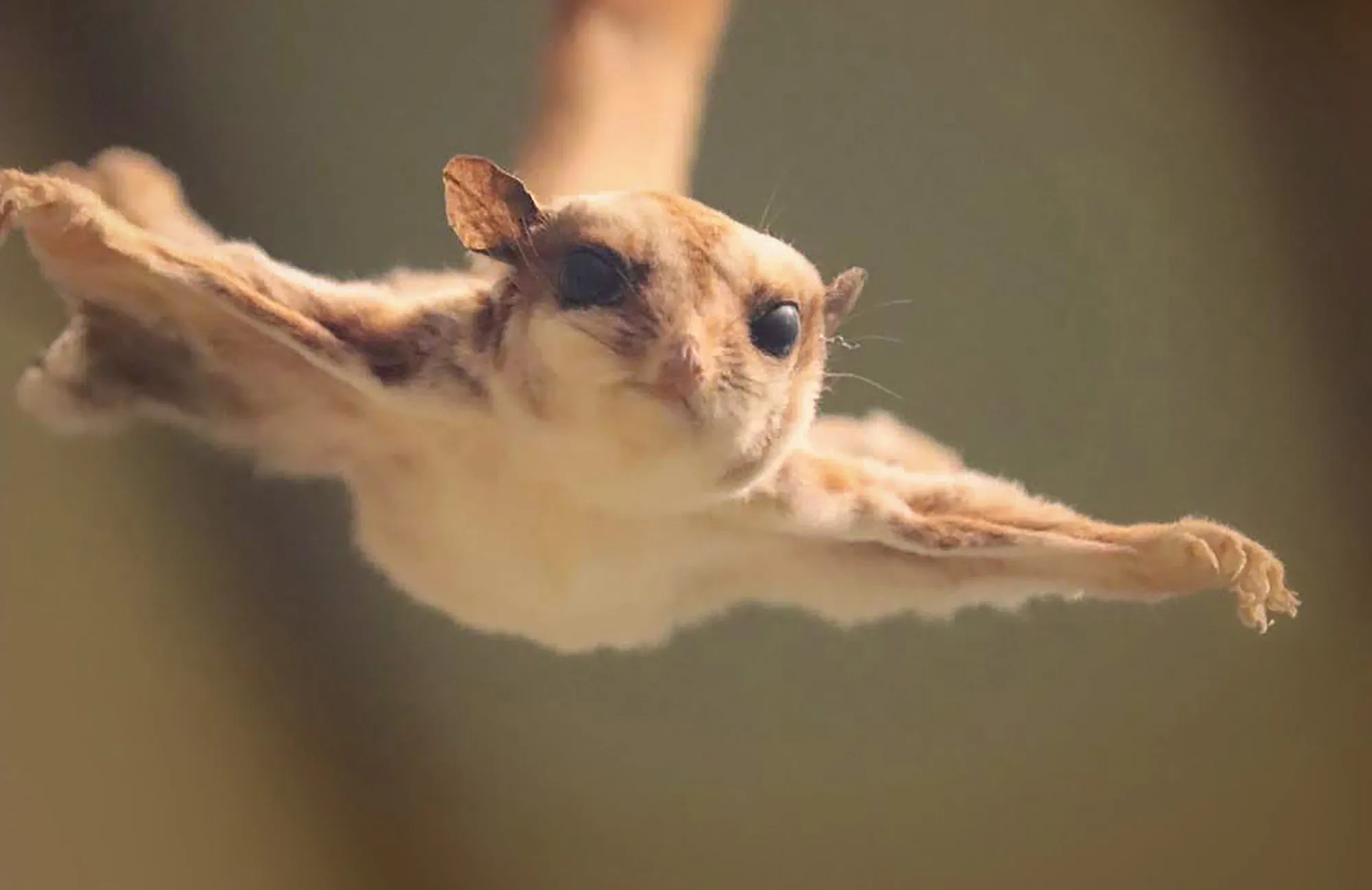
The flying squirrel is one of the most remarkable animals in the natural world, known for its ability to glide gracefully through the air. While it cannot truly fly like a bird or bat, the flying squirrel uses a unique physical adaptation to move effortlessly from tree to tree. This extraordinary skill has made the flying squirrel a symbol of agility, survival, and innovation in nature.
Flying squirrels are found in forests across North America, Europe, and Asia. They are mostly nocturnal animals, meaning they are active at night and rest during the day. Because of this behavior, many people are unaware of their presence, even in areas where they are relatively common. Their quiet movements and nighttime habits help them avoid predators and human disturbance.
The key feature that allows flying squirrels to glide is a special membrane of skin called the patagium. This membrane stretches from the squirrel’s wrists to its ankles, forming a wing like surface when the animal spreads its limbs. When a flying squirrel leaps from a tree, it extends its body and uses the patagium to catch air, allowing it to glide smoothly over long distances. Some species can glide more than 100 meters in a single leap.
Gliding provides several important survival advantages. By moving through the air instead of descending to the ground, flying squirrels reduce their exposure to predators such as snakes, foxes, and wild cats. Gliding also allows them to travel efficiently between feeding areas without expending excessive energy climbing down and back up trees. This ability is especially valuable in dense forests with tall canopies.
Flying squirrels are omnivores with a diet that includes nuts, seeds, fruits, insects, fungi, and occasionally bird eggs. Their strong teeth allow them to crack hard shells, while their excellent sense of smell helps them locate food in the dark. Some species play an important role in forest ecosystems by spreading fungal spores that support tree health.
Despite their name, flying squirrels are closely related to tree squirrels. However, their physical structure has evolved to support gliding. They have large eyes adapted for night vision, lightweight bodies, and flat tails that help stabilize and steer during flight. The tail acts like a rudder, allowing the squirrel to change direction and land accurately on tree trunks.
Reproduction and social behavior vary among species, but many flying squirrels live in small groups or family units. During colder months, they may share nests to conserve body heat. Their nests are usually located in tree cavities or abandoned woodpecker holes, providing shelter from weather and predators.
Flying squirrels have also attracted scientific interest because of their unique locomotion. Researchers study how these animals control their glide path and landing precision, hoping to apply similar principles to engineering and robotics. Their ability to maneuver through complex environments with minimal energy is a source of inspiration for modern design.
However, flying squirrels face challenges from habitat loss and deforestation. As forests are cleared or fragmented, the distance between trees increases, making gliding more difficult and dangerous. Conservation efforts focus on protecting forest habitats and maintaining tree connectivity to ensure these animals can continue to thrive.
In conclusion, the flying squirrel is an incredible example of adaptation in the animal kingdom. Its ability to glide through the air using a skin membrane highlights the creativity of evolution. By understanding and protecting flying squirrels, we help preserve not only a unique species but also the forest ecosystems they depend on for survival.
