




The opossum is one of the most unique mammals in North America, known for its remarkable survival strategy: the ability to play dead. This behavior, commonly called “playing possum,” is an involuntary defense mechanism that helps the animal escape predators. With its adaptable nature and unusual biology, the opossum remains one of the most fascinating creatures in the animal kingdom.
What Is Playing Possum?
When faced with extreme fear or threat, an opossum enters a comatose-like state. Its body becomes limp, its breathing slows, and its eyes may appear vacant or half-closed. In many cases, the opossum even produces a foul-smelling fluid to mimic the odor of a decaying carcass. This convincing act often discourages predators such as coyotes, foxes, and dogs, which typically avoid eating animals that appear sick or dead.
Unlike what many people believe, this behavior is not a conscious choice. It is an automatic nervous system response similar to fainting in humans.
Physical Characteristics
Opossums are medium-sized marsupials with long snouts, sharp teeth, hairless ears, and a prehensile tail used for gripping branches. Their grayish fur and agile hands allow them to navigate both forested and urban environments with ease.
They are the only native marsupials found in North America, meaning females carry and nurse their young in a pouch.
Habitat and Behavior
Opossums are highly adaptable animals that can live in forests, grasslands, swamps, and residential areas. They are nocturnal and spend most of their time searching for food at night. As omnivores, opossums eat insects, small animals, fruits, grains, carrion, and even leftover human food.
Despite their defensive display, opossums are generally gentle and avoid confrontation. They may hiss or show their teeth when threatened, but they rarely attack.
Why Opossums Play Dead
The primary purpose of playing dead is survival. Many predators lose interest when prey appears lifeless, providing the opossum with a crucial opportunity to escape. Once the threat is gone, the opossum gradually regains mobility and continues on its way.
This unique tactic has helped the species thrive, even in areas with high predator populations.
Reproduction and Life Cycle
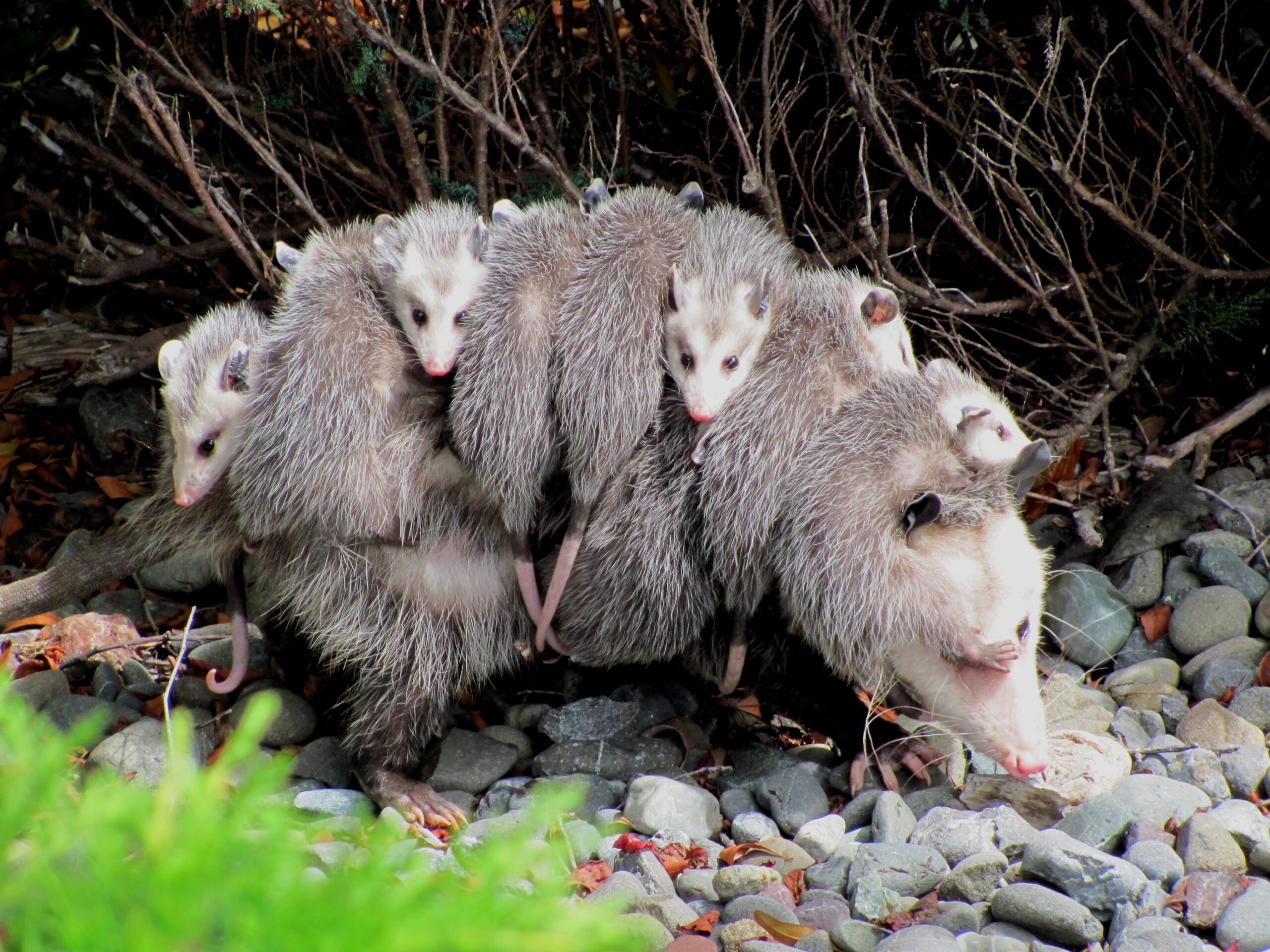
Female opossums can give birth to large litters, sometimes more than ten babies at a time. Newborns are extremely small and must crawl into the mother’s pouch immediately after birth. They stay in the pouch for several weeks before transitioning to riding on the mother’s back.
Opossums have relatively short lifespans compared to many mammals, but their high reproductive rates support stable population levels.
Ecological Importance
Opossums play a valuable role in their ecosystems. They help control insect and rodent populations, clean up carrion, and reduce the spread of ticks. Studies have shown that opossums can kill thousands of ticks each season, contributing to lower risks of tick-borne diseases.
Their scavenging behavior also helps keep natural and urban environments clean.
Common Myths About Opossums
Many misconceptions surround opossums. They are often mistakenly viewed as aggressive or dangerous, but they rarely pose any threat to humans. They carry fewer diseases than many other wild animals and are less likely to transmit rabies due to their lower body temperature.
Understanding their true nature can help promote coexistence in both rural and urban settings.
Why the Opossum Fascinates Scientists
The opossum’s unique physiology, marsupial characteristics, and dramatic defense mechanisms make it an intriguing subject for scientific research. Its ability to play dead provides insights into stress responses, while its immunity to some snake venoms and toxins is being studied for potential medical applications.
