


The frogfish is one of the most unusual and fascinating creatures in the ocean. Known for its ability to walk on the seafloor instead of swimming like most fish, the frogfish has adapted to a lifestyle that relies on camouflage, patience, and slow but deliberate movement. Found in tropical and subtropical waters around the world, this remarkable fish uses its modified pectoral and pelvic fins like tiny legs, allowing it to crawl along the ocean bottom with surprising precision. This walking behavior sets the frogfish apart as one of the most distinctive species in the marine world.
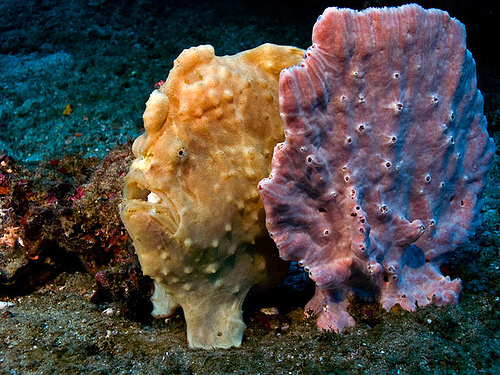
One of the key features that makes the frogfish so unique is its incredible camouflage. Its skin can mimic rocks, coral, sponges, or algae, making it nearly invisible in its surroundings. Somefrogfish can change color within weeks to match their environment more accurately. The irregular bumps, textures, and patterns on their bodies help them blend seamlessly into reefs or sandy areas. Their disguise allows them to become stealthy ambush predators that wait patiently for prey to approach within striking distance.
Instead of chasing prey, frogfish rely on lightning fast attacks. They can open their mouths and inhale prey in just a few milliseconds, one of the fastest feeding mechanisms in the animal kingdom. Their diet includes small fish, crustaceans, and even other frogfish. This feeding style works perfectly with their walking locomotion. By staying low to the ground and moving slowly, they avoid attracting attention until the exact moment they strike.
Another fascinating feature of frogfish is the lure on their heads, known as the illicium. This structure acts like a fishing rod with a baitlike appendage at the end known as the esca. By wiggling the lure, frogfish attract prey directly toward their mouths. The combination of camouflage, walking movement, and built in lure makes them highly effective hunters despite their slow pace.
Walking along the seafloor allows the frogfish to explore a variety of habitats. They typically live in coral reefs, rocky crevices, sandy areas, and sometimes even deep sea environments. The ability to crawl rather than swim helps them avoid strong currents and provides stability in complex reef structures. Their body shape is compact and rounded, which reduces drag when moving through tight spaces. Although they can swim when necessary, they prefer walking because it matches their ambush based hunting strategy.
From a biological perspective, the frogfish showcases an incredible example of evolutionary specialization. Over millions of years, frogfish have developed features that allow them to thrive in environments where stealth is more valuable than speed. Their walking fins are a rare adaptation among fish, and their extreme camouflage demonstrates how diverse survival strategies can be in marine ecosystems. These adaptations also make the frogfish a favorite subject for underwater photographers and divers who enjoy searching for hidden marine life.
Despite their impressive abilities, frogfish face environmental challenges. Coral reef degradation, pollution, and habitat loss can threaten the areas where they live. Because frogfish rely heavily on their surroundings for camouflage and hunting, the destruction of coral ecosystems directly impacts their survival. Protecting reef environments is essential not only for frogfish but for countless species that depend on these ecosystems.
The frogfish is a reminder that the ocean is full of creatures that defy expectations. With its walking fins, ambush hunting, and near perfect camouflage, it stands out as one of the most extraordinary fish on the planet. Although it moves slowly, everything about its design reflects precision and efficiency. Observing a frogfish in its natural habitat is like discovering a hidden world where even fish can walk across the ocean floor.
