




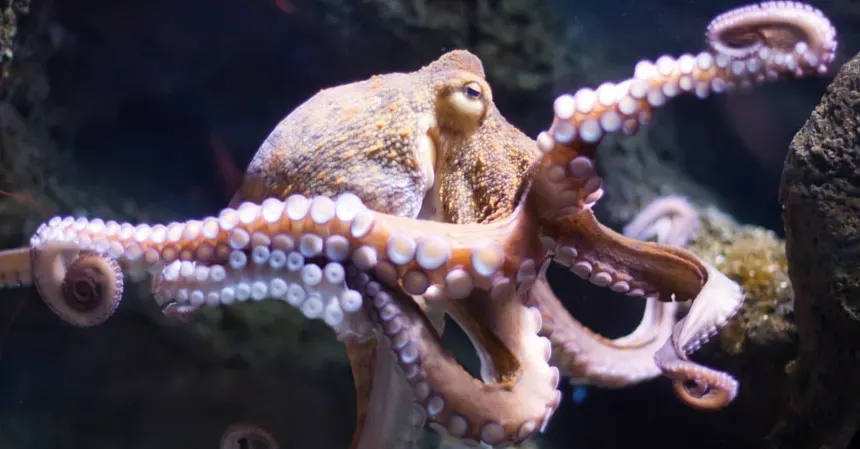
The giant squid (Architeuthis dux) is one of the ocean’s most mysterious creatures. Famous for its enormous size and elusive nature, this deep-sea predator also possesses a remarkable neurological system that has earned it the nickname “animal with 10 brains.” Understanding the giant squid’s anatomy and behavior sheds light on the marvels of deep-ocean life.
Size and Physical Characteristics
Giant squids can reach lengths of up to 13 meters, making them among the largest invertebrates on Earth. They have long tentacles equipped with powerful suction cups, a streamlined body, and large eyes, each the size of a basketball, adapted for detecting faint light in the deep sea.
Nervous System Complexity
The term “10 brains” refers to the giant squid’s decentralized nervous system. The squid has a central brain that controls overall functions, while each of its eight arms contains a ganglion – a mini-brain – capable of independent movement. This allows the squid to coordinate complex movements, hunt efficiently, and manipulate prey simultaneously.
Deep-Sea Habitat
Giant squids inhabit depths ranging from 300 to over 1,000 meters. The darkness of the deep sea has led to adaptations such as bioluminescence in some squid species, as well as enormous eyes for low-light vision. These adaptations allow the squid to survive in an environment that remains largely unexplored by humans.
Feeding Habits
Giant squids are carnivorous predators, feeding mainly on deep-sea fish and smaller squids. Their long tentacles capture prey with suction cups, while the beak, located at the base of their arms, allows them to tear through flesh efficiently. Hunting requires precise coordination between their central brain and arm ganglia.
Reproduction and Lifespan
The giant squid’s life cycle is still not fully understood, but it is believed they live up to 5 years. Females release large quantities of eggs, which hatch into small larvae before growing into adults. Deep-sea conditions make studying reproduction a significant challenge for scientists.
Encounters with Humans
Giant squids are rarely seen alive, with most knowledge coming from dead specimens washed ashore or found in deep-sea predator stomachs, such as sperm whales. Their elusive nature has inspired myths of sea monsters and giant creatures in folklore.
Conservation Considerations
While not classified as endangered, giant squids face threats from deep-sea fishing, ocean pollution, and climate change. Protecting deep-sea habitats is crucial for their survival and for maintaining marine biodiversity.
The giant squid exemplifies the complexity of ocean life. Its multiple brains, impressive size, and deep-sea adaptations make it a true marvel of nature. Studying this enigmatic creature provides insights not only into cephalopod biology but also into the mysteries of life in Earth’s most extreme environments.
