




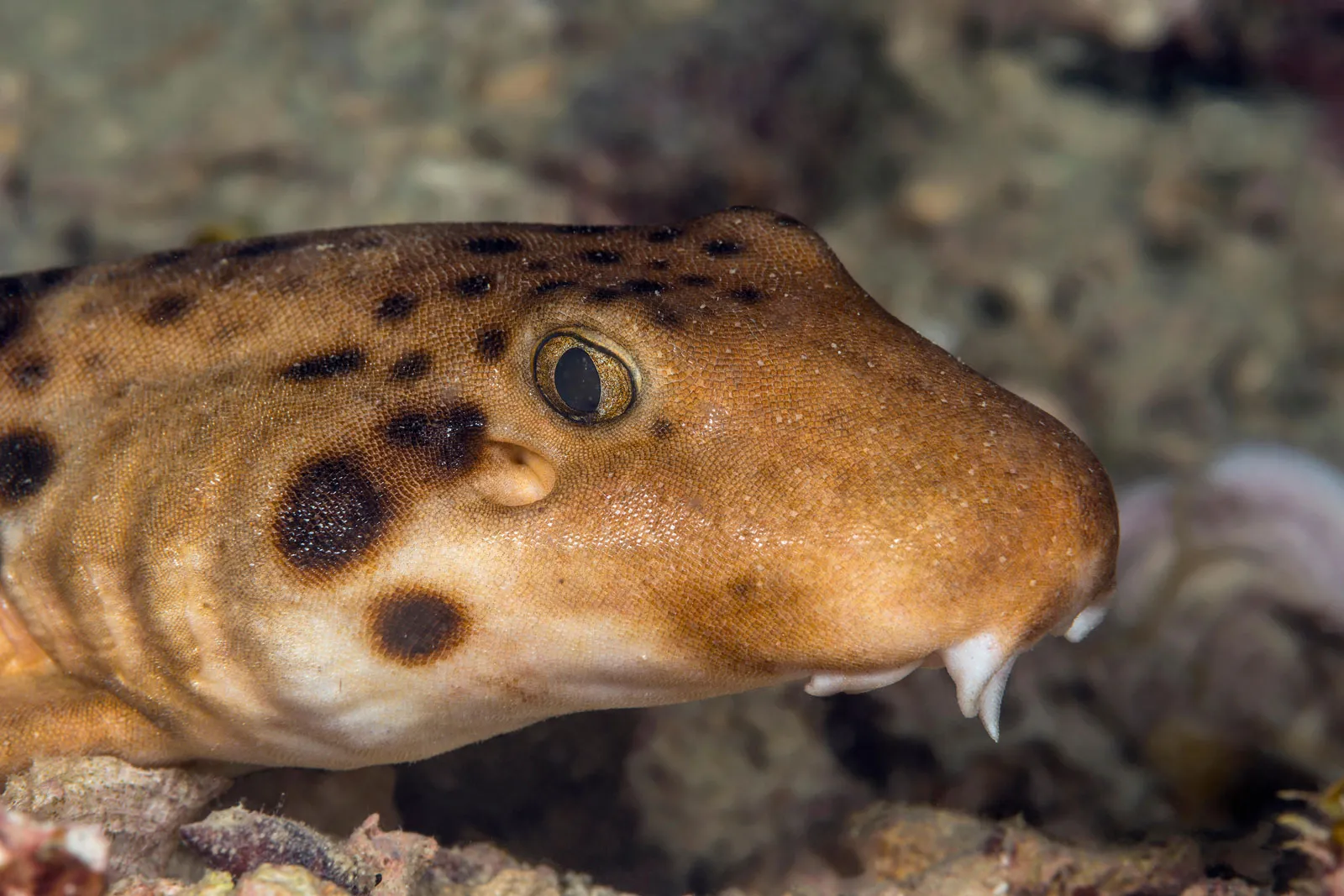
Carpet sharks are a group of sharks known for their unusual appearance and unique feeding adaptations. One of their most fascinating traits is the position of their mouth, which appears to be located on their chest or underside rather than at the front of the head.
This unusual design makes carpet sharks highly efficient seafloor hunters.
Understanding the Mouth Position
Unlike fast swimming sharks that chase prey, carpet sharks are ambush predators. Their mouth is positioned underneath the head, close to the body.
This placement allows them to strike downward instantly when prey passes below or in front of them.
Why This Adaptation Works
The chest like mouth position provides several advantages:
- Allows stealth while resting on the seafloor
- Enables rapid suction feeding
- Reduces the need for high speed pursuit
Carpet sharks often remain motionless for hours, blending into the ocean floor.
Camouflage and Body Shape
Carpet sharks have flattened bodies and patterned skin that resembles coral, sand, or seaweed. Species such as the wobbegong shark have skin flaps that break up their outline.
This camouflage makes them nearly invisible to prey.
Hunting Technique on the Seafloor
When a fish or crustacean swims too close, the carpet shark:
- Opens its mouth rapidly
- Creates suction to pull prey inward
- Uses sharp backward facing teeth to trap the prey
The entire process happens in a fraction of a second.
Diet and Feeding Habits
Carpet sharks feed on:
- Small fish
- Crabs and lobsters
- Octopus and squid
Some larger species can even capture fish nearly their own size.
Evolutionary Development
This mouth placement evolved over millions of years as carpet sharks adapted to benthic environments. Natural selection favored individuals that could feed efficiently without moving much.
Habitat and Distribution
Carpet sharks are found in warm and temperate oceans, especially around coral reefs and continental shelves.
They prefer shallow waters where seafloor hiding spots are abundant.
Interaction with Humans
Carpet sharks are generally non aggressive. However, they can bite if stepped on or disturbed.
They are popular subjects for marine research due to their unique anatomy.
Conservation Considerations
Habitat destruction and overfishing threaten some carpet shark species. Protecting reef environments is essential for their survival.
The chest positioned mouth of the carpet shark is a perfect example of evolution shaping form to fit function. It allows these sharks to dominate the seafloor as silent and effective predators.
