




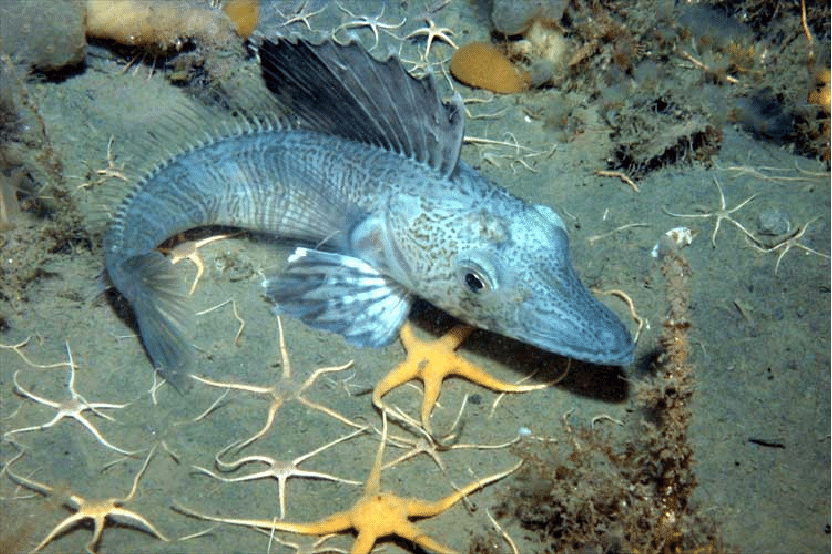
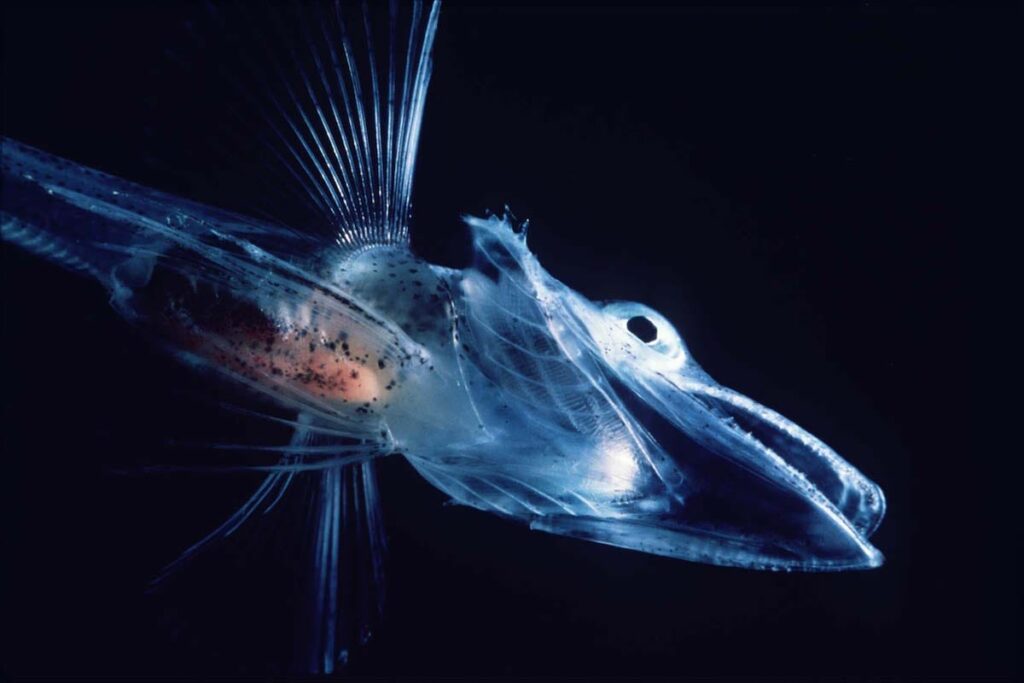
The Antarctic icefish is one of the most unusual animals on Earth. Unlike almost all vertebrates, this fish survives without hemoglobin, the protein responsible for giving blood its red color. As a result, Antarctic icefish have nearly transparent blood, making them a biological curiosity.
What Makes Icefish Blood Transparent
Hemoglobin normally carries oxygen throughout the body. Antarctic icefish lack this protein entirely. Instead, oxygen dissolves directly into their blood plasma.
This adaptation is possible because Antarctic waters are extremely cold and rich in oxygen. Cold water can hold more dissolved oxygen, allowing the icefish to survive without red blood cells.
Adaptations for Extreme Cold
Antarctic icefish live in waters that remain below freezing. To survive, they have evolved several unique features:
- Antifreeze proteins in their blood prevent ice crystals from forming
- Large hearts pump blood efficiently despite the lack of hemoglobin
- Wide blood vessels allow increased circulation
These traits work together to keep the fish alive in one of Earth’s harshest environments.
Habitat and Distribution
Icefish are found mainly in the Southern Ocean around Antarctica. They inhabit deep and cold waters where temperatures can reach minus two degrees Celsius.
Their bodies are often scaleless and pale, which helps them blend into their icy surroundings.
Evolutionary Significance
Scientists believe icefish lost hemoglobin millions of years ago during a period of extreme cold. Over time, the absence of hemoglobin became an advantage rather than a disadvantage.
This makes the Antarctic icefish a powerful example of evolution through environmental pressure.
Importance in Scientific Research
Icefish are studied to understand:
- How organisms adapt to extreme cold
- Oxygen transport without hemoglobin
- Potential medical applications related to blood circulation
The Antarctic icefish proves that life can thrive in unexpected ways. Its clear blood challenges our understanding of biology and shows how evolution finds remarkable solutions.
