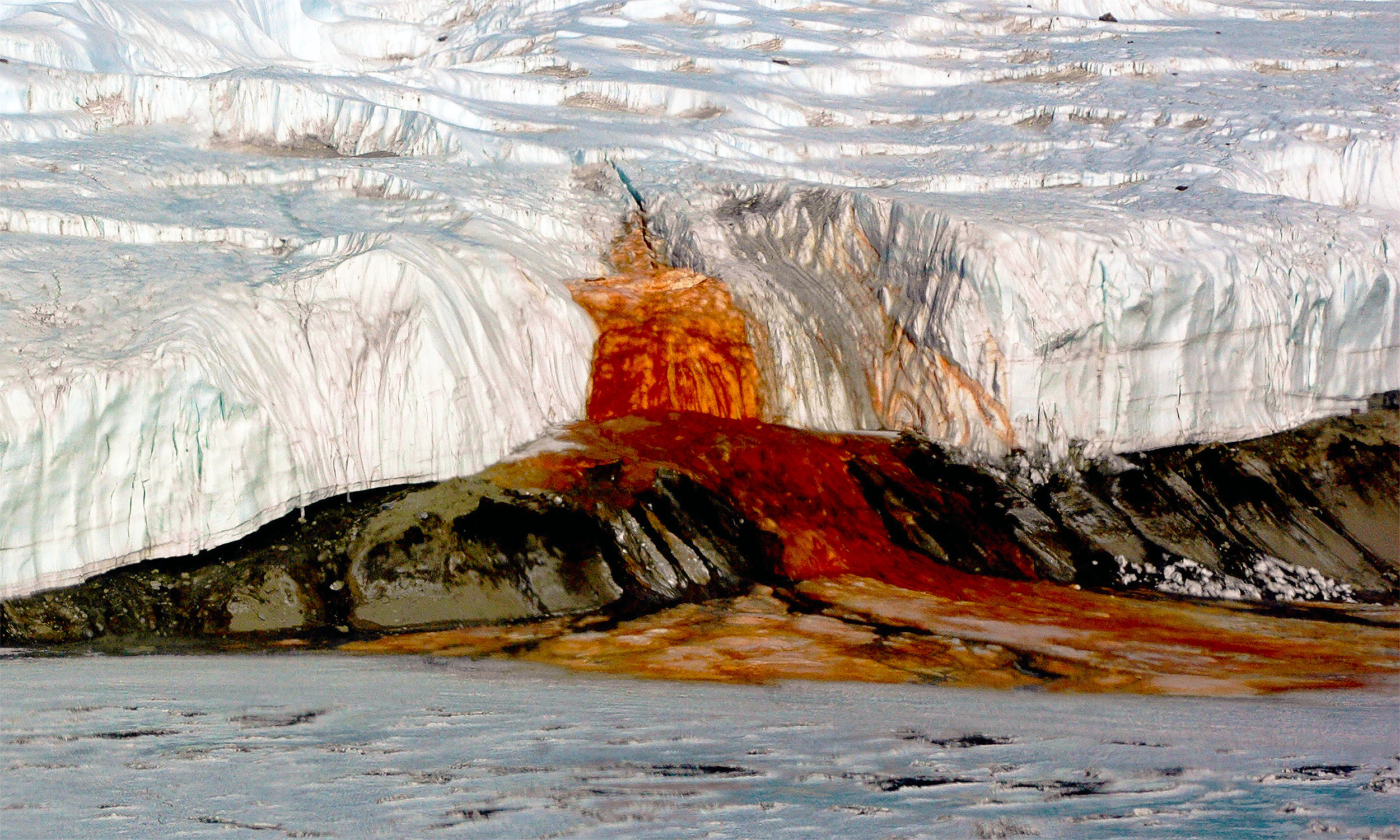
Deep within the frozen landscape of Antarctica lies one of the most striking natural phenomena on Earth. Known as Blood Falls, this red colored waterfall pours out from the Taylor Glacier, creating a dramatic contrast against the surrounding white ice. At first glance, it looks like blood flowing from the glacier, but the true explanation is rooted in science, geology, and iron oxidation.
What Is Blood Falls in Antarctica
Blood Falls is a natural outflow of deep red water that emerges from the Taylor Glacier in the McMurdo Dry Valleys of Antarctica. The waterfall was first discovered in 1911 by Australian geologist Griffith Taylor. Since then, it has fascinated scientists and travelers due to its unusual color and isolated location in one of the coldest places on Earth.
Despite its appearance, Blood Falls is not caused by algae, bacteria on the surface, or volcanic activity. The red color comes from iron rich water that oxidizes when it comes into contact with oxygen.
Why the Water Is Red
The striking red color of Blood Falls is the result of iron oxidation. Beneath the Taylor Glacier lies a hidden subglacial lake filled with extremely salty water rich in dissolved iron. This water has been trapped under the ice for millions of years.
When the iron rich water flows out of the glacier and meets the oxygen in the air, a chemical reaction occurs. The iron oxidizes in a process similar to how metal rusts. This oxidation turns the water deep red, giving Blood Falls its dramatic appearance.
The Hidden Subglacial Ecosystem
One of the most fascinating discoveries related to Blood Falls is the presence of microbial life beneath the glacier. Scientists have found that microorganisms survive in the dark, oxygen free environment of the subglacial lake. These microbes use iron and sulfate in the water to survive, proving that life can exist in extreme conditions.
This discovery has major implications for astrobiology. It suggests that similar microbial life could potentially exist beneath the icy surfaces of planets and moons such as Mars or Europa.
How Blood Falls Continues to Flow
Despite Antarctica’s freezing temperatures, Blood Falls continues to flow periodically. The secret lies in the extremely high salt content of the subglacial water. Salt lowers the freezing point of water, allowing it to remain liquid even in temperatures far below zero.
Pressure from the overlying glacier forces the salty, iron rich water to the surface through cracks in the ice. When it emerges, oxidation occurs almost instantly, creating the vivid red color seen at the falls.
Location and Environmental Setting
Blood Falls is located in the McMurdo Dry Valleys, one of the driest and coldest deserts on Earth. The region receives very little snowfall, and much of the landscape is bare rock and ice. This unique environment makes the red waterfall even more visually striking.
Because the area is remote and protected, access is limited primarily to scientific researchers. This helps preserve the fragile ecosystem and ensures minimal human impact.
Scientific Importance of Blood Falls
Blood Falls is more than a visual wonder. It provides valuable insights into glacial dynamics, geochemistry, and the limits of life. By studying this phenomenon, scientists gain a better understanding of how water moves beneath glaciers and how ecosystems can survive without sunlight or oxygen.
Research at Blood Falls also helps scientists predict how glaciers might respond to climate change, especially as subglacial water systems become more active.
Why Blood Falls Captivates the World
The idea of a red waterfall flowing from ice captures the imagination of people around the globe. Blood Falls challenges expectations of what frozen landscapes should look like and reminds us that even the most extreme environments can hold hidden complexity.
Its haunting beauty and scientific significance make it one of Antarctica’s most iconic natural features.
Blood Falls in Antarctica is a powerful example of how simple chemical processes can create extraordinary natural wonders. Formed by iron oxidation from ancient, salty subglacial water, this red waterfall reveals secrets about Earth’s past and the resilience of life. In a land dominated by ice and silence, Blood Falls stands as a vivid reminder that Antarctica is far more dynamic than it appears.
