

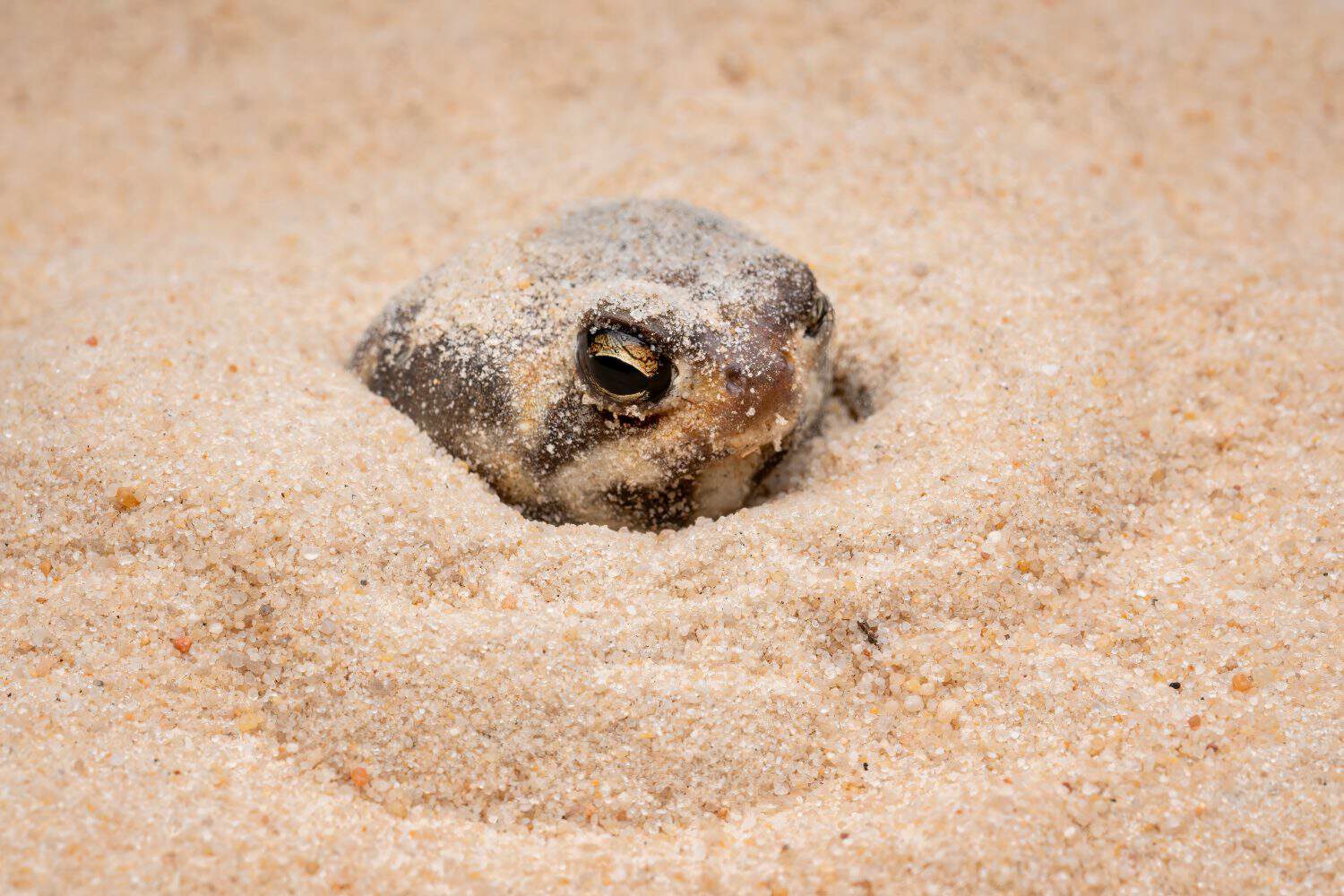
In the world’s harshest deserts, where temperatures soar above 120°F (49°C) and water is a rare luxury, certain frogs have evolved a remarkable trick: burying themselves alive under sand to escape the heat. Species like the Australian water-holding frog, desert spadefoot toad, and desert rain frog turn the arid ground into a lifesaving bunker. This adaptation, known as aestivation, allows them to survive months or years without surfacing. Explore how these amphibians defy desert odds, their biology, habitats, and conservation challenges in this deep dive.
Understanding Aestivation in Desert Frogs
Aestivation is summer hibernation, where frogs slow metabolism to conserve energy during heat and drought. Unlike hibernation, it’s triggered by high temperatures. These frogs dig burrows using spade-like hind feet—hardened keratin structures for efficient shoveling. Once underground, they form a cocoon from shed skin layers, sealing in moisture like a plastic bag.
The Australian water-holding frog (Cyclorana platycephala) stores water in its bladder, acting as a living canteen. Indigenous Australians once dug them up for hydration. Metabolism drops to 10% of normal, surviving on stored fats.
Key Species and Their Habitats
The desert spadefoot toad (Notaden nichollsi), native to Australia’s arid interior, buries up to 3 feet deep in sandy soils. Nocturnal, it emerges after rains to breed explosively in temporary pools. Tadpoles develop rapidly, metamorphosing in weeks before water evaporates.
Africa’s desert rain frog (Breviceps macrops) walks rather than hops, using powerful legs to burrow in Namib Desert dunes. Its squeaky call resembles a dog’s toy. The Sonoran Desert’s Couch’s spadefoot (Scaphiopus couchii) inhabits creosote bush areas, estivating for 8–10 months yearly.
These frogs prefer loose, sandy substrates for easy digging and moisture retention. In the Chihuahuan Desert, spadefoots absorb soil water osmotically, staying hydrated without drinking.
Biological Adaptations for Survival
Skin adaptations are crucial: permeable yet cocoon-forming to minimize evaporation. Kidneys concentrate urine, recycling water. Lungs reduce in function, with skin absorbing oxygen from moist burrow air.
During burial, they tolerate high urea levels, preventing toxicity. Upon rain, vibrations or moisture cues trigger emergence. Breeding frenzies follow, with males calling to attract females. Eggs hatch quickly to beat drying pools.
Studies show these frogs can survive 2–5 years underground, emerging healthier than surface dwellers. Climate resilience comes from genetic diversity, allowing rapid evolution.
Ecological Role and Threats
Desert frogs control insect populations and serve as prey for birds and snakes. Their tadpoles aerate pools, aiding ecosystems. However, habitat loss from mining, agriculture, and urbanization threatens them. In Australia, invasive cane toads compete for burrows.
Climate change exacerbates droughts, delaying rains and reducing breeding success. Conservation efforts include protected reserves like Uluru-Kata Tjuta National Park, where water-holding frogs thrive. Monitoring programs track populations via call surveys.
Human Interactions and Cultural Significance
Indigenous cultures revere these frogs: Aboriginal Australians use water-holding frogs as survival aids. In folklore, their calls herald rain. Modern science studies them for biomedical insights, like drought-resistant tech or wound-healing compounds.
Ecotourism in deserts highlights these “zombie frogs” emerging post-rain. Responsible viewing avoids disturbing burrows.
Future Prospects and Research
Ongoing research at institutions like the University of Queensland examines genetics for climate adaptation models. Captive breeding bolsters wild populations. As deserts expand, understanding these survivors could inform global biodiversity strategies.
Desert frogs embody resilience, turning hostile sands into sanctuaries. Their buried existence challenges our view of life in extremes, inspiring awe and action for conservation. Next rainstorm in the outback? Listen for their triumphant chorus.
