




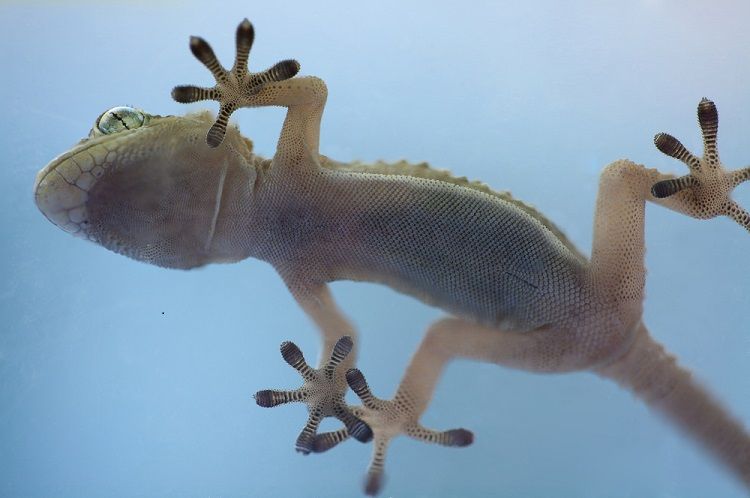
Masters of Adhesion
Certain gecko species appear to ignore gravity entirely, sprinting across ceilings and clinging to vertical cave walls. Their ability comes from an advanced natural adhesion system that scientists still struggle to fully reproduce.
What Makes Gecko Adhesion Unique
Geckos rely on microscopic toe pads rather than sticky fluids. Millions of hair like structures create enormous surface contact, while molecular forces hold the animal in place.
Key features include:
- Setae covered toes
- Spatula shaped microstructures
- Rapid release and reattachment for movement
The Science Behind Gecko Grip
Setae and Spatulae
Each toe contains countless branching hairs, each ending in flattened tips that maximize contact with surfaces.
Van der Waals Forces
These weak molecular attractions become powerful when multiplied across millions of contact points, allowing geckos to hang upside down without slipping.
Cave Living and Survival
In cave environments, adhesion offers access to food, shelter, and escape routes.
Geckos can:
- Climb vertical rock faces
- Traverse ceilings
- Hide in narrow crevices
Low light vision and sensitive skin further enhance their underground lifestyles.
Evolutionary Advantages
Strong adhesion evolved as protection from predators, improved hunting success, and the ability to occupy habitats inaccessible to competitors.
Technology Inspired by Geckos
Researchers develop reusable tapes, climbing robots, and gripping devices modeled after gecko feet. Such innovations may assist in space exploration, industrial inspections, and disaster rescue operations.
Challenges in Replicating Gecko Feet
Manufacturing synthetic surfaces with millions of microscopic fibers is difficult. Performance also declines in wet or dusty conditions, making real world use complex.
Geckos that roam cave ceilings are among nature’s most extraordinary climbers. Their biological engineering continues to inspire future technologies that may redefine how humans move, build, and explore extreme environments.
