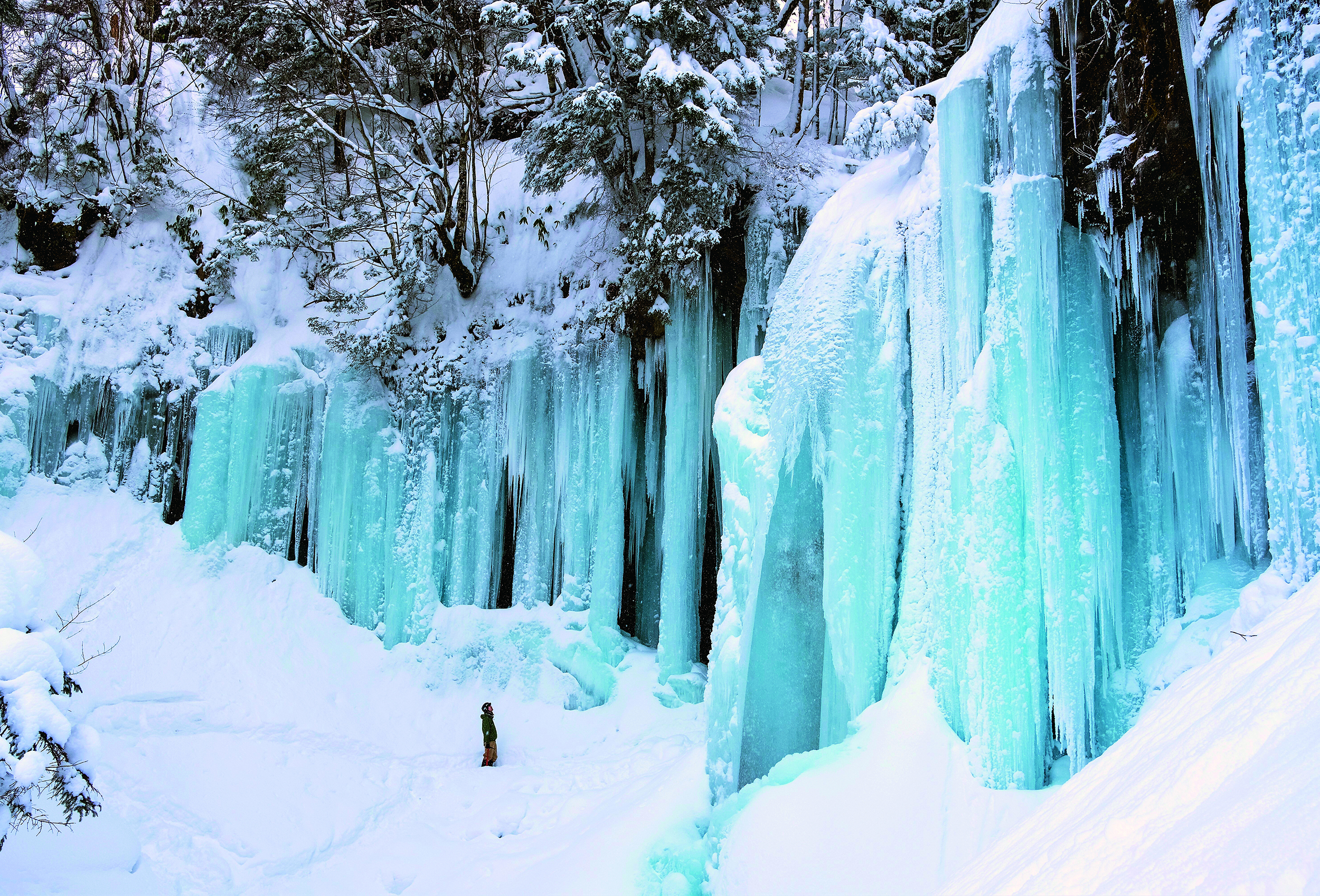
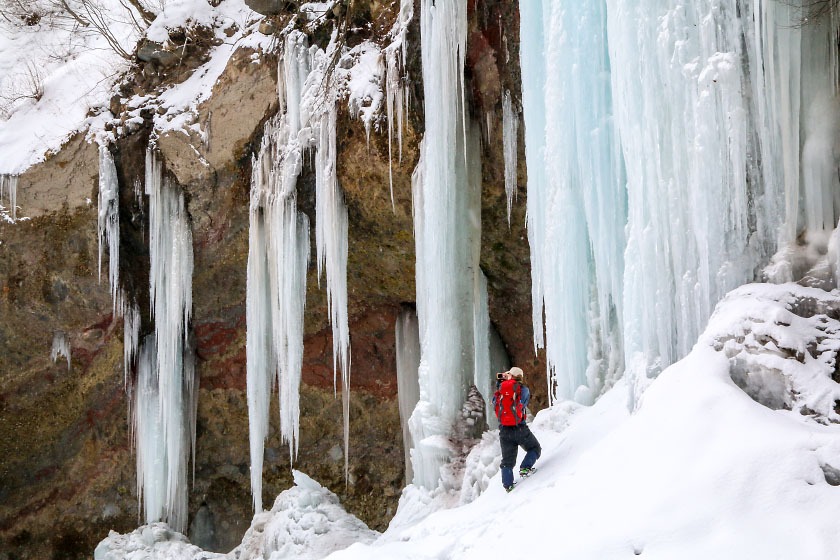
Japan’s harsh winters transform many waterfalls into stunning frozen waterfalls, known as hyobaku (icefalls) massive sculptures of blue-tinted ice that resemble giant icicles or cascading frozen waves. These natural wonders attract photographers, hikers, and adventure seekers, with the most impressive ones appearing in January and February when temperatures drop consistently below freezing.
Top Frozen Waterfalls in Japan
- Fukuroda Falls (Ibaraki Prefecture): One of Japan’s three most famous waterfalls (120m tall, 73m wide), it fully freezes into a dramatic ice curtain. Known as “Yodo no Taki” for its four-tiered flow, winter illuminations create a magical nighttime glow.
- Hirayu Otaki (Gifu Prefecture): A 64m-high cascade in Okuhida Onsen that turns into a giant icicle. Nighttime lighting from a nearby suspension bridge enhances the fantasy-like scene.
- Unryu Keikoku (Nikko, Tochigi Prefecture): Cloud Dragon Valley features multiple frozen cascades and ice columns perfect for ice climbing thousands of icicles hang like daggers.
- Kegon Falls (Nikko): 97m drop famous for its “blue ice” phenomenon in winter, where frozen water glows ethereal blue.
Other notable spots include Hida-Osaka Falls (Gifu) with over 200 cascades, some freezing dramatically, and illuminated sites in Aomori or Yamagata.
Best Time and Tips for Viewing
Visit from mid-January to late February for the most complete freezing. Many sites offer guided snowshoe treks, ice climbing, or illuminations. Wear crampons, warm layers, and check weather paths can be icy. Popular areas like Nikko or Gifu combine hyobaku with onsen (hot springs) for the perfect winter escape.
Fun Facts About Japan’s Frozen Waterfalls
- Some hyobaku reach 100+ meters, creating walls thick enough for climbing.
- Blue hues come from dense, air-free ice refracting light.
- Ancient poets praised sites like Fukuroda for changing beauty across seasons.
- Events often include amazake (sweet sake) and local food stalls.
