
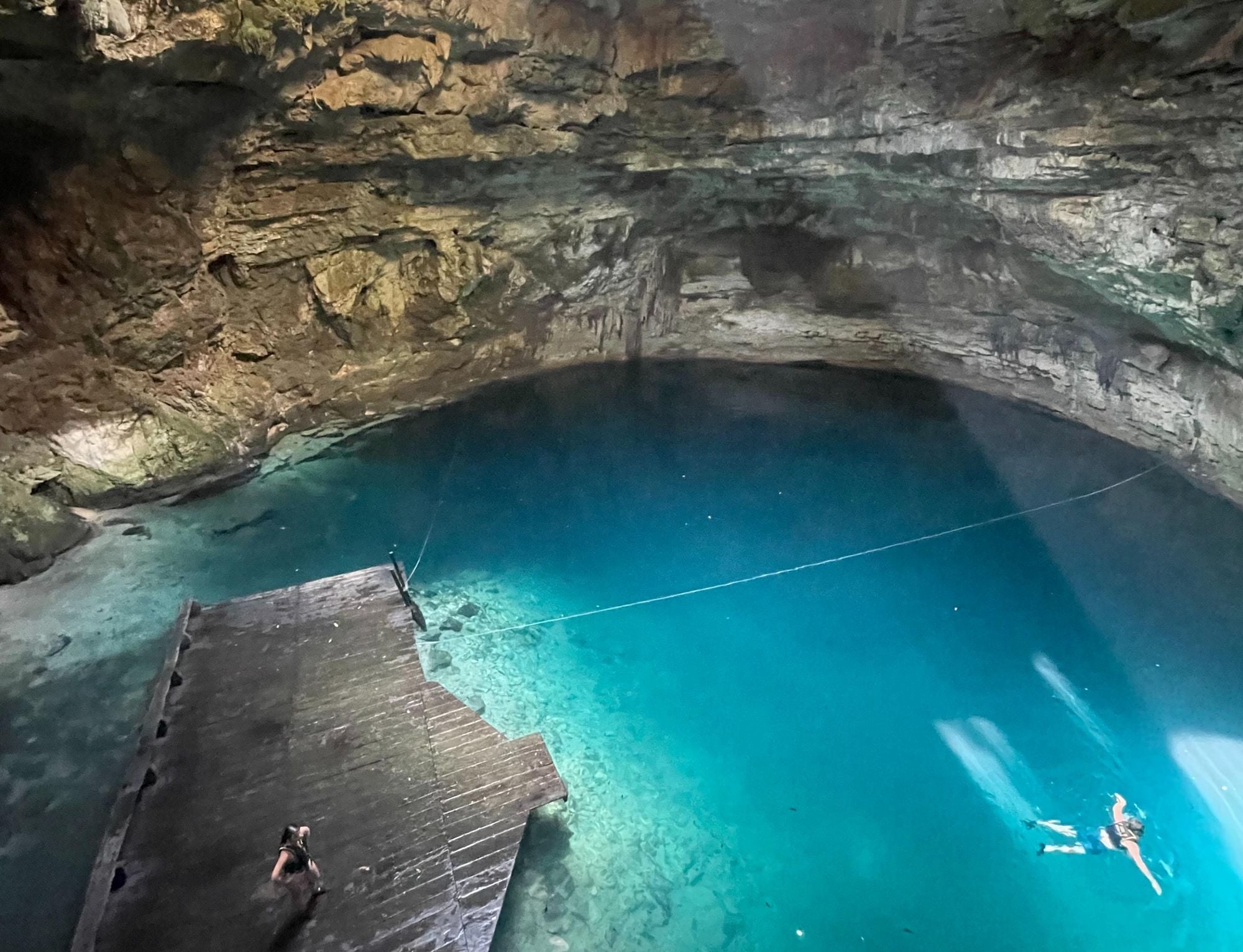
Hidden deep beneath the surface of Mexico lies one of the most breathtaking natural formations on Earth: a giant underground lake that stretches across vast chambers carved over thousands of years. This impressive natural wonder attracts explorers, scientists, and travelers who are fascinated by caves, geology, and untouched beauty. Mexico is known for its cenotes and subterranean landscapes, but a giant lake hidden inside a cave offers a completely different level of mystery and grandeur.
A Rare Underground Wonderland
The giant lake inside a cave in Mexico is part of a larger network of underground systems formed from limestone erosion. Over time, water seeped through the porous ground, creating vast hollows that eventually became interconnected chambers. Unlike smaller cenotes that are open to the sky, this lake is entirely enclosed by rock formations, giving it a quiet and almost surreal atmosphere.
The water in the cave is typically crystal clear due to natural filtration through rock layers. Its stillness reflects the stalactites hanging from the ceiling, creating mesmerizing mirror images. The sense of silence and isolation in this hidden place makes the experience unforgettable.
Geological Formation
The cave and lake system were formed over millions of years as acidic rainwater dissolved layers of limestone. This process created tunnels, caverns, and underground rivers that eventually pooled into massive lakes. These formations are part of Mexico’s karst landscape, which is one of the most extensive in the world.
Because the lake is isolated from sunlight, algae growth is minimal, allowing the water to remain exceptionally clear. Minerals in the cave walls also contribute to the water’s unique color, which can range from deep blue to turquoise, depending on the depth and light conditions.
Biodiversity in the Deep
Despite the absence of sunlight, the underground lake supports several unique species adapted to life in darkness. These creatures often lack pigmentation and have evolved heightened senses. Blind cavefish, transparent shrimp, and small crustaceans inhabit the waters, thriving in an environment where very few predators exist.
Researchers study these species to understand how life adapts to extreme conditions. The cave lake provides a rare opportunity to explore evolutionary biology and the resilience of life in isolated ecosystems.
A Destination for Explorers
While not all underground lakes in Mexico are accessible to the public, some can be explored with certified guides or professional cave divers. These expeditions offer a chance to witness extraordinary rock formations, underwater passages, and massive chambers that feel like another world.
For adventurers, swimming or diving in an underground lake provides a sense of wonder and excitement. The silence, the cool air, and the sheer scale of the cave make it a powerful experience. Many visitors describe it as entering a hidden realm untouched by time.
Cultural and Historical Value
Mexico’s underground cave systems have long been important in local cultures. The ancient Maya considered these places sacred, associating them with gateways to the spiritual world. Caves and underground lakes were used for rituals, offerings, and gatherings.
Today, these landscapes continue to inspire admiration and respect. Local communities play a significant role in protecting and preserving their natural heritage, ensuring these unique formations remain intact for future generations.
Conservation Efforts
Due to their delicate ecosystems, giant underground lakes are sensitive to pollution and human disturbance. Conservation programs focus on limiting access, monitoring water quality, and educating visitors about the importance of preserving these environments. Scientists work alongside local organizations to maintain the fragile balance of the cave system.
Protecting the underground lake ensures that its geological beauty, biodiversity, and cultural significance remain unharmed. Responsible tourism also helps promote environmental awareness and sustainable exploration.
The giant lake inside a cave in Mexico stands as one of nature’s most stunning achievements. With crystal clear water, vast chambers, and rare species adapted to darkness, it represents a world few people ever have the chance to see. Whether studied by scientists or admired by explorers, this underground wonder continues to inspire awe and curiosity.
