
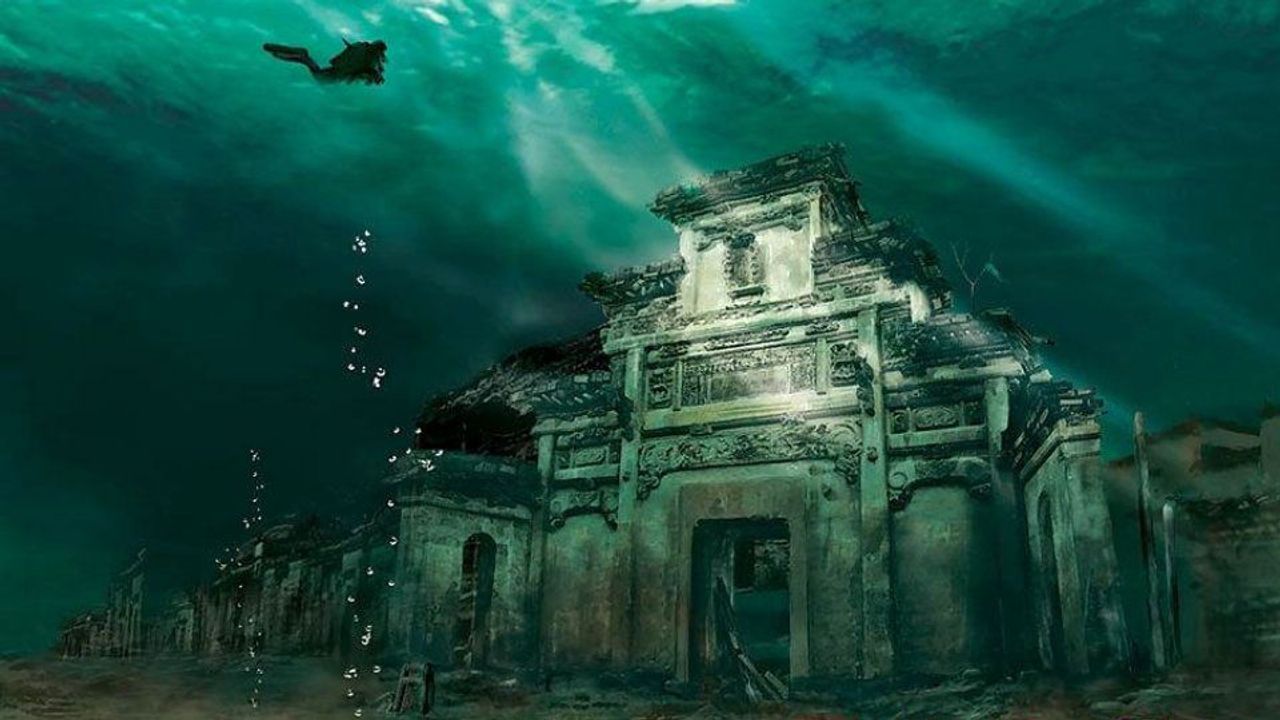
Shicheng, often called the Half Century Sunken City, is one of China’s most fascinating underwater historical sites. Located beneath Qiandao Lake in Zhejiang Province, this ancient city offers a rare glimpse into China’s architectural and cultural past that has been preserved underwater for more than fifty years. Known as the Lion City due to the five surrounding mountains, Shicheng remained hidden from the world for decades until divers rediscovered it and revealed an extraordinary submerged world frozen in time.
Shicheng was built during the Eastern Han Dynasty and thrived for more than 1,300 years. The city was once a bustling center of politics, culture, and trade. However, in 1959, the construction of the Xin’an River Hydropower Station required the area to be flooded, which resulted in the entire city being submerged under the waters of the newly formed Qiandao Lake. Unlike many ancient structures exposed to weathering, Shicheng’s underwater state has naturally protected its buildings, carvings, and streets. The lake environment acts like a time capsule, preserving intricate details that would have otherwise deteriorated.
One of the most astonishing aspects of Shicheng is how well its architectural features have remained intact. Divers exploring the site often describe the experience as swimming through an underwater museum. The city contains traditional arches, wooden structures, stone carvings, and pathways that still retain their original shape. The walls of buildings display detailed designs inspired by Chinese imperial dynasties, including lotus motifs, mythical creatures, and delicate line carvings. Even after half a century underwater, many of these decorations appear surprisingly clear and unweathered.
Shicheng’s layout remains recognizable, featuring wide streets, city gates, and residential areas arranged similarly to ancient urban planning designs. The absence of strong water currents in Qiandao Lake helps keep the structures stable. Sunlight filtering through the water creates a mystical atmosphere that has captivated divers, photographers, and historians. The city feels remarkably untouched, making it one of the most visually impressive underwater ruins in the world.
The rediscovery of Shicheng has sparked global interest in underwater archaeology. While the site is not open to mass tourism due to safety concerns, several controlled diving tours allow experienced divers to explore selected parts of the city. These tours emphasize preservation and aim to minimize physical contact with the ruins. Because underwater exploration is limited, much of Shicheng remains a mystery, which adds to its allure and scientific significance.
Beyond its architectural beauty, Shicheng also serves as a reminder of the complex relationship between development and cultural preservation. The flooding of the city was seen as a necessary step for modern energy production, yet it resulted in the loss of a historical landmark. However, the lake’s formation unintentionally preserved the city in ways that would not have been possible above ground. This delicate balance between progress and heritage continues to be a topic of discussion among historians and urban planners.
Shicheng’s unique condition makes it an invaluable research site. Archaeologists are studying how underwater environments can preserve historical artifacts, offering insights that might help protect other endangered heritage sites around the world. The city also stands as a symbol of hidden history, reminding people that even submerged or forgotten places can hold great cultural value.
In recent years, Shicheng has become a subject of documentaries, travel features, and global media interest. Its atmospheric underwater visuals provide stunning imagery that captivates viewers. Although most visitors cannot explore it physically, drone footage, underwater photography, and virtual reconstructions allow people to experience the city through digital means. These efforts help share the story of Shicheng with future generations while maintaining the integrity of the site.
Overall, Shicheng is more than just an underwater ruin. It is a half century time capsule that reveals the extraordinary craftsmanship and architectural sophistication of ancient China. The city’s preservation under Qiandao Lake demonstrates how history can survive in unexpected forms and places. As interest grows, Shicheng continues to inspire explorers, historians, and travelers who are drawn to its beauty and mystery.
