




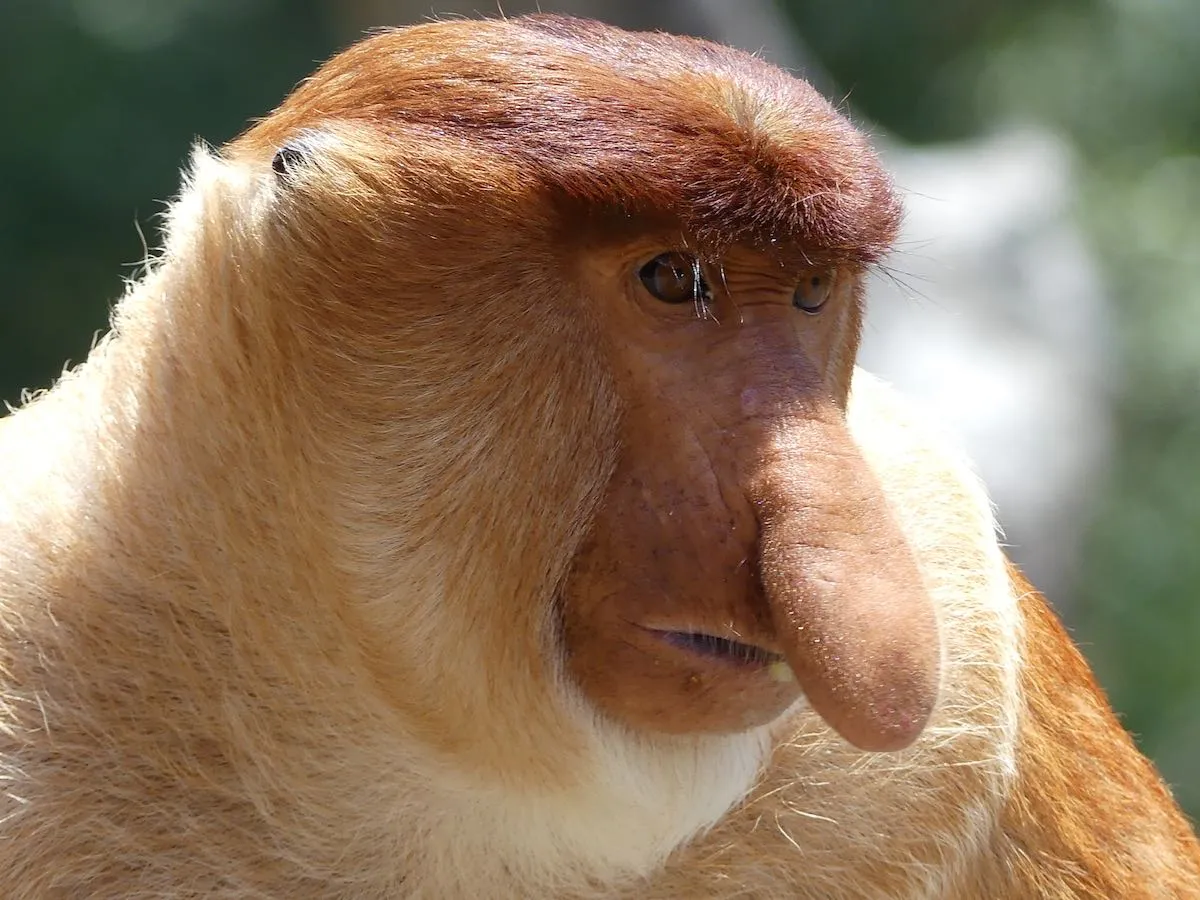
The proboscis monkey, often described as a human faced animal, is one of the most distinctive primates in the world. Native to the island of Borneo, this species is recognized instantly by its unusually large nose, round belly, and expressive facial features that resemble human emotions. These characteristics make the proboscis monkey a subject of fascination for wildlife enthusiasts, photographers, and researchers. Despite its humorous appearance, the proboscis monkey plays an important role in the ecosystem and faces significant threats that make conservation efforts crucial.
The most iconic feature of this animal is its oversized nose. In adult males, the nose can grow long enough to hang over the mouth, creating a comical yet intriguing look. Scientists believe that the large nose amplifies vocal sounds, helping males attract females and assert dominance within the group. When the monkey calls out, the enlarged nasal structure creates a loud, resonating sound that travels far through the forest. Female proboscis monkeys, although possessing smaller noses, are still instantly recognizable by their prominent facial shape and gentle expressions.
Another reason the proboscis monkey is often compared to humans is its expressive eyes and varied facial gestures. Observers frequently note how the monkey’s face seems to show curiosity, surprise, calmness, frustration, or even boredom. This resemblance to human emotion makes the species popular in wildlife documentaries and social media content. Their reddish brown fur, pale face, and potbellied silhouette further enhance their unusual appearance, making them stand out compared to other monkey species in Southeast Asia.
The proboscis monkey primarily inhabits mangrove forests, coastal swamps, and riverine environments in Borneo. These habitats provide abundant food sources such as leaves, seeds, fruits, and young shoots. The species is known as a folivorous primate, meaning a large portion of its diet consists of leaves. To digest this tough material, the monkey has a specialized multi chambered stomach containing bacteria that help break down cellulose. This digestive design often results in the species having a noticeably large belly, which adds to its unique silhouette.
Proboscis monkeys are excellent swimmers, an ability that further sets them apart from many other primates. They can swim across rivers with ease and are often seen diving into the water to escape predators. Their partially webbed feet allow them to navigate mangrove environments efficiently. This aquatic skill makes them one of the few primate species capable of long distance swimming, giving them access to food sources unreachable by other animals.
In terms of social behavior, proboscis monkeys live in groups consisting of one dominant male, several females, and their offspring. These groups often join together at night near riverbanks for protection. The monkeys communicate using various vocalizations such as honks, grunts, and roars, many of which are amplified by the enlarged nose in males. Observing their interactions offers insight into complex social structures and bonding behavior.
Despite their unique characteristics, proboscis monkeys are classified as endangered due to habitat loss, deforestation, and human development in Borneo. Mangrove destruction and land conversion for palm oil plantations have drastically reduced their natural habitat. As a result, their population continues to decline. Conservation organizations and local governments are working to protect remaining forest areas through wildlife reserves and eco tourism initiatives.
The presence of the proboscis monkey also plays an essential role in supporting healthy ecosystems. As leaf eaters, they help regulate plant growth and contribute to seed dispersal. Their movement through mangroves and swamp forests creates natural pathways that benefit other wildlife. Losing this species would not only mean losing a unique animal with human like facial features but also disrupting ecological balance in some of the most delicate environments in Southeast Asia.
For travelers, spotting a proboscis monkey in the wild is an unforgettable experience. Popular locations include Sabah’s river cruises, Sarawak’s mangrove areas, and protected reserves in Kalimantan. Wildlife enthusiasts value these encounters because the monkey’s unusual appearance and charismatic behavior make for compelling photography and observation.
Overall, the proboscis monkey stands as one of nature’s most remarkable examples of evolutionary adaptation. Its human like face, distinctive nose, swimming abilities, and complex social behavior make it a species worth learning about and protecting. Although endangered, global awareness and responsible ecotourism can contribute to preserving this extraordinary animal for future generations.
