
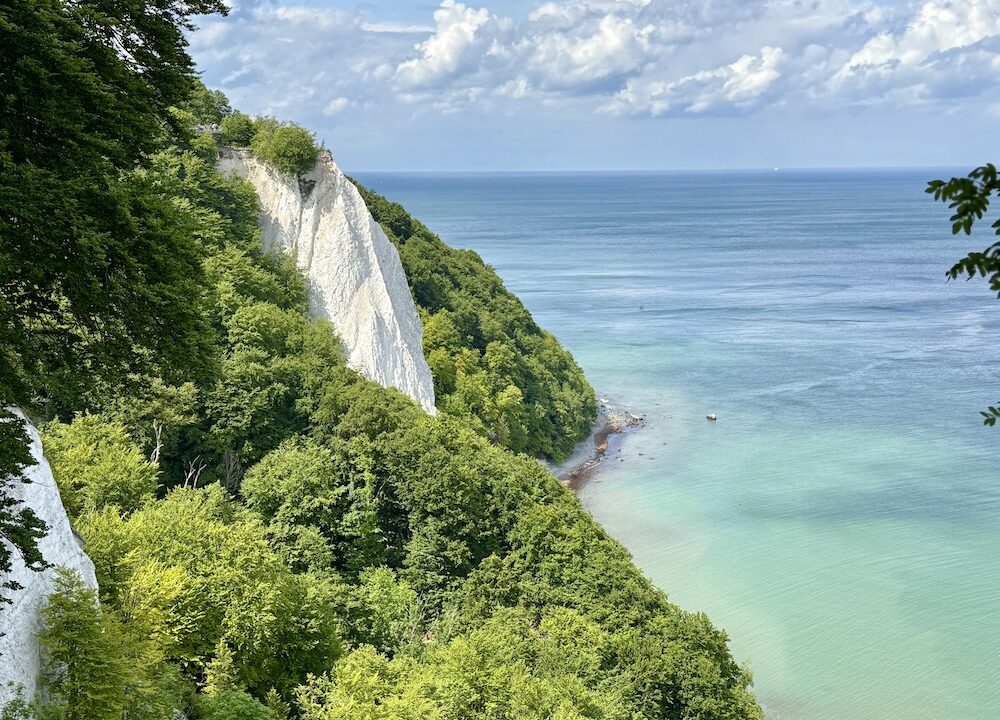
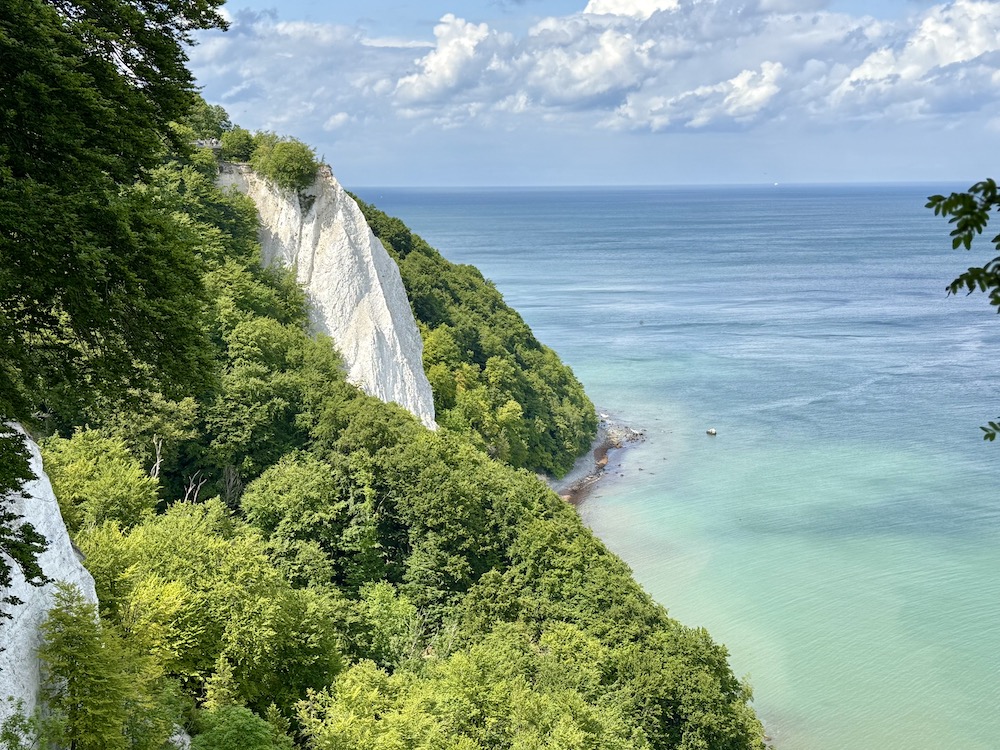
The Königsstuhl (King’s Chair) chalk cliffs in Jasmund National Park on Rügen Island are among Germany’s most breathtaking natural phenomena. These dramatic white chalk formations drop steeply into the turquoise Baltic Sea, creating postcard-perfect views that have inspired artists and visitors for centuries. For those searching for unique German landscapes and coastal wonders, the Königsstuhl cliffs offer an unforgettable mix of geology, nature, and serenity.
The Geological Wonder of the Chalk Cliffs
Formed over 70 million years ago from ancient marine deposits, the cliffs rise up to 118 meters high and stretch along the island’s northeast coast. Erosion by wind and waves constantly reshapes them, with pieces occasionally tumbling into the sea below. The bright white chalk contrasts vividly with dense beech forests and the deep blue-green Baltic waters, making it one of Europe’s most striking coastal features.
What Makes Königsstuhl Truly Unique?
The viewpoint at Königsstuhl offers panoramic vistas of the cliffs, sea, and nearby rock formations like the “Wissower Klinken.” A wooden platform and paths let visitors stand right at the edge for dizzying perspectives. The area is a protected national park, home to rare orchids, seabirds, and ancient beech woods adding layers of biodiversity to this iconic German natural site.
Tips for Visiting the Königsstuhl Chalk Cliffs
Take the short hike from the national park center (entry fee applies) to the famous viewpoint. Visit in summer for long daylight or early morning for fewer crowds and soft light. Combine with a boat tour along the cliffs or exploring nearby Sassnitz town. The cliffs shine brightest on sunny days when the turquoise sea glows.
In short, the Königsstuhl chalk cliffs highlight one of Germany’s most dramatic and photogenic unique natural phenomena, perfect for nature lovers and photographers seeking Baltic beauty.
