

Salar de Uyuni in Bolivia is the largest salt flat on Earth and one of the most extraordinary natural landscapes in the world. Covering more than ten thousand square kilometers, this vast white expanse looks like an endless sea of salt stretching to the horizon. Its scale, beauty, and scientific importance make Salar de Uyuni a global natural wonder and a symbol of Bolivia’s unique geography.
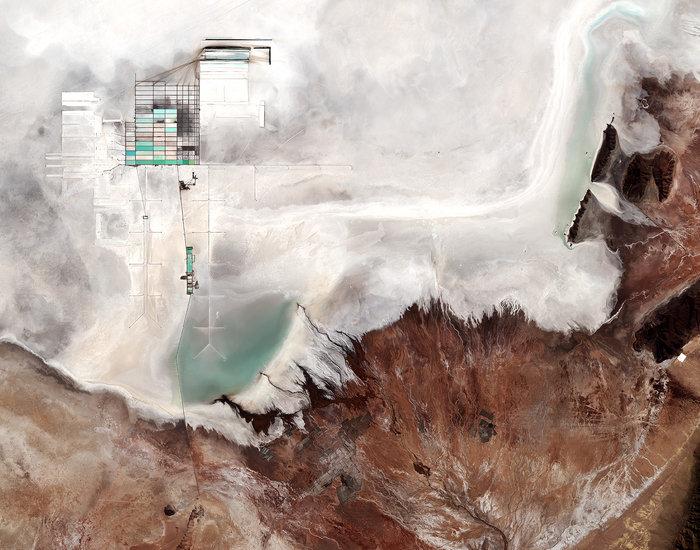
Salar de Uyuni is located in the southwest of Bolivia, high on the Altiplano plateau at an elevation of over three thousand six hundred meters above sea level. The salt flat was formed thousands of years ago after several ancient lakes evaporated, leaving behind thick layers of salt. Over time, these deposits hardened into a flat and remarkably uniform surface that is visible even from space.
One of the most striking features of Salar de Uyuni is its perfectly flat terrain. The surface varies in elevation by less than a meter across the entire salt flat. This extreme flatness makes it an ideal natural mirror during the rainy season. When a thin layer of water covers the salt crust, the sky is reflected so clearly that the boundary between earth and sky seems to disappear. This mirror effect has made Salar de Uyuni famous around the world and a favorite destination for photographers.
During the dry season, the salt flat transforms into a geometric landscape of white hexagonal patterns formed by natural salt crystallization. The ground becomes solid enough for vehicles to cross, allowing visitors to explore the vast area. The bright white surface combined with intense sunlight creates a surreal environment that feels almost otherworldly.
Beyond its visual beauty, Salar de Uyuni is also extremely important economically and scientifically. Beneath the salt crust lies one of the world’s largest reserves of lithium, a key resource used in batteries for electric vehicles and renewable energy storage. Bolivia holds a significant portion of the global lithium supply, making Salar de Uyuni strategically important in the transition to clean energy. At the same time, extracting these resources presents environmental and social challenges that require careful management.
Salar de Uyuni also plays a role in climate and scientific research. Because of its flatness, it is used to calibrate satellites and remote sensing instruments. Scientists rely on the salt flat to improve the accuracy of Earth observation data, which is essential for monitoring climate change, weather patterns, and environmental shifts across the planet.
Despite its harsh conditions, life exists around Salar de Uyuni. Flamingos migrate to nearby shallow lakes during certain seasons, feeding on algae and microorganisms. Small islands within the salt flat, such as Isla Incahuasi, are covered with giant cacti and provide a stark contrast to the surrounding white landscape. These islands were once hilltops before the ancient lakes disappeared.
Tourism has become an important part of the local economy. Visitors travel from around the world to experience the vastness of the salt flat, stay in hotels built from salt blocks, and witness dramatic sunrises and sunsets. Guided tours help protect the fragile environment while allowing people to appreciate its beauty and cultural significance.
In conclusion, Salar de Uyuni is far more than just the largest salt flat in the world. It is a place where geology, climate, science, and culture come together in a stunning natural setting. Its endless white surface, mirror like reflections, and hidden resources make it one of the most remarkable landscapes on Earth. Salar de Uyuni stands as a reminder of the planet’s ability to create beauty on a truly massive scale.
