




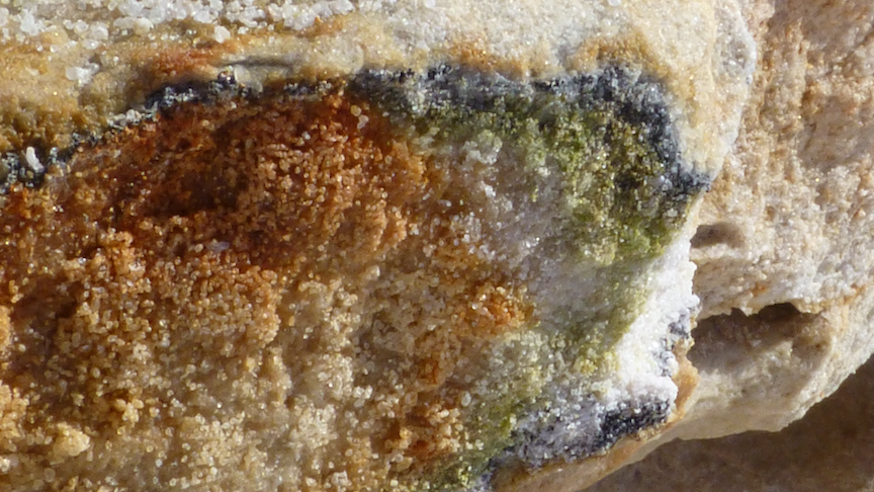
Deep inside seemingly lifeless rocks, in some of Earth’s harshest environments, thrive ancient microbes known as endolithic cyanobacteria. These remarkable organisms bore into or colonize cracks within rocks, surviving extreme conditions that would kill most life forms. Often called “rock-eating” bacteria, they play a crucial role in Earth’s history and offer clues for astrobiology.
What Are Endolithic Cyanobacteria?
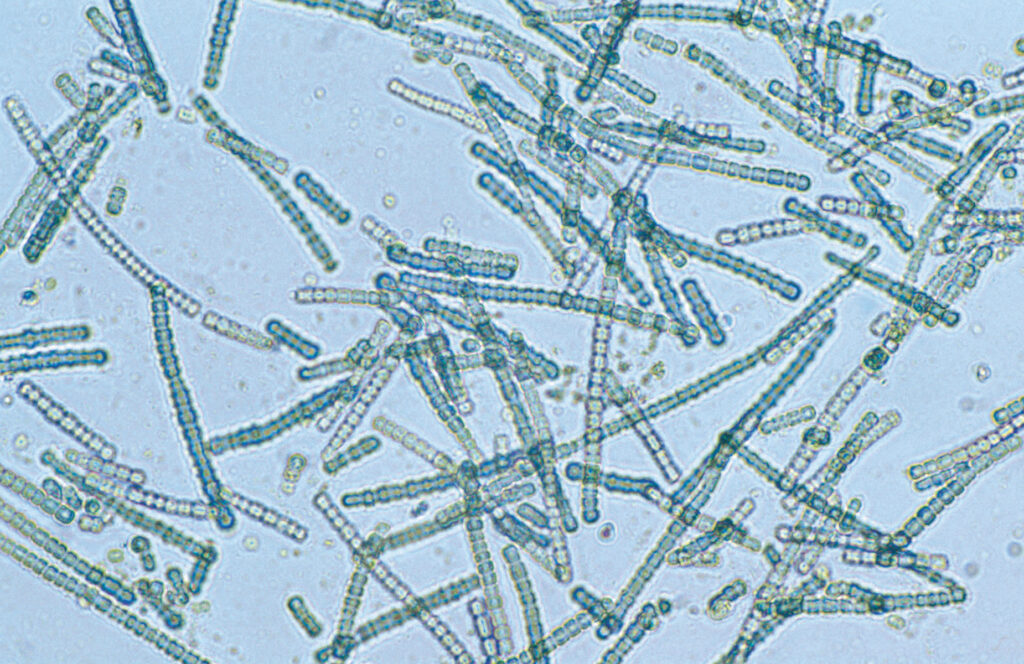
Cyanobacteria are photosynthetic bacteria, often called blue-green algae, that produce oxygen through photosynthesis. Endoliths live inside rocks (euendoliths bore actively, while others occupy natural pores).
These microbes form communities just millimeters below the rock surface, protected from intense UV radiation, desiccation, and temperature swings.
Where Do They Live?
Endolithic cyanobacteria thrive in extreme habitats:
- Antarctic Dry Valleys – One of the coldest, driest places on Earth.
- Atacama Desert (Chile) – The driest non-polar desert, with some areas receiving no rain for decades.
- Hot deserts – Like the Negev or Mojave.
- Coastal rocks and limestone – Exposed to salt spray.
They use translucent rocks (quartz, halite, gypsum) that allow faint light for photosynthesis while shielding from harm.
How Do They Survive Inside Rocks?
- Photosynthesis → Low light levels suffice due to adaptations.
- Moisture trapping → Rocks absorb atmospheric humidity or rare dew.
- Bio-weathering → They dissolve rock slightly to access nutrients, contributing to soil formation.
- Dormancy → Enter inactive states during extreme dry periods, reviving when conditions improve.
These strategies make them masters of survival in places considered uninhabitable.
Historical Significance: The Great Oxidation Event
Ancient cyanobacteria, including early endolithic forms, transformed Earth ~2.4 billion years ago during the Great Oxidation Event. Their oxygen production shifted the atmosphere from oxygen-poor to oxygenated, enabling complex life.
Fossilized evidence appears in stromatolites layered structures built by cyanobacteria trapping sediment.
Implications for Life on Mars and Beyond
NASA and astrobiologists study endolithic cyanobacteria as analogs for potential Martian life. Mars’ dry, rocky surface with past water hints at similar refuges. Drilling into Martian rocks could reveal biosignatures.
