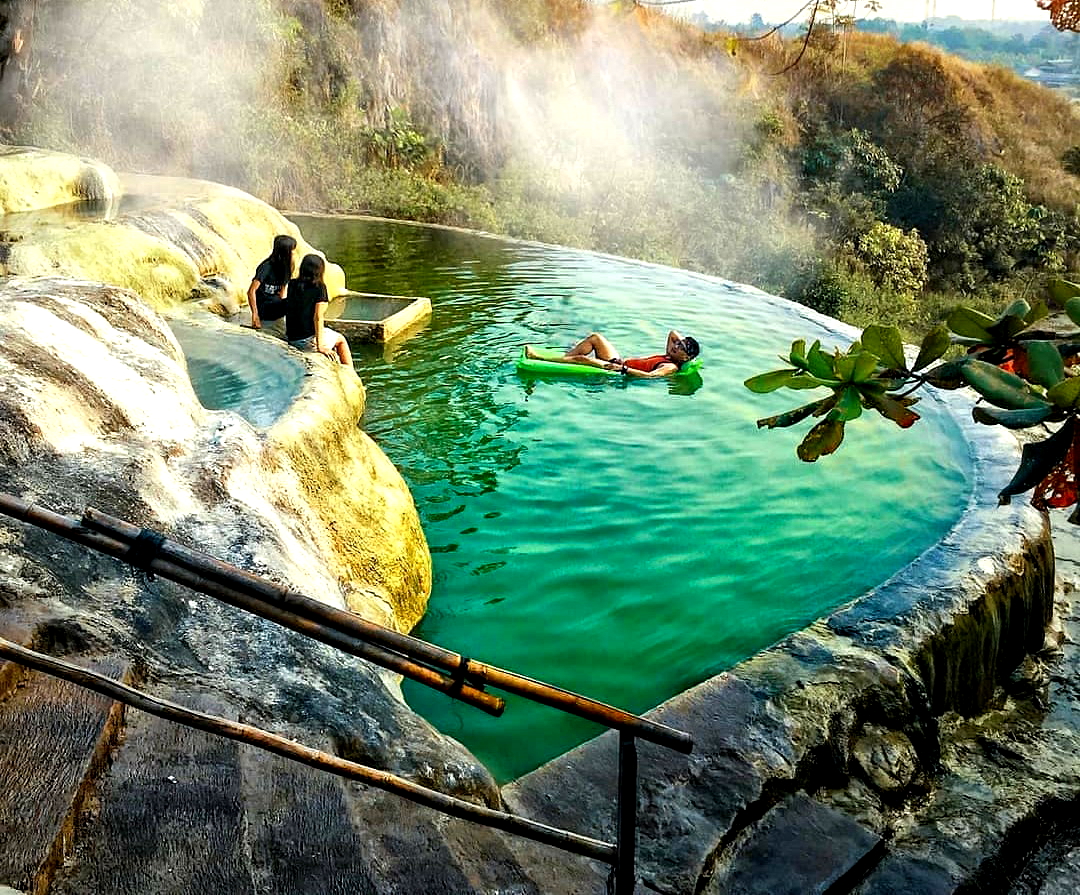
Indonesia is famous for its dramatic landscapes shaped by volcanic activity, and among its most intriguing natural wonders is a mountain where hot and cold springs exist side by side. This rare phenomenon can be found in several volcanic regions of Indonesia, with Mount Pancar in West Java often highlighted as a place where visitors can experience both hot and cold water sources in close proximity. The coexistence of these springs reflects the powerful geological forces beneath the surface.
Mount Pancar is located near Bogor, West Java, and is part of an area influenced by ancient volcanic activity. Although the mountain is no longer actively erupting, geothermal heat remains trapped underground. This heat warms groundwater, creating natural hot springs that flow to the surface. At the same time, nearby cold springs emerge from higher elevations, fed by rainwater and underground streams that remain cool as they travel through rock layers.
The presence of both hot and cold springs in one mountain area is the result of complex geological structures. Faults and fractures in the rock allow water to circulate at different depths. Water that travels deeper is heated by geothermal energy before resurfacing as a hot spring. In contrast, shallow groundwater remains cool and flows out as cold springs. Because these water paths are close to each other, both types of springs can be found within the same area.
These contrasting springs have long been valued by local communities. Hot springs are traditionally believed to offer health benefits, such as relieving muscle pain, improving circulation, and reducing stress. Cold springs, on the other hand, are often associated with freshness and rejuvenation. The unique experience of alternating between hot and cold water has made such mountain areas popular for wellness tourism.
Beyond tourism, these springs also provide insight into Indonesia’s volcanic nature. The country sits along the Pacific Ring of Fire, an area with intense tectonic and volcanic activity. Mountains with both hot and cold springs serve as natural indicators of geothermal systems still active beneath the surface. Studying these systems helps scientists better understand volcanic processes and assess potential geothermal energy resources.
The environment around mountains with mixed springs is often rich in biodiversity. Warm mineral water supports unique microorganisms, while cooler streams sustain plants and wildlife adapted to mountain climates. Forests surrounding these areas help regulate water flow and maintain the balance between hot and cold sources, making environmental conservation essential.
Climate and rainfall also influence the strength of these springs. Heavy rain can increase the flow of cold water, while dry seasons may intensify the temperature difference between springs. This natural variability adds to the dynamic character of the landscape and keeps the springs constantly changing.
In conclusion, a mountain with hot and cold springs together in Indonesia is a powerful example of the country’s geological diversity. The close presence of these contrasting water sources highlights the interaction between volcanic heat and natural groundwater systems. Whether appreciated for relaxation, scientific study, or natural beauty, these mountains offer a unique experience that reflects Indonesia’s position as one of the most geologically active regions in the world.
