



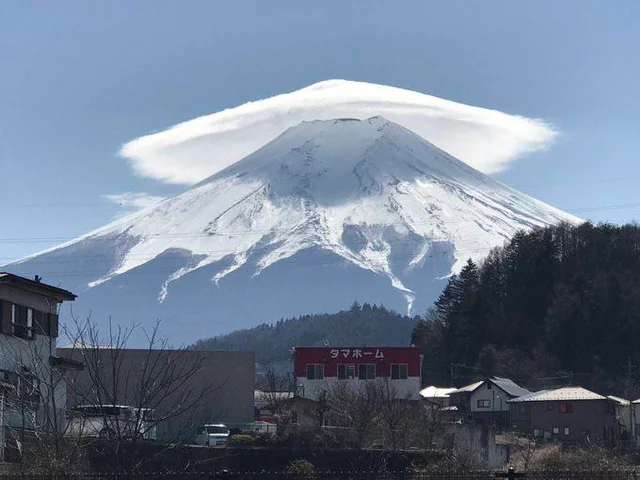
Lenticular clouds, often called “hat clouds” or “cap clouds,” transform majestic mountains into whimsical figures wearing ethereal headgear. These stationary, lens-shaped formations hover like UFOs or elegant caps atop peaks, creating breathtaking vistas. Commonly seen on mountains like Mount Rainier, Mount Fuji, or Mount Hood, they signal shifting weather and showcase nature’s artistry. Dive into the science, famous examples, and why these clouds captivate photographers and hikers alike.
The Science Behind Lenticular Clouds
Lenticular clouds form when stable, moist air flows over a mountain, creating standing waves. As air ascends the peak, it cools and condenses into clouds at the wave’s crest. Descending air evaporates the moisture, keeping the cloud stationary despite strong winds. These altocumulus lenticularis clouds appear at 6,500–16,500 feet, perpendicular to wind direction.
They aren’t truly “permanent” but can persist for hours or days in consistent conditions. Often multilayered like stacked hats, they indicate approaching moist fronts and stronger upper-level winds. Pilots avoid them due to turbulence from the waves.
Famous Mountains and Their Cloud Hats
Mount Rainier in Washington State frequently dons a cap cloud, signaling weather changes in the Puget Sound region. Known as the “Rainier Cap,” it’s a precursor to storms, forming when Pacific moisture meets the volcano’s 14,410-foot summit.
Japan’s Mount Fuji often wears a lenticular “hat,” called “kasagumo,” inspiring art and folklore. In the U.S., Mount Hood in Oregon showcases dramatic hats, while Mount Shasta in California hosts intricate stacks during winter.
Tenerife’s Mount Teide in Spain features similar formations, resembling sombreros.
Formation Conditions and Variations
Ideal for lenticulars: strong, perpendicular winds (20–40 mph) and moisture in stable atmospheric layers. They differ from orographic clouds by their smooth, saucer shape. Pileus clouds, a variant, form brief “caps” above cumulus towers.
In rare cases, iridescent colors appear when sunlight diffracts through ice crystals. Noctilucent versions glow at night in polar regions. Climate change may increase their frequency with altered wind patterns.
Cultural and Photographic Appeal
In folklore, cap clouds predict rain or signify mountain spirits. Hikers on trails like the Pacific Crest view them as photo ops but heed weather warnings. Photographers use drones for close-ups, capturing the “hat” effect at golden hour.
Mountaineers note them as signs of high winds, aiding safety. In aviation, they’re beautiful but hazardous, causing wave turbulence.
Environmental Significance
These clouds highlight mountain ecosystems’ role in weather. As air rises, it can trigger precipitation, nourishing forests below. Studying them aids climate models, predicting storm patterns.
Lenticular hats remind us of nature’s elegance transient yet timeless. Next time you spot a mountain in a cloud cap, appreciate the atmospheric dance creating this spectacle.
