




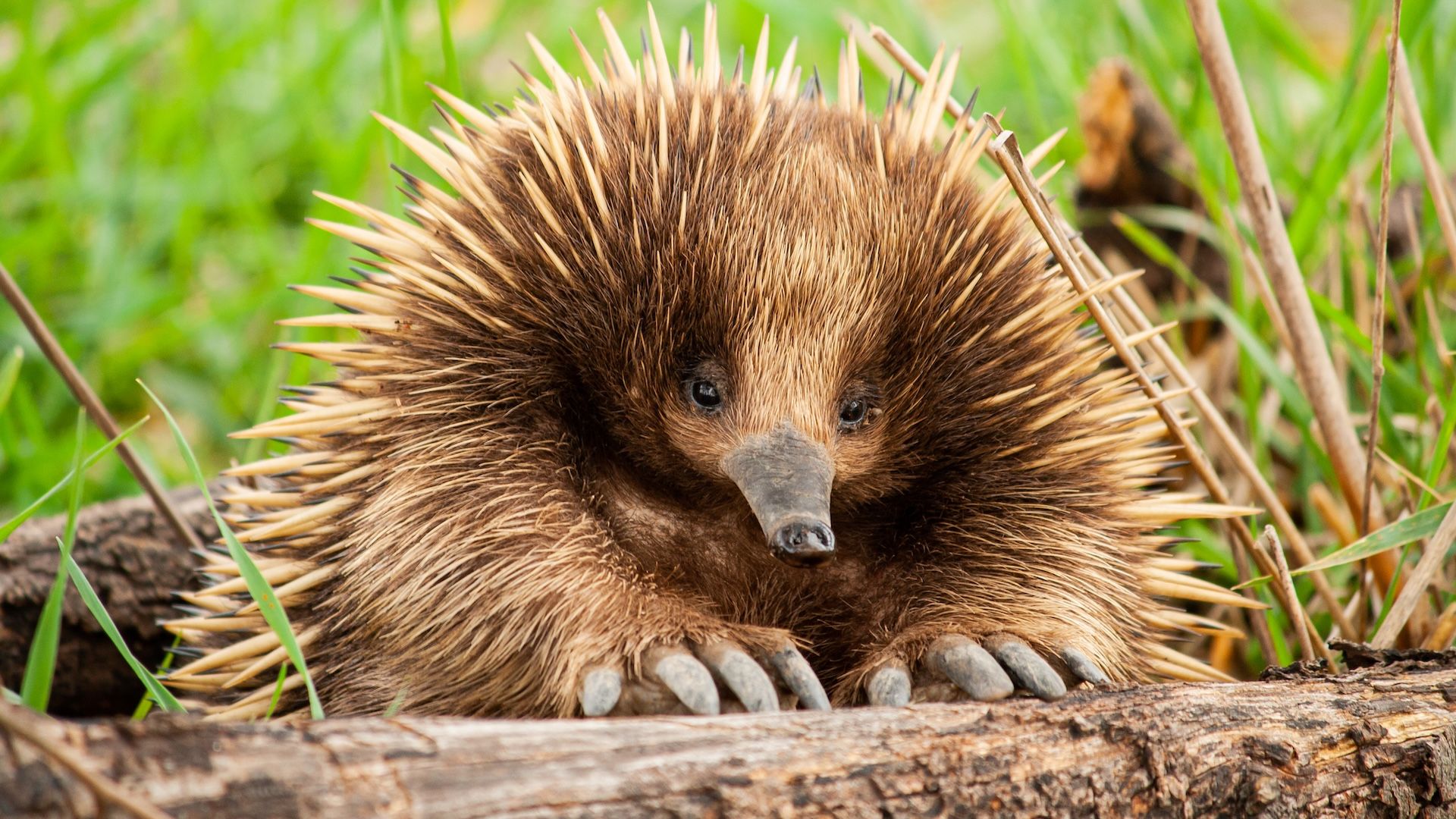
The Echidna’s Unique Appearance
The echidna, often mistaken for a porcupine or hedgehog due to its spiny exterior, is one of the most fascinating creatures on Earth. These monotremes, belonging to the family Tachyglossidae, are covered in coarse hair modified into sharp spines, giving them a distinctive “spiny hair” look. Native to Australia and New Guinea, echidnas are egg-laying mammals, sharing this rare trait only with the platypus. Their spines, made of keratin like human hair, serve as protection against predators, while their long snouts and sticky tongues are perfect for foraging ants and termites.
There are four species: the short-beaked echidna (Tachyglossus aculeatus) widespread in Australia, and three long-beaked species (Zaglossus spp.) in New Guinea. Weighing up to 16 kg, echidnas have a compact body, strong claws for digging, and a beak-like snout that can detect electrical signals from prey.
Evolutionary History and Adaptations
Echidnas evolved around 20-50 million years ago, diverging from platypuses. As monotremes, they represent a bridge between reptiles and mammals, laying leathery eggs incubated in a pouch. After hatching, puggles (baby echidnas) lap milk from mammary glands without nipples.
Their spines are not quills but hollow, barbed hairs that deter threats. When alarmed, echidnas curl into a ball or burrow quickly. In cold climates, they hibernate, lowering body temperature to conserve energy. Their diet of insects makes them natural pest controllers, with tongues extending up to 18 cm to capture prey.
Echidnas have poor eyesight but excellent senses of smell and electroreception, locating underground insects. They are solitary, meeting only to mate, with males forming “trains” behind females during breeding season.
Habitat and Behavior
Echidnas inhabit diverse environments from forests to deserts. Short-beaked echidnas thrive in arid Australia, digging burrows for shelter. Long-beaked ones prefer New Guinea’s rainforests, feeding on earthworms.
They are mostly nocturnal or crepuscular, avoiding heat. Swimming is another skill; they paddle with webbed feet. Lifespan reaches 50 years in captivity, though wild ones live shorter due to threats like habitat loss.
Conservation status varies: short-beaked are least concern, but long-beaked are vulnerable due to hunting and deforestation.
Cultural Significance and Conservation
In Aboriginal culture, echidnas feature in Dreamtime stories as symbols of survival. Modern research uses them to study mammalian evolution.
Threats include roadkill, predators like foxes, and climate change. Conservation efforts in Australia involve protected areas and breeding programs.
Echidnas remind us of biodiversity’s wonders, with their spiny “hair” encapsulating adaptation’s marvels.
