




Beyond Egypt – The Nubian Legacy
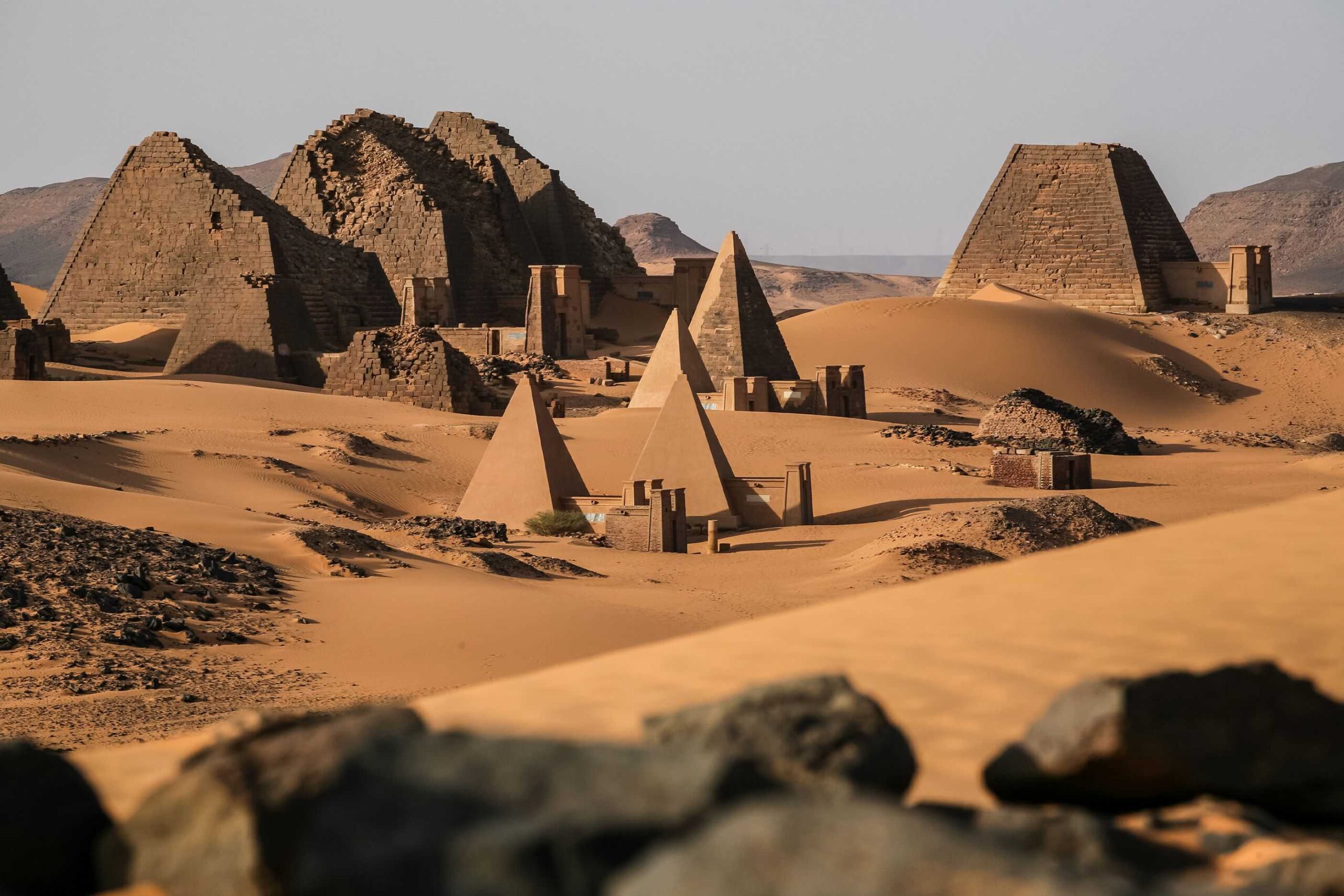
When people think of pyramids, they picture Egypt. But Sudan’s Nubian pyramids, especially around Meroë, are among Africa’s most remarkable ancient sites steeped in history, mystery, and grandeur.
The Kingdom of Kush
From about 800 BCE to 350 CE, the Kingdom of Kush thrived along the Nile. Meroë served as a royal capital, where kings and queens were buried in distinctive pyramids.
What Makes Nubian Pyramids Unique
Compared to Egyptian pyramids, Nubian pyramids are:
- Smaller and steeper in shape.
- Built with brick cores and stone facing.
- Often grouped in large cemeteries.
These striking shapes rise dramatically from desert sands.
Royal Tombs and Artifacts
Excavations reveal:
- Tomb chambers with rich burials.
- Artifacts like jewelry, pottery, and statues.
- Inscriptions in ancient Meroitic script.
Cultural Significance
The pyramids represent:
- A fusion of African and Mediterranean influences.
- Nubian power and identity.
- Continuity of ancient civilization along the Nile.
Visiting Meroë Today
Tourists to the Meroë pyramid fields can:
- See sunrises and sunsets casting golden light.
- Explore ruins with knowledgeable guides.
- Learn about Nubian history at local museums.
Preservation and Recognition
Although less famous than Egypt’s Giza, Nubian pyramids are gaining global interest. Conservation efforts help protect these ancient monuments for future generations.
A Must-See Ancient Wonder
The Nubian pyramids showcase Africa’s deep historical roots and architectural ingenuity a destination for history lovers and curious travelers alike.
