
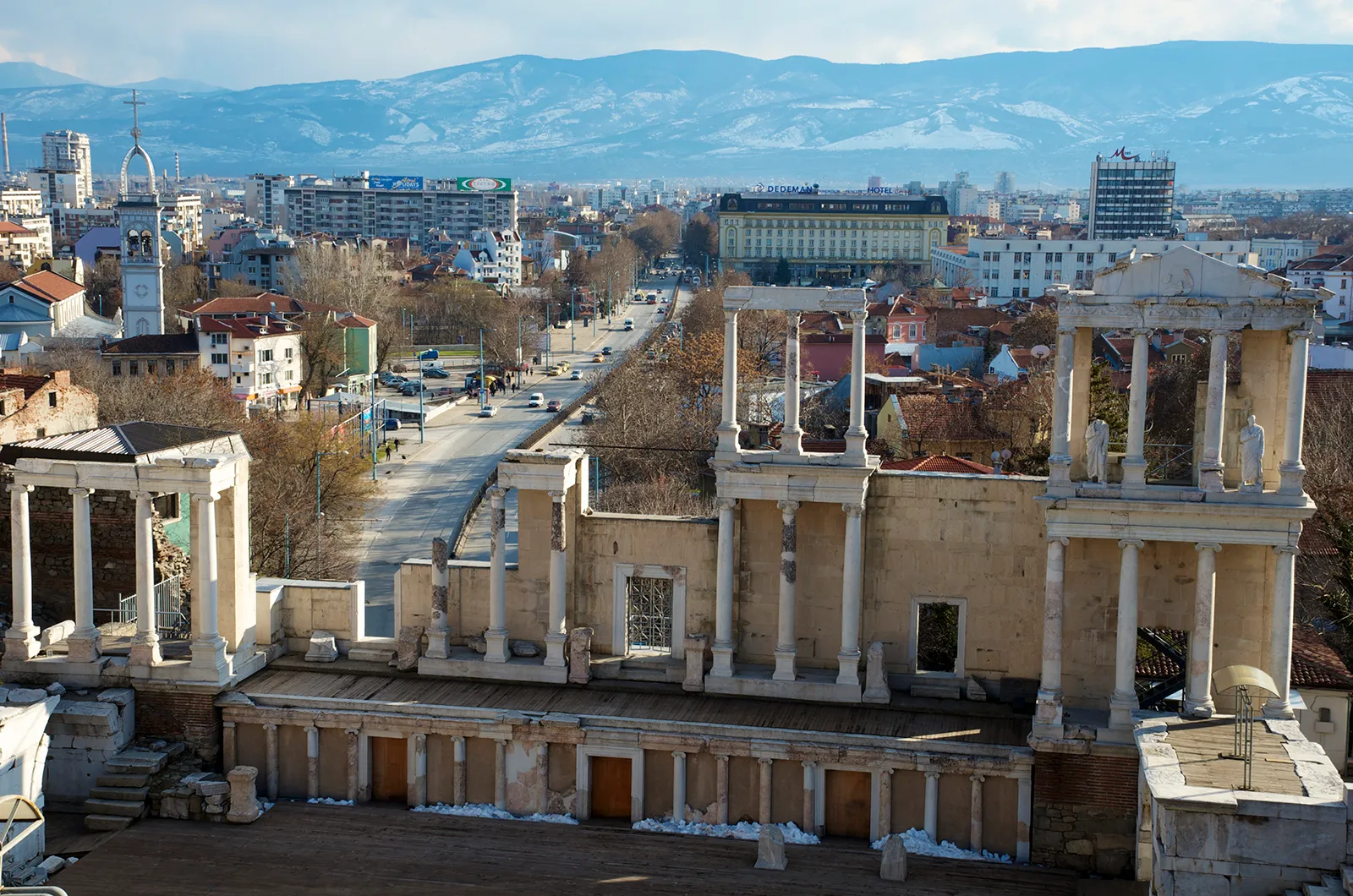
Plovdiv is widely recognized as the oldest continuously inhabited city in Europe. Located in southern Bulgaria, it has a recorded history spanning more than 8,000 years.
Few cities in the world can match its depth of cultural and historical continuity.
Early Origins and Thracian Roots
The earliest settlements in Plovdiv date back to the Neolithic era. The city was originally inhabited by the Thracians, who built fortified settlements on its hills.
It was known as Eumolpias during this period.
Roman Influence and Urban Development
Under Roman rule, Plovdiv was called Philippopolis. The Romans transformed it into a major urban center.
Key Roman structures include:
- The Roman Theatre
- Stadium of Philippopolis
- Roads and aqueducts
Many of these structures remain visible today.
Byzantine and Ottoman Eras
After the Roman period, Plovdiv became part of the Byzantine Empire and later the Ottoman Empire.
Each era added layers of architecture, culture, and tradition, shaping the city’s diverse identity.
Cultural and Architectural Diversity
Plovdiv’s Old Town features:
- Roman ruins
- Medieval churches
- Ottoman era mosques
- Bulgarian Revival houses
This mixture makes Plovdiv a living museum.

Modern Plovdiv
Today, Plovdiv is a vibrant city with universities, art districts, and festivals. It was named European Capital of Culture in 2019.
Despite modernization, its ancient core remains preserved.
Archaeological Importance
Ongoing excavations continue to uncover new artifacts, proving that Plovdiv’s history is still being written.
Why Plovdiv Still Matters
Plovdiv shows how civilizations rise, fall, and coexist in one place. Its continuous habitation sets it apart from nearly every other European city.
Plovdiv is not just Europe’s oldest city. It is a testament to humanity’s ability to adapt, preserve, and build upon the past while moving forward.
