


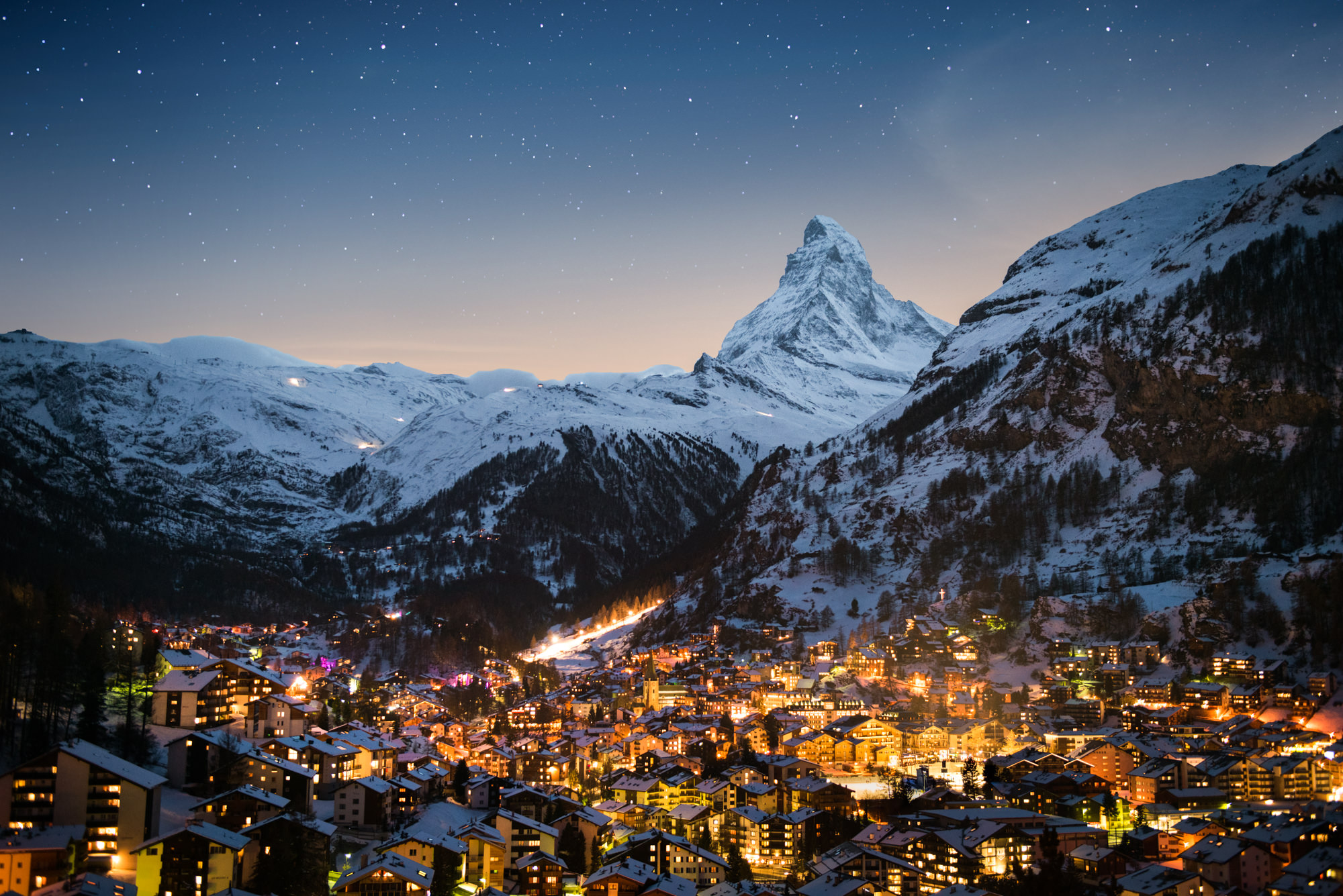
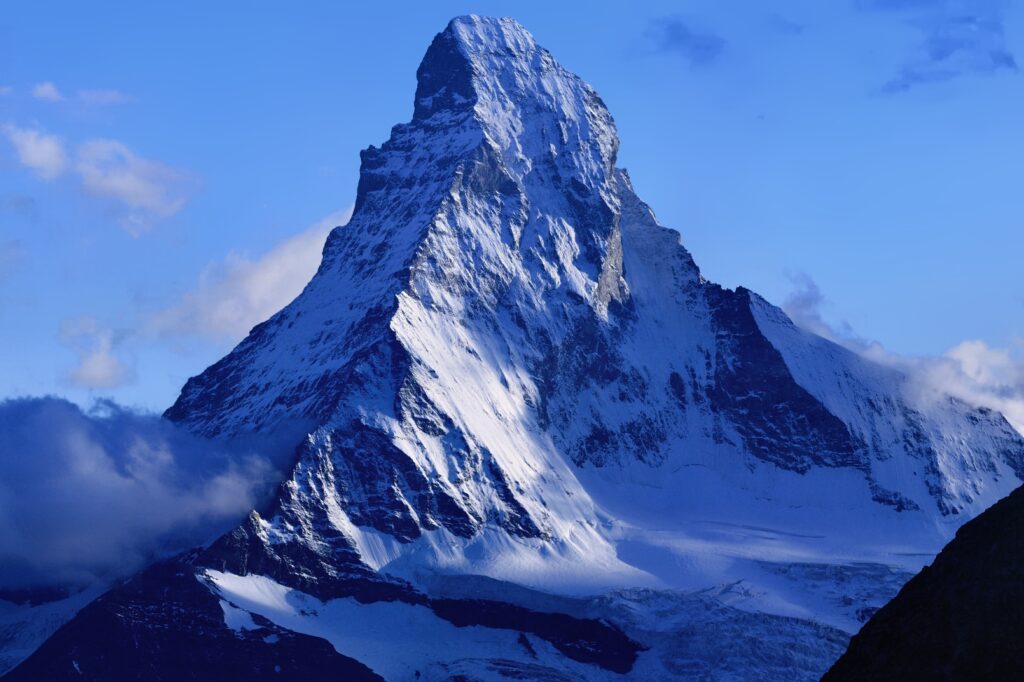
Rising dramatically from the Swiss Alps, the Matterhorn stands as one of the world’s most recognizable mountains a near-perfect pyramid-shaped peak with breathtaking symmetry that has captivated adventurers, artists, and photographers for centuries. Straddling the border between Switzerland and Italy, this 4,478-meter (14,692-foot) giant is often called the “Mountain of Mountains” for its striking, isolated form.
Why Is the Matterhorn So Perfectly Pyramidal?
The Matterhorn’s iconic shape is a classic example of a pyramidal peak (or “horn”) formed by glacial erosion. Cirque glaciers carved into the mountain from multiple directions, sharpening its ridges and creating four steep faces oriented toward the compass points. This natural sculpture gives it an almost unnatural symmetry – no wonder it’s featured on everything from Toblerone chocolate wrappers to countless postcards!
Viewed from Zermatt, Switzerland, the northeast face appears as a flawless crooked pyramid against the sky, especially stunning at sunrise or sunset when the light accentuates its sharp edges.
Climbing the Legendary Peak
The Matterhorn was one of the last major Alpine peaks to be climbed, first summited in 1865 via the Hörnli Ridge – a dramatic ascent that ended in tragedy on the descent, cementing its fearsome reputation. Today, it’s a bucket-list climb for experienced mountaineers, with routes like the Hörnli and Lion Ridges offering thrilling exposure and fixed ropes.
Visiting the Matterhorn
The car-free village of Zermatt offers the best base, with cable cars like the Matterhorn Glacier Paradise providing jaw-dropping views without the climb. Summer hiking and winter skiing surround this alpine icon, making it accessible year-round.
