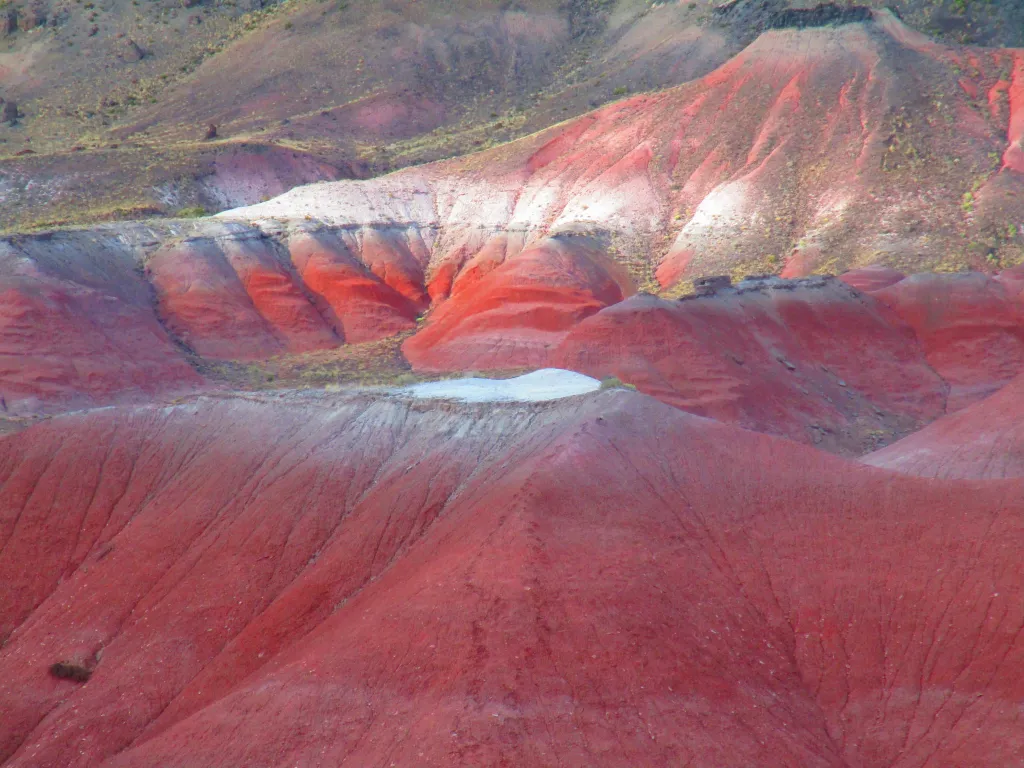
The Painted Desert is one of the most visually striking landscapes in the United States. Located primarily in northern Arizona, it is famous for its rainbow like layers of red, orange, purple, and gray stretching across the horizon.
These colors are not painted by humans, but formed by millions of years of geological processes.
Why the Desert Has So Many Colors
The vibrant colors come from mineral rich sediment layers:
- Iron oxides create red and orange tones
- Manganese adds purple shades
- Volcanic ash contributes gray and white layers
Each layer represents a different geological era.
Geological History
The Painted Desert formed over 200 million years ago. Ancient rivers deposited sediment that later hardened into rock.
Erosion from wind and water slowly exposed these layers, revealing the desert’s colorful patterns.
Climate and Environment
The region experiences:
- Hot summers
- Cold winters
- Low rainfall
Despite harsh conditions, plant life such as grasses and shrubs survives, supporting wildlife like lizards, birds, and small mammals.
Cultural and Historical Significance
The Painted Desert lies near Petrified Forest National Park and has been home to Indigenous peoples for thousands of years.
Artifacts, ruins, and petroglyphs show long standing human connections to the land.
Best Time to Visit
The desert is most colorful during sunrise and sunset, when low angle sunlight enhances the mineral tones.
Photographers consider it one of the best natural color displays in North America.
Conservation Efforts
Protected areas ensure that erosion, tourism, and development do not damage this fragile landscape.
The Painted Desert is a natural rainbow carved into stone. It stands as a reminder that Earth’s beauty is shaped slowly through time.
