



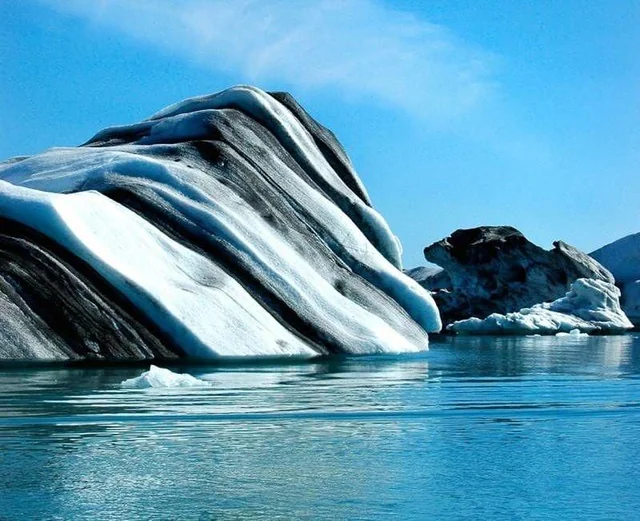
Rainbow-layered icebergs, also known as striped icebergs, are breathtaking natural phenomena primarily found in Antarctic waters. These massive floating ice structures display vibrant horizontal bands of color deep blues, turquoises, greens, browns, and even yellows creating a rainbow-like effect as sunlight refracts through their dense ice layers. The interplay of light with trapped air bubbles, impurities, and frozen seawater produces an ethereal glow that has mesmerized explorers and photographers alike.
How Do Ice Layers Refract Sunlight in Striped Icebergs?
The magical colors arise from the way ice layers refract sunlight. Pure glacial ice appears vivid blue because it absorbs red wavelengths and scatters blue light similar to why the sky looks blue. Air bubbles trapped in the ice further scatter light, enhancing the intensity.
Striped patterns form over millennia:
- Snow accumulates and compresses into ice on ancient glaciers.
- Layers incorporate dust, volcanic ash, or minerals during different snowfall periods.
- Meltwater or seawater freezes in cracks, adding clear or impurity-rich bands.
- When the iceberg calves and flips, these layers become exposed horizontally.
Green stripes often come from marine algae or iron oxides frozen into the underside, while brown/black lines result from sediment.
Where to See Rainbow-Layered Icebergs
Most striped icebergs originate from Antarctica’s massive ice shelves, like the Ross or Amery Ice Shelf. They drift into the Southern Ocean, occasionally reaching waters near South Georgia or the Antarctic Peninsula.
Antarctic cruises offer the best views expeditions from Ushuaia, Argentina, frequently encounter these colorful giants. Clear, sunny days maximize the refraction effect, making layers shimmer like polished gems.
Fun Facts About Striped Icebergs
- Blue ice is denser and older often thousands of years than white surface ice.
- Some green icebergs are rich in iron, potentially fertilizing ocean plankton when they melt.
- No two striped icebergs are alike each tells a unique story of Earth’s climate history.
- They inspired myths of “emerald ice” among early explorers.
If you’re captivated by natural wonders like rainbow-layered icebergs or the beauty of ice refracting sunlight, these Antarctic marvels are a top bucket-list sight. Witnessing one in person is an unforgettable reminder of nature’s artistic power!
