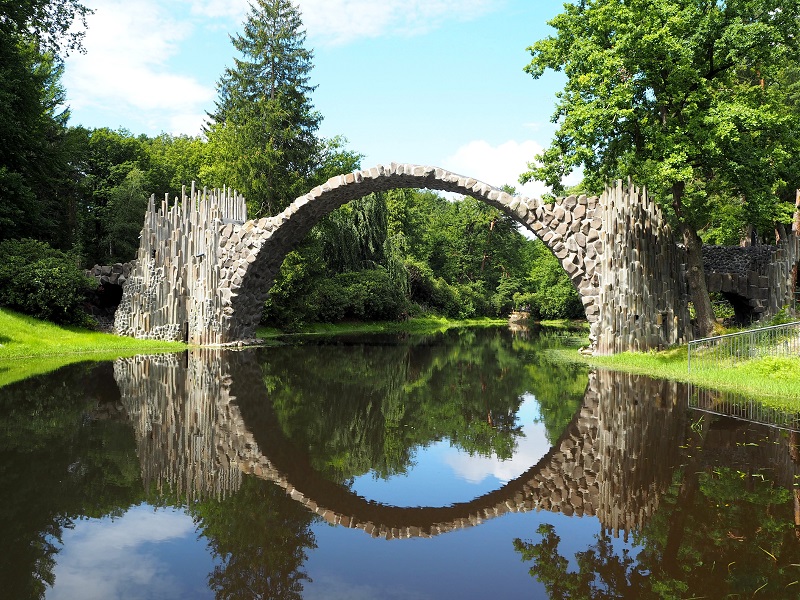
Rakotzbrücke, often called Devil’s Bridge, is a breathtaking stone arch in Kromlau Rhododendron Park, Saxony, Germany. This 19th-century bridge forms a perfect circle with its reflection in the water below, creating a surreal, mirror-like optical illusion that’s gone viral on social media. Among unique places in Germany, Rakotzbrücke offers a magical, almost otherworldly experience that’s perfect for photographers and nature lovers.
The Legend and History of Rakotzbrücke
Built in the 1860s as part of a romantic landscaped park by local noble Friedrich Hermann Rötschke, the bridge was designed to create the illusion of a full circle. Local folklore claims the devil himself built it in one night, hence the name “Teufelsbrücke” (Devil’s Bridge). It’s part of a larger azalea and rhododendron-filled park that’s especially stunning in spring and autumn.
What Makes Rakotzbrücke Truly Unique?
The perfectly symmetrical basalt columns and curved arch create a flawless reflection when the water is calm, forming an impossible-looking circle. Access is restricted to protect the structure (you can no longer walk on it), but viewing from the banks delivers the iconic shot. The surrounding forest and seasonal blooms add layers of natural beauty.
Tips for Visiting Rakotzbrücke
Best visited early morning or late afternoon for soft light and fewer crowds. Spring (May-June) brings vibrant rhododendrons, while fall offers golden foliage. The park is free to enter, but check seasonal water levels as low water can diminish the reflection effect. Combine with nearby Görlitz for a full Saxony adventure.
Ultimately, Rakotzbrücke showcases one of Germany’s most photogenic and mysterious unique spots, blending engineering, nature, and legend into an unforgettable sight.
