The Mystical Origins of Cappadocia’s Landscape
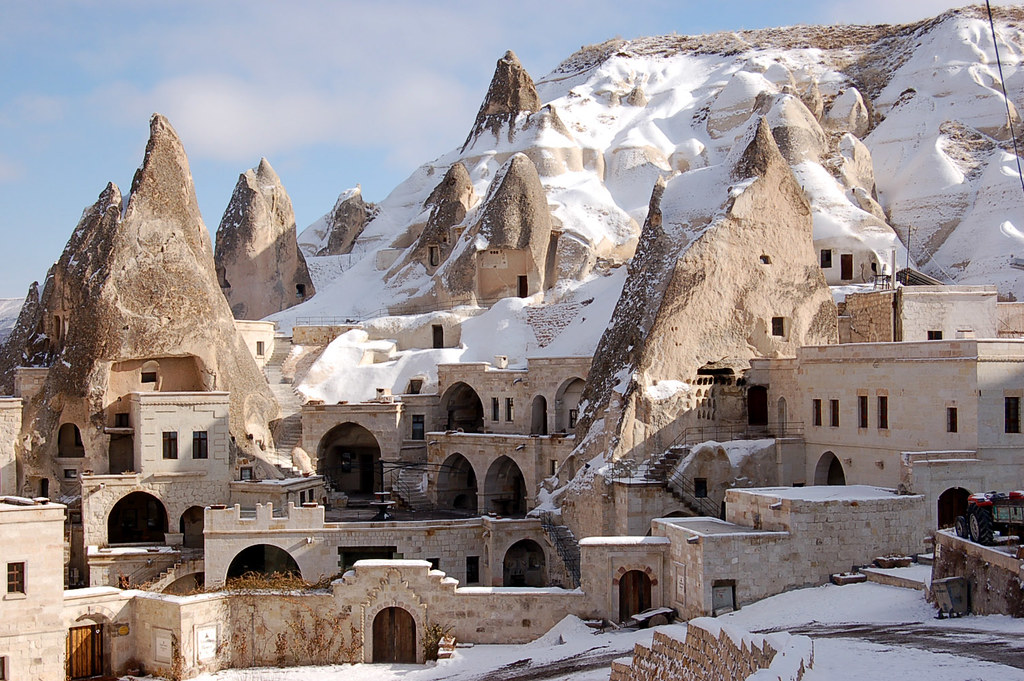
Nestled in central Turkey’s Anatolian plateau, Cappadocia is a surreal wonderland where nature and human ingenuity converge. Formed 60 million years ago by volcanic eruptions from Mount Erciyes and Hasan, layers of tuff a soft volcanic ash eroded into iconic “fairy chimneys,” towering rock formations resembling mushrooms or spires.
This otherworldly terrain, sculpted by wind and water, became the canvas for ancient civilizations to carve entire cities into the rock, creating a harmonious blend of geology and architecture.
Ancient Inhabitants and Rock-Cut Dwellings
Human history in Cappadocia dates back to the Hittites around 1800 BCE, but it was the Phrygians in the 8th-7th centuries BCE who began excavating underground cities for protection. During the Byzantine era, persecuted Christians expanded these into vast networks like Derinkuyu, which descends 85 meters and once housed 20,000 people with ventilation shafts, wells, and chapels. Kaymakli, another marvel, connects via tunnels, featuring wineries and stables.
Above ground, fairy chimneys were hollowed into homes, churches, and monasteries. Göreme Open-Air Museum, a UNESCO site, boasts over 30 rock-cut churches from the 10th-11th centuries, adorned with frescoes depicting biblical scenes.
Engineering Feats of Underground Cities
These subterranean metropolises were engineering masterpieces. Derinkuyu’s 18 levels included schools, churches, and defensive rolling stones to seal entrances. Ventilation systems circulated air deep underground, while narrow tunnels deterred invaders. Built during Arab-Byzantine wars, they provided refuge for centuries, later used by Ottoman Greeks.
The soft tuff allowed easy carving, yet its durability ensured longevity. Erosion created valleys like Love Valley, where phallic-shaped chimneys stand tall.
Cultural and Religious Significance
Cappadocia flourished in the 10th-11th centuries, with monastic communities thriving in rock-cut complexes. Saints like Basil the Great influenced the region, fostering cave churches with vibrant art. Persian, Seljuk, and Ottoman influences added layers, from caravanserais to mosques.
Today, it’s a living heritage site, with boutique hotels in restored caves blending ancient charm with modern luxury.
Tourism and Preservation Efforts
Hot-air balloon rides offer panoramic views of the fairy chimneys, while hiking trails explore valleys. UNESCO protection since 1985 safeguards against erosion and overtourism. Recent discoveries, like a 5,000-year-old underground city, continue to unveil secrets.
Cappadocia’s rock-built city remains a testament to human resilience, inviting visitors to step into a fairy-tale world.
