



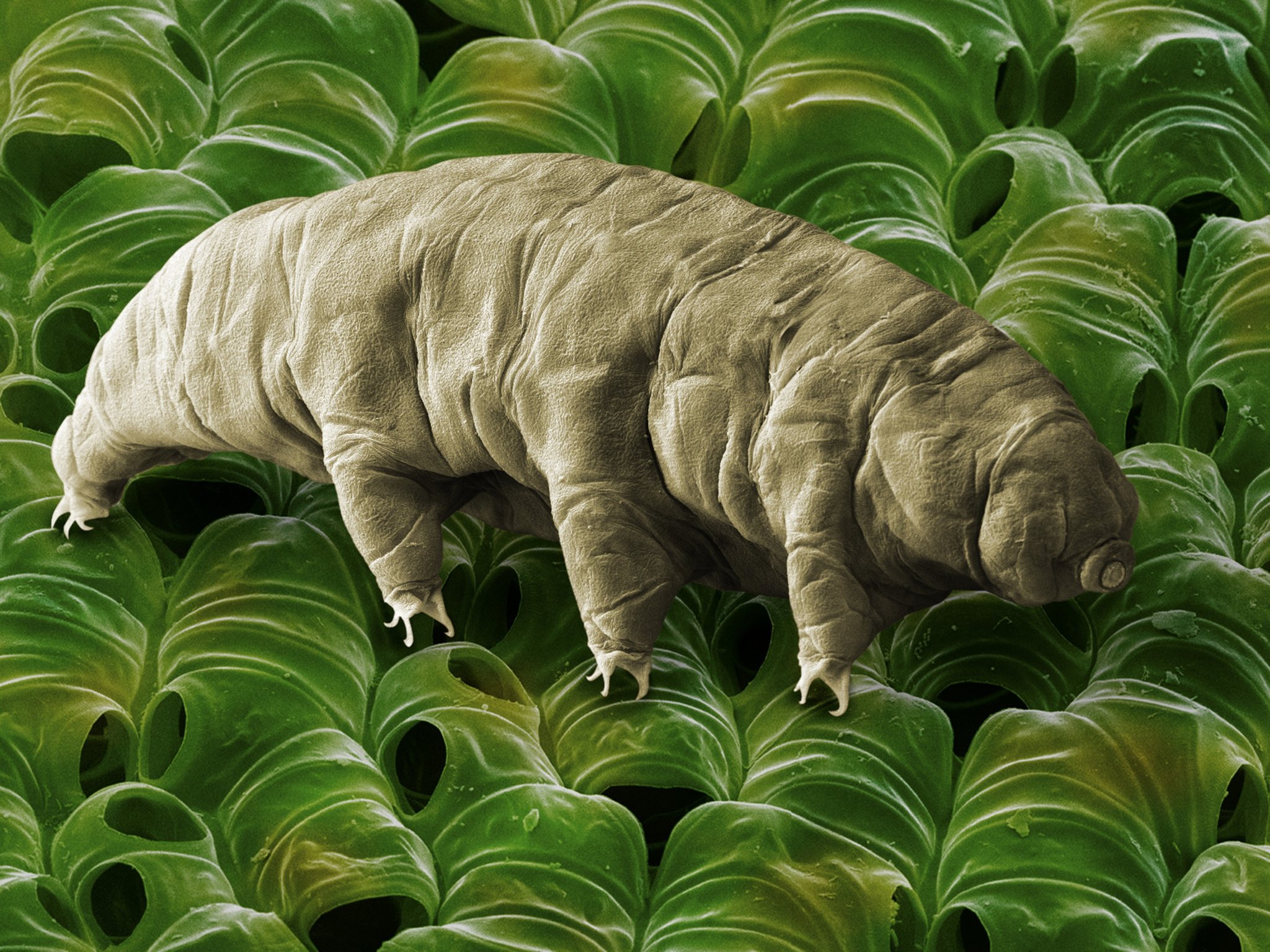
Tardigrades, often dubbed “water bears” or “moss piglets,” are microscopic animals famous for surviving extreme conditions, including full desiccation followed by rehydration. These resilient creatures can dry out completely and revive years later, making them a focal point in astrobiology and extremophile research. This in-depth article covers their biology, survival mechanisms, and implications for science. For queries like “tardigrade desiccation revival” or “animal that dries out and revives,” discover the wonders of these indestructible micro-animals.
Anatomy and Habitat of Tardigrades
Tardigrades are eight-legged invertebrates, measuring 0.1 to 1.5 mm, found in diverse habitats from mosses and lichens to deep-sea sediments. Over 1,300 species exist, classified under the phylum Tardigrada.
Their body features a segmented structure with claws for gripping surfaces. In moist environments, they thrive by feeding on plant cells, algae, or smaller organisms.
When conditions dry, tardigrades enter cryptobiosis, a state of suspended animation. This desiccation tolerance allows them to lose up to 95% of body water without dying.
The Process of Desiccation and Rehydration
In desiccation, tardigrades curl into a “tun” state, retracting limbs and reducing metabolism to near zero. Proteins like tardigrade-specific intrinsically disordered proteins (TDPs) protect cellular structures from damage.
A landmark study revived tardigrades frozen for 30 years, as reported in Cryobiology. Upon rehydration, they resume normal functions within hours, showcasing remarkable revival.
For “tardigrade full desiccation then rehydration,” this process involves trehalose sugar acting as a vitrifying agent, preventing ice crystal formation in cold or dry extremes.
They withstand temperatures from -272°C to 150°C, vacuum of space, and radiation 1,000 times lethal to humans, as proven by the 2007 ESA mission exposing them to space.
Evolutionary and Genetic Insights
Evolutionarily, tardigrades diverged early in animal history, acquiring genes via horizontal transfer from bacteria and fungi, enhancing survival traits.
Genome sequencing of species like Ramazzottius varieornatus reveals DNA repair mechanisms crucial for revival post-desiccation.
Comparisons with other extremophiles, like rotifers, highlight tardigrades’ superiority in multi-stress tolerance.
Applications in Science and Technology
Tardigrade research inspires biotechnology, such as developing drought-resistant crops or vaccines stable without refrigeration. NASA’s interest stems from potential for life on other planets.
Ethical studies use non-invasive methods, with citizen science projects identifying new species.
Challenges include understanding cryptobiosis triggers, with ongoing experiments at facilities like the European Space Agency.
Future Prospects and Conservation
As climate change alters habitats, conserving moist micro-environments is vital. Tardigrades symbolize resilience, teaching us about life’s limits.
In astrobiology, they model potential extraterrestrial life, fueling searches on Mars or Europa.
Ultimately, tardigrades’ ability to dry out and revive exemplifies nature’s ingenuity, pushing scientific boundaries.
