




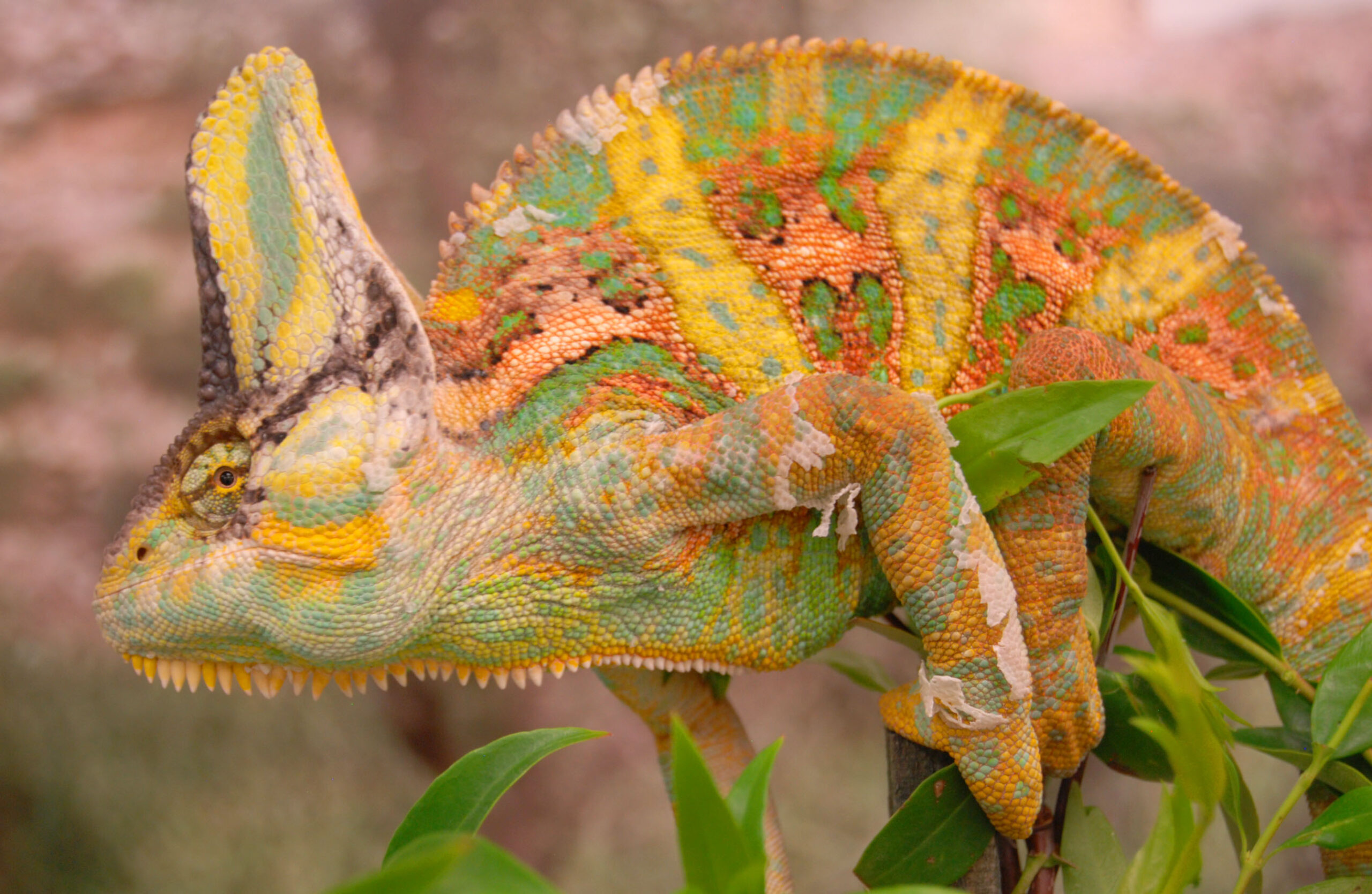
When Conflict Reaches Beneath the Skin
During intense confrontations, some male chameleons undergo dramatic visual changes that go far beyond skin color. In certain species, layers of tissue thin and brighten so much that the underlying bone structure appears to glow or shift color, creating a startling display during combat or territorial disputes.
How Chameleons Change Color
Chameleon color change is controlled by specialized skin cells called chromatophores and iridophores. These layers reflect and absorb light differently depending on mood, temperature, and hormonal signals.
When males become aggressive, the skin can brighten dramatically, revealing underlying structures such as pale bone ridges along the head or casque.
Why Bone Appears to Change Color
The bones themselves do not instantly alter pigment. Instead, heightened blood flow, stretched skin, and rearranged reflective cells create the illusion that bone color has shifted.
This visual exaggeration makes the chameleon appear larger and more threatening to rivals.
Male Combat Behavior
During territorial battles or competition for mates, male chameleons perform elaborate displays before physical contact:
- Body flattening to appear larger
- Rapid brightening of colors
- Head bobbing and lateral swaying
- Exposing pale cranial ridges
If neither retreats, the reptiles may grapple, pushing and biting until one backs down.
Evolutionary Advantages of Extreme Displays
These dramatic signals reduce the need for deadly fights. By showcasing strength and health through color and skeletal outlines, males can intimidate opponents without causing serious injury.
Bright displays also attract females, serving a dual purpose in reproduction and dominance.
Species Known for Intense Displays
Panther chameleons and veiled chameleons are among the most studied for these aggressive visual transformations. Their head crests and bony casques become especially prominent when the surrounding skin flushes with color.
Scientific Interest in Color Physiology
Biologists study these reactions to understand:
- Hormonal control of skin cells
- Structural coloration in animals
- Rapid optical changes in living tissue
Insights from chameleons influence research in adaptive camouflage materials and color changing surfaces.
Conservation and Habitat Pressures
Habitat loss, illegal wildlife trade, and climate change threaten many chameleon species. Protecting forests and regulating pet trade practices are essential to preserving these extraordinary reptiles.
Male chameleons in combat reveal that communication in nature can reach below the skin, sometimes making bones appear to glow with intensity. This remarkable adaptation highlights how evolution shapes both appearance and behavior for survival and reproduction.
