




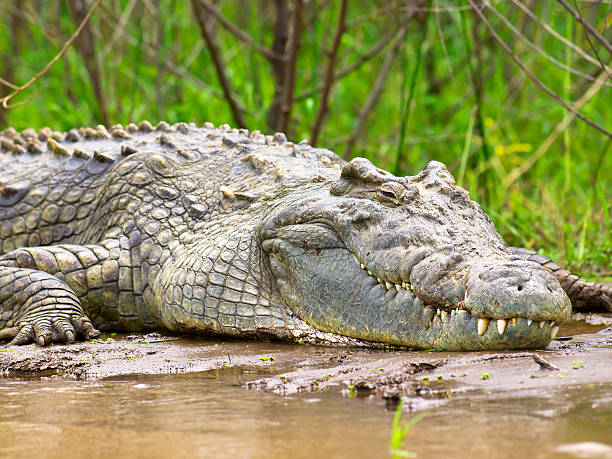
The Nile crocodile (Crocodylus niloticus) is one of nature’s toughest survivors, capable of going months or even up to 2-3 years without eating after a large meal. As Africa’s largest predator and one of the most dangerous reptiles on Earth, this ancient ambush hunter has evolved remarkable adaptations to endure long periods of food scarcity in harsh environments.
How Long Can a Nile Crocodile Go Without Food?
Adult Nile crocodiles can survive:
- Several months routinely during dry seasons when prey is scarce.
- Up to 2 years or more in extreme cases, thanks to their ultra-slow metabolism.
- Juveniles need more frequent meals, but adults thrive on infrequent feasts.
After gorging on a large kill (like a zebra or wildebeest), they digest slowly and enter a state of low activity, conserving energy like a living battery.
Key Survival Adaptations
Nile crocodiles are ectothermic (cold-blooded), which gives them a huge advantage:
- Extremely low metabolic rate: They use far less energy than warm-blooded animals, dropping heart rates to 1-2 beats per minute while resting.
- Basking behavior: Lie motionless in the sun to regulate body temperature and minimize energy expenditure.
- Efficient digestion: Strong stomach acids dissolve bones, horns, and hooves, extracting maximum nutrients.
- Estivation-like state: During droughts, they burrow or remain dormant, further reducing needs.
Habitat and Hunting Style
Found across sub-Saharan Africa in rivers, lakes, marshes, and estuaries, Nile crocodiles reach up to 20 feet (6 meters) and weigh over 1,650 pounds (750 kg). They’re apex predators with a bite force of 3,700 psi stronger than a great white shark.
They employ a “sit-and-wait” strategy:
- Float submerged with only eyes and nostrils visible.
- Explode in lightning-fast ambushes on drinking animals.
This energy-conserving hunt aligns perfectly with their ability to fast for long periods.
Conservation Status
Once hunted to near extinction for their skins, Nile crocodiles are now listed as Least Concern by the IUCN, with populations recovering in many areas. However, habitat loss and human conflict remain threats.
The Nile crocodile’s ability to survive extended fasts showcases evolutionary perfection for unpredictable African wildernesses. From death rolls to months-long hibernation-like states, these living dinosaurs continue to rule their watery domains.
