




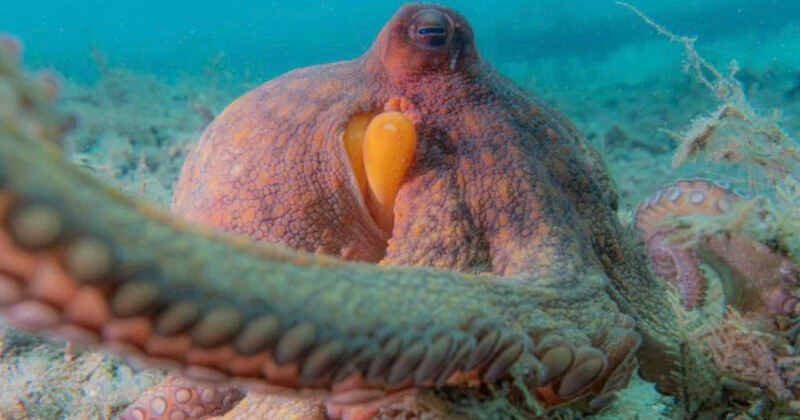
Octopuses are among the most fascinating creatures in the ocean, often described as aliens from another world due to their unique biology and intelligence. One of the most mind-blowing facts about them? The octopus has 8 arms but effectively 9 “brains” – a central brain plus a dedicated neural hub in each arm. This distributed nervous system allows octopuses to perform complex tasks with remarkable autonomy and speed.
How Does an Octopus Have 9 Brains?
While the term “9 brains” is a popular simplification, it’s rooted in solid science:
- One central brain: Located between the eyes, this donut-shaped brain (which wraps around the esophagus) handles higher-level functions like decision-making, learning, and memory. It contains around 180 million neurons.
- Eight arm “mini-brains”: Each of the octopus’s eight arms has its own large cluster of neurons – about 40 million per arm – acting as independent neural hubs or ganglia. These allow the arms to process sensory information (touch, taste, and even light) and control movements without constant input from the central brain.
In total, an octopus has around 500 million neurons, with two-thirds distributed across its arms. This makes their nervous system highly decentralized compared to vertebrates like humans, where most neurons are centralized in the brain.
Why This Distributed System Makes Octopuses So Intelligent
This unique setup gives octopuses extraordinary abilities:
- Independent arm action: Each arm can taste, touch, and move on its own. For example, a detached octopus arm can still crawl and respond to stimuli, thanks to its neural hub.
- Multitasking mastery: While one arm explores a crevice for food, others can camouflage the body or ward off predators.
- Lightning-fast reactions: Arms process information locally, bypassing the central brain for routine tasks, allowing quicker responses in complex environments.
Octopuses are renowned for problem-solving: they’ve been observed unscrewing jars, using tools like coconut shells for shelter, navigating mazes, and even escaping aquariums.
Other Amazing Octopus Facts
- Master of camouflage: Octopuses change color and texture instantly using chromatophores in their skin, often controlled partially by arm neurons.
- Three hearts and blue blood: Two pump blood to the gills, one to the body – perfect for their active lifestyle.
- Short but brilliant life: Most live 1-5 years, but in that time, they display intelligence rivaling many vertebrates.
The octopus’s 9 “brains” system highlights how evolution can produce intelligence in radically different ways. These cephalopods continue to captivate scientists and inspire fields like robotics and AI.
