




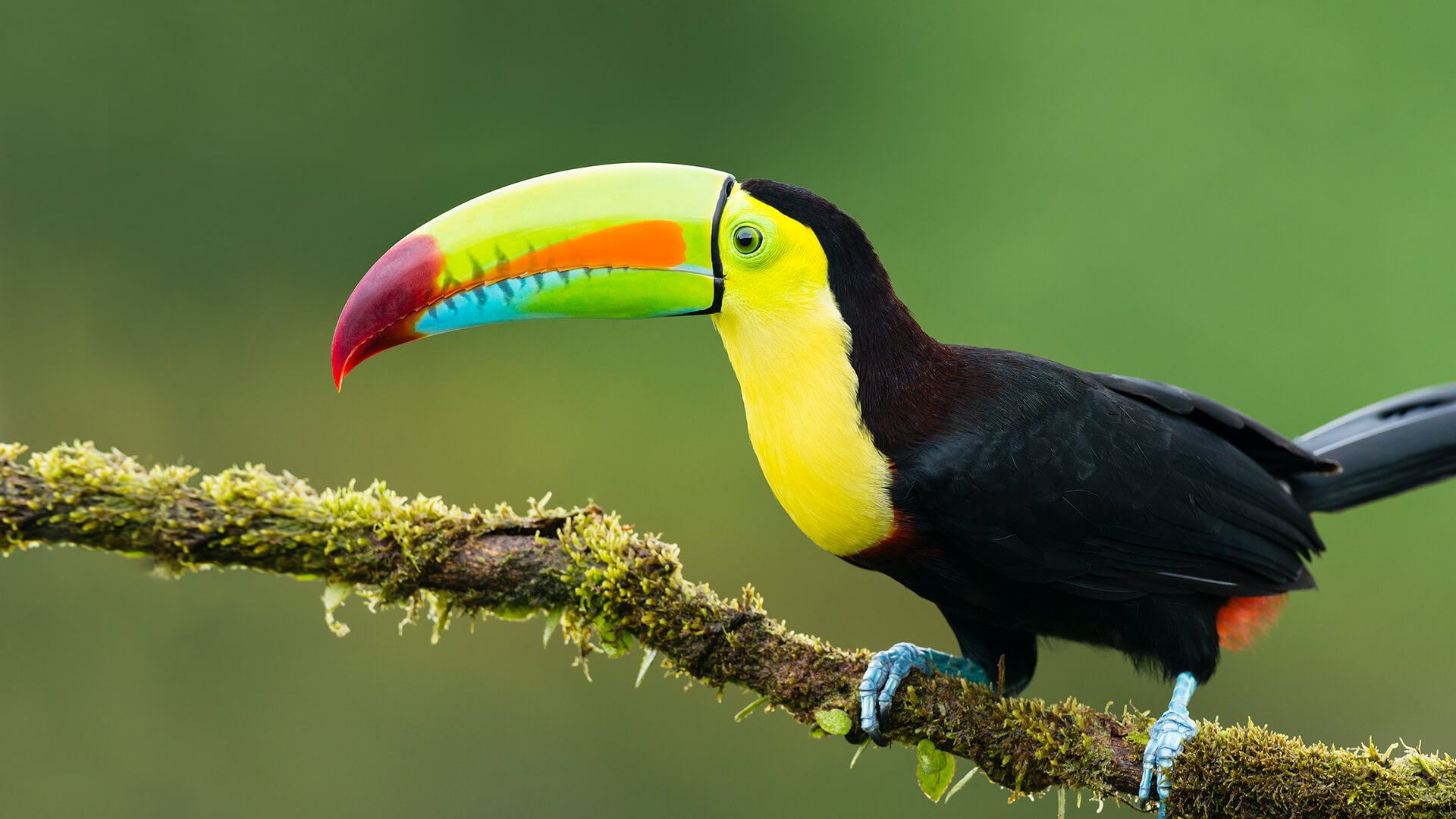
Toucans are among the most iconic birds in the world, instantly recognizable for their enormous, brightly colored beaks and vivid plumage. Native to the tropical rainforests of South America, these charismatic birds captivate birdwatchers and nature enthusiasts alike. While the title of “longest beak” often sparks debate, toucans particularly the Toco Toucan hold the record for the largest beak relative to body size of any bird.
Which Bird Has the Longest Beak?
When discussing the longest beak in the bird world, it’s important to distinguish between absolute length and proportional size:
- Absolute longest beak: The Australian Pelican boasts the longest bill of any living bird, measuring up to 20 inches (50 cm) in males.
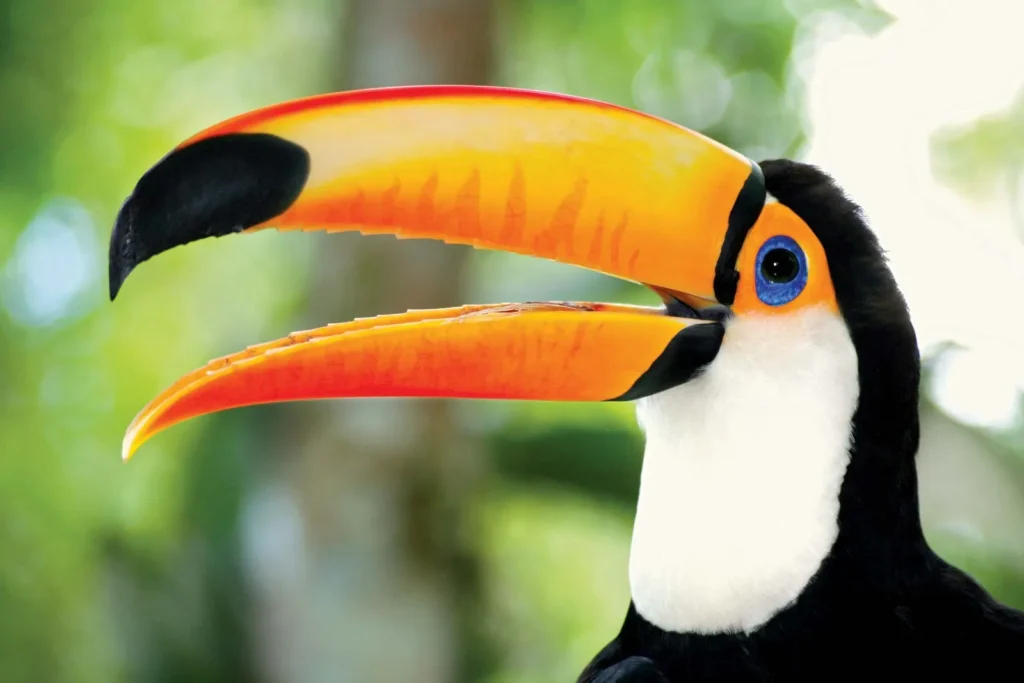
- Longest beak relative to body size: This honor goes to toucans, especially the Toco Toucan (Ramphastos toco). Its beak can reach 7-9 inches (19-23 cm), accounting for about one-third of its total body length (up to 25 inches or 63 cm). The beak also represents up to 30-50% of the bird’s surface area, making it the most proportionally massive.
Other toucan species, like the Keel-billed Toucan, feature even more rainbow-like beaks with vibrant greens, reds, blues, and yellows.
Why Do Toucans Have Such Large, Colorful Beaks?
Despite their imposing appearance, a toucan’s beak is surprisingly lightweight. It’s made of keratin (the same protein as human fingernails) with a hollow, honeycomb-like interior supported by thin bone struts. This structure keeps it from weighing the bird down during flight.
Key functions of the toucan’s oversized beak include:
- Feeding: Reach distant fruits on thin branches without landing, peel fruit, and toss it into their mouths using their long, feathered tongue.
- Thermoregulation: The beak acts as a natural radiator. Blood flow adjusts to release excess heat in hot tropical climates similar to an elephant’s ears.
- Defense and Display: Bright colors may intimidate predators or rivals, and play a role in mating rituals.
- Camouflage: In dappled rainforest light, the vivid beak blends surprisingly well with colorful fruits and flowers.
Habitat and Lifestyle: Bright Colors of South America
Toucans thrive in the lush rainforests, woodlands, and savannas of Central and South America, from Mexico to northern Argentina. The Toco Toucan, the largest species, prefers semi-open areas and is commonly spotted in Brazil, Bolivia, Paraguay, and Guyana.
These social birds live in small flocks, hopping through the canopy rather than flying long distances. They’re primarily frugivores (fruit-eaters), helping disperse seeds across the forest an essential role in maintaining rainforest biodiversity. Occasionally, they’ll snack on insects, eggs, or small reptiles.
Their bright plumage black bodies with white throats, yellow chests, and splashes of red or blue adds to their tropical allure, providing camouflage among sunlit leaves and fruits.
Conservation Status
Most toucan species, including the Toco Toucan, are currently listed as Least Concern by the IUCN. However, habitat loss from deforestation poses a growing threat. Protecting South America’s rainforests is crucial for these colorful icons to continue thriving.
Whether you’re planning a birdwatching trip to the Amazon or simply admiring photos, toucans embody the wild, vibrant spirit of South America. Their extraordinary beaks aren’t just for show they’re a masterpiece of evolutionary adaptation!
