




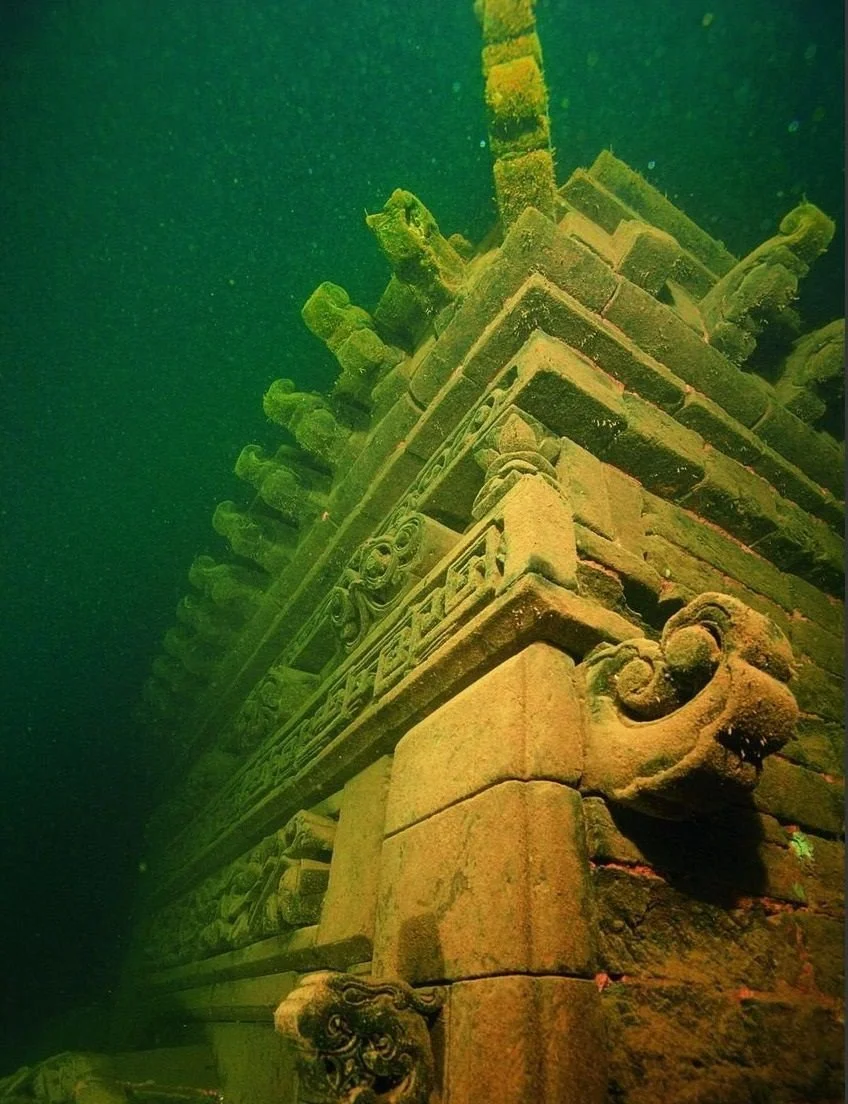
A Forgotten City Beneath the Surface
Hidden beneath the calm waters of Qiandao Lake in eastern China lies Shicheng, also known as the Lion City. Once a thriving settlement dating back more than 1,300 years, this ancient urban center now rests intact on the lake floor, preserved in eerie silence.
Unlike sunken cities lost to earthquakes or rising seas, Shicheng was deliberately submerged during the construction of a hydroelectric dam in the twentieth century.
The History of Shicheng
Founded during the Tang Dynasty, Shicheng served as a political and cultural hub in Zhejiang Province. Its location between five mountain peaks inspired the nickname Lion City.
Stone archways, temples, and city walls once defined its layout, reflecting classical Chinese architecture and imperial planning traditions.
Why the City Was Submerged
In 1959, the Chinese government built the Xin’an River Hydropower Station, flooding valleys to create what is now Qiandao Lake, also called Thousand Island Lake.
Entire towns were evacuated, and Shicheng disappeared beneath roughly forty meters of water.
Preservation Underwater
Cold temperatures, low oxygen, and minimal currents have helped preserve carved stone structures remarkably well.
Divers have documented:
- Ornate arch gates with inscriptions
- Stone staircases
- Sculpted lions and dragons
- Temple foundations
These features remain visible decades after submersion.
Modern Exploration and Tourism
Technical divers and underwater archaeologists explore Shicheng under strict regulation. High visibility conditions make Qiandao Lake a unique freshwater diving destination.
Photographs from these expeditions have transformed the Lion City into an online sensation.
Cultural Significance
Shicheng provides rare insight into everyday life during imperial China and raises questions about heritage preservation in the face of modernization.
The submerged streets of Shicheng form a haunting underwater time capsule. Frozen beneath the lake, the Lion City reminds the modern world how progress can reshape landscapes and history alike.
