

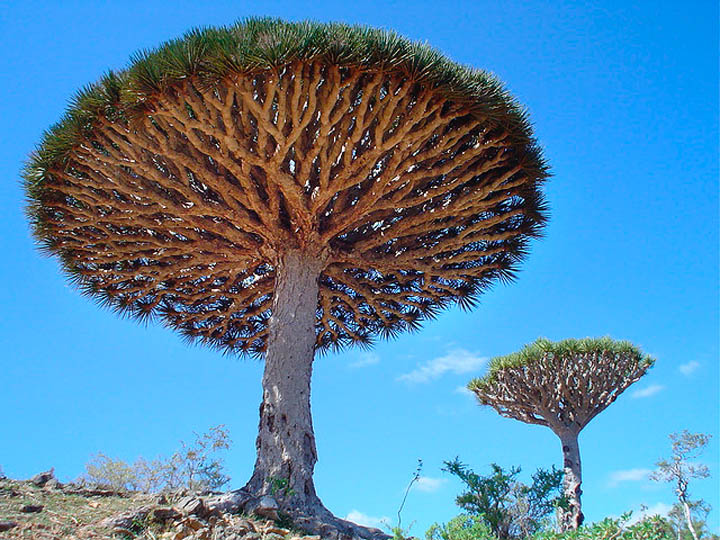
Socotra Island, part of Yemen, hosts the iconic Dragon’s Blood Tree (Dracaena cinnabari). Its red resin, oozing from the trunk or branches when injured, resembles blood or tears—earning poetic “crying” descriptions in folklore and media. This umbrella-shaped tree is a symbol of Socotra’s otherworldly biodiversity.
Botanical Wonders of the Dragon’s Blood Tree
Dracaena cinnabari features a thick trunk, dense crown of sword-like leaves, and inverted umbrella shape adapted to capture fog moisture in arid conditions. Endemic to Socotra’s limestone plateaus, it grows slowly (up to 10m tall, centuries-old specimens). The “tears” are dragon’s blood resin—a bright red sap rich in dracoresinotannol—exuded when bark is cut or damaged. It hardens into a resin used historically as varnish, dye, medicine, and incense.
Legends, History, and Cultural Significance
Ancient Greeks/Romans called it “dragon’s blood” from myths of dragon-elephant battles staining the earth red. In Yemeni/Socotri culture, it’s medicinal (wound healing, anti-inflammatory, dye for pottery/textiles) and mystical. Locals tap trees sustainably for resin. The tree appears in literature and art as a “weeping” or sacred guardian.
Ecology and Unique Adaptations of Socotra
Socotra, a UNESCO site, has high endemism (37% plants unique). Dragon’s blood trees stabilize soil, provide shade/microhabitats, and indicate healthy fog-dependent ecosystems. They face threats from overgrazing (goats eat seedlings), climate change (reduced fog/rain), and development. Conservation includes protected areas and community replanting.
Scientific Research and Modern Uses
Studies reveal the resin’s antimicrobial, antioxidant properties for potential pharmaceuticals/cosmetics. Resin chemistry helps understand ancient trade routes (exported to Europe/Asia). Climate models use tree rings/age for paleoclimate data.
Visiting Socotra: Practical Tips and Responsible Tourism
Access via flights from mainland Yemen or Abu Dhabi; permits required. Best season October-April. Hire local guides; respect culture (conservative dress, no solo travel). Support eco-lodges and avoid damaging trees. Combine with visits to other endemics like bottle trees or beaches.
Comparisons and Similar “Crying” Phenomena
Similar resin-oozing trees exist (e.g., mastic tree “weeping tears,” South African Euphorbia “crying tree”), but Dragon’s Blood is uniquely dramatic and iconic to Yemen’s Socotra.
In conclusion, the “crying” Dragon’s Blood Tree encapsulates Socotra’s fragile beauty, ancient mysteries, and urgent conservation needs. Its oozing sap connects botany, culture, and history in a mesmerizing natural phenomenon.
