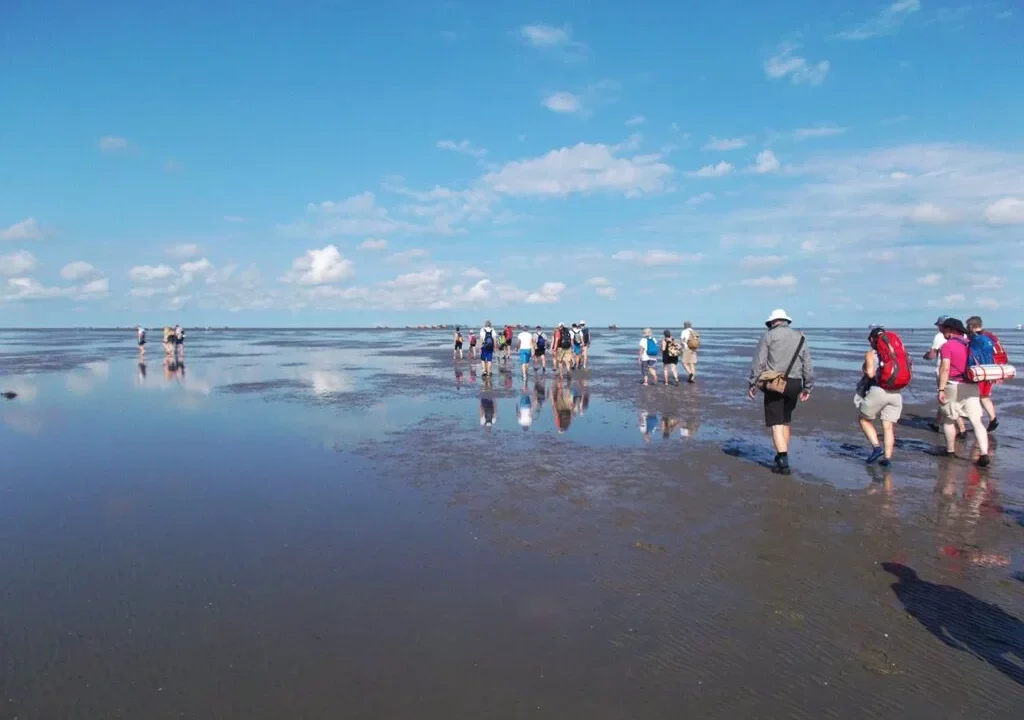
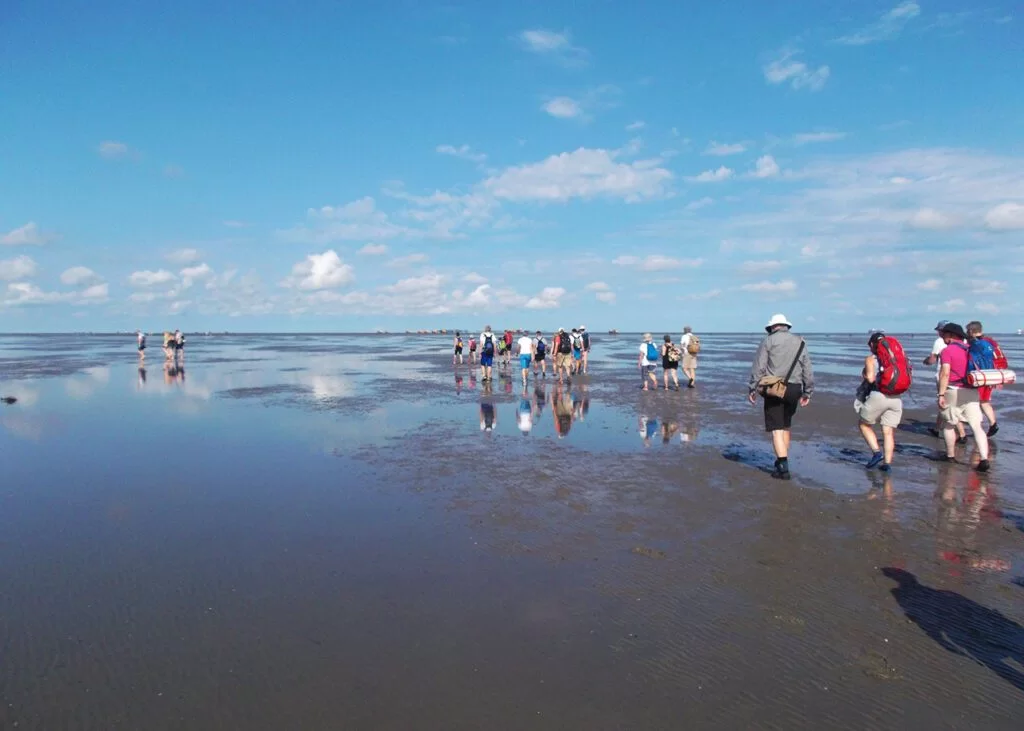
The Cuxhaven mudflats in Lower Saxony are part of the Wadden Sea, Europe’s largest tidal flat system, where low tide reveals kilometers of mud, sand, and channels teeming with marine life like crabs, worms, and seals. This UNESCO World Heritage site allows guided “mud walks” (Wattwanderungen) to explore the exposed seabed. Among unique German coastal phenomena, Cuxhaven’s mudflats stand out for their vast, interactive ecosystem and the thrill of walking where the sea was hours before.
The Tidal Dynamics of Cuxhaven Mudflats
The tides retreat up to 10 km twice daily, exposing a nutrient-rich habitat that supports millions of migratory birds. The mud’s quicksand-like texture requires guides to navigate safely, revealing hidden tide pools and fossil-like impressions.
What Makes Cuxhaven Mudflats Unique?
The scale and accessibility from Cuxhaven’s Duhnen beach allow barefoot exploration of a “seafloor safari” with expert guides. It’s a biodiversity hotspot, with rare plants and the chance to see harbor seals lounging on sandbanks, setting it apart from typical beaches.
Tips for Exploring Cuxhaven Mudflats
Join certified tours from Cuxhaven harbor (book ahead, tides-dependent). Wear water shoes and quick-dry clothes; summer is best for warmth. Combine with the Alte Liebe pier or a ferry to Neuwerk Island for extended adventures.
Ultimately, Cuxhaven mudflats offer one of Germany’s most hands-on and ephemeral unique natural experiences, ideal for eco-tourists and families discovering tidal wonders.
