



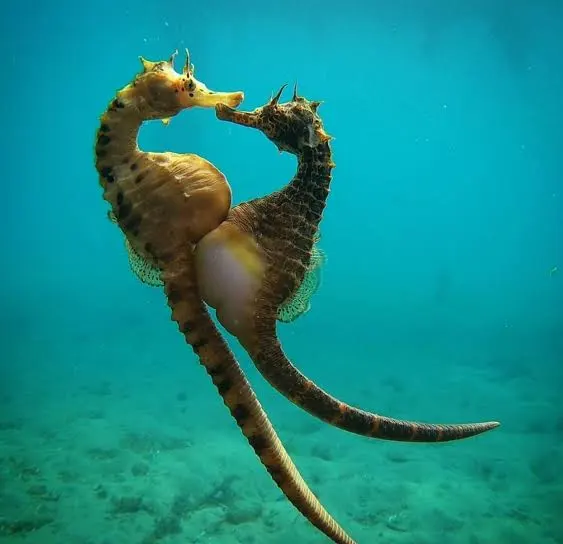
In the underwater realm, few creatures captivate like the seahorse, especially the males who defy traditional gender roles by becoming pregnant. With their transparent skin revealing developing embryos, these marine marvels offer a glimpse into evolutionary innovation. This in-depth article explores the biology, reproduction, habitat, threats, and scientific insights of pregnant male seahorses, shedding light on why they remain one of nature’s most intriguing animals.
Understanding Seahorse Anatomy: The Transparent Skin Phenomenon
Seahorses (genus Hippocampus) are small fish with horse-like heads, curled tails, and bony plates instead of scales. Their skin is often semi-transparent, allowing visibility of internal structures, particularly in species like the pot-bellied seahorse (Hippocampus abdominalis). This transparency aids in camouflage among seagrasses and corals, blending with surroundings through color changes.
The male’s brood pouch, located on the abdomen, is a key feature. During pregnancy, the pouch’s skin thins, becoming almost see-through to reveal hundreds of tiny embryos. This adaptation not only protects but also nourishes the young, functioning like a mammalian placenta.
The Unique Reproduction Process: Males Take the Lead
Unlike most animals, male seahorses and their relatives (pipefish and sea dragons) carry and birth offspring. Courtship involves elaborate dances where the female deposits up to 1,500 eggs into the male’s pouch via an ovipositor. The male fertilizes them internally, and the pouch seals with a protective skin layer.
Pregnancy lasts 10-25 days, depending on species and water temperature. The pouch provides oxygen, nutrients, and waste removal through vascular tissues that expand into placenta-like structures. Hormones like prolactin regulate this, mirroring mammalian pregnancy. Birth involves muscular contractions, expelling fully formed fry that are independent from day one.
This role reversal evolved for better offspring survival in predator-rich environments, allowing females to produce more eggs while males nurture.
Habitat and Behavior: Life in Shallow Seas
Seahorses inhabit tropical and temperate coastal waters worldwide, from the Indo-Pacific to the Atlantic. They prefer seagrass beds, mangroves, and coral reefs, using their prehensile tails to anchor against currents. Their upright posture and slow swimming (using dorsal fins) make them ambush predators, sucking in tiny crustaceans with tubular snouts.
Monogamy is common; pairs greet daily with dances to reinforce bonds. Transparent skin helps in mate recognition and threat assessment. In pregnancy, males become less mobile, relying on camouflage to avoid predators like fish and crabs.
Scientific Insights: Immune Adaptations and Model for Research
Male pregnancy in seahorses serves as a model for studying human reproduction and immunology. The pouch develops immune tolerance to prevent rejecting embryos, similar to mammalian uteruses. Research shows gene expressions for nutrient transport and osmoregulation, adapting to salinity changes.
Environmental factors like pollution affect pregnancy success, making seahorses indicators of ocean health. Studies reveal how males supply calcium and lipids to embryos via pouch fluids.
Threats and Conservation: Protecting These Delicate Creatures
Seahorses face habitat loss from coastal development, overfishing for traditional medicine, and climate change. Many species are listed as vulnerable by IUCN. Aquaculture and protected areas help, but illegal trade persists.
Efforts include breeding programs in aquariums, like the New York Aquarium, to study and conserve them. Public awareness about their unique biology can drive conservation.
Why Male Pregnancy Matters: Evolutionary and Cultural Perspectives
This adaptation challenges gender norms in biology, inspiring discussions on parental roles. Culturally, seahorses symbolize patience and protection in folklore.
In summary, the transparent-skinned pregnant male seahorse exemplifies nature’s ingenuity. From pouch placentas to immune feats, they offer lessons for science and conservation. Dive deeper into marine biology to appreciate these wonders perhaps visit an aquarium to see them up close.
