




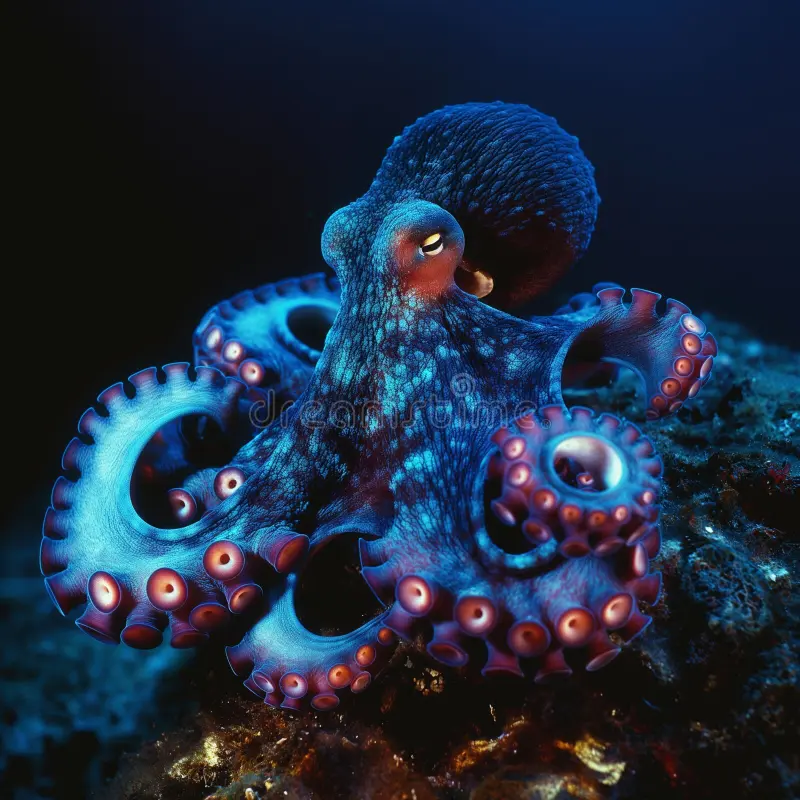
The neon octopus, a fascinating creature of the deep sea, has captivated scientists and nature enthusiasts alike with its ability to “glow” or shift colors in mere seconds when under stress. This remarkable adaptation not only serves as a defense mechanism but also highlights the intricate biology of cephalopods. In this article, we’ll dive into the world of the neon octopus, exploring its unique pigments, behavioral responses, and the science behind its rapid color changes. Whether you’re searching for “neon octopus color shift” or “animals that glow under stress,” this guide provides in-depth insights into one of nature’s most colorful spectacles.
Understanding the Neon Octopus and Its Habitat
The neon octopus, often referred to in scientific circles as species like the Greater Blue-Ringed Octopus (Hapalochlaena lunulata) or similar bioluminescent cephalopods, inhabits coral reefs and rocky crevices in tropical oceans, particularly around the Indo-Pacific region. These octopuses are small, typically measuring up to 20 cm in arm span, but what they lack in size, they make up for in vibrancy. Their skin is embedded with specialized cells called chromatophores, which contain pigments that expand or contract to alter color.
When stressed whether by predators, environmental changes, or human interaction the octopus activates these chromatophores. The shift can turn their body from a camouflage brown to a brilliant neon blue or yellow, often accompanied by iridescent rings that pulse like a warning signal. This isn’t true bioluminescence (light produced chemically) but rather biofluorescence or rapid pigmentation changes that reflect light in a glowing manner under certain conditions.
Studies from marine biologists at institutions like the Monterey Bay Aquarium Research Institute reveal that this color shift occurs in seconds due to neural signals from the octopus’s brain. The pigments, primarily melanin and other reflective proteins, allow the octopus to communicate danger or blend into surroundings. For SEO purposes, if you’re looking for “neon octopus stress response,” note that this behavior is evolutionary, helping the creature evade threats like fish or sharks.
The Science Behind the Color Shift
Delving deeper into the biology, the neon octopus’s pigments are housed in elastic sacs within the chromatophores. When the octopus senses stress via vibrations, chemical cues, or visual threats muscles around these sacs contract, spreading the pigment and creating vivid displays. This process is incredibly energy-efficient, allowing changes in under a second.
Researchers have observed that under ultraviolet light, some octopuses exhibit true fluorescence, where absorbed light is re-emitted at a different wavelength, making them appear to glow. A 2020 study published in the Journal of Experimental Biology detailed how the neon octopus’s skin contains fluorophores that enhance this effect, particularly in low-light deep-sea environments.
This adaptation isn’t just for show; it’s a survival tool. The sudden color change can startle predators, giving the octopus time to ink and escape. For those interested in “octopus pigments shift color,” it’s worth noting that this capability extends to mood expression and mating rituals, where softer glows attract partners.
In captivity, aquariums simulate stress to study these shifts, but ethical concerns emphasize minimal disturbance. Conservation efforts focus on protecting habitats from pollution and overfishing, as these affect the octopus’s ability to thrive.
Evolutionary Advantages and Comparisons
Evolutionarily, the neon octopus’s stress-induced glow parallels other animals like chameleons or cuttlefish, but its speed is unparalleled. Fossil records suggest cephalopods developed this trait over 300 million years ago, adapting to predatory pressures in ancient oceans.
Comparatively, while fireflies glow for attraction, the octopus’s glow is defensive. This makes it a prime subject for biomimicry in technology, inspiring flexible displays and camouflage materials for military use.
For “animals that glow under stress,” the neon octopus stands out due to its instantaneous response. Environmental stressors like ocean acidification could impair this ability, highlighting the need for marine conservation.
Human Interactions and Conservation
Humans have long been intrigued by these creatures, featuring them in documentaries and art. However, handling them can induce stress, leading to venomous bites in species like the blue-ringed octopus, which carries tetrodotoxin.
Conservation groups like the Ocean Conservancy advocate for sustainable practices to preserve these habitats. If you’re planning a dive to see neon octopuses, choose eco-friendly tours that minimize stress to the animals.
In summary, the neon octopus’s ability to shift colors under stress is a marvel of nature, blending science, survival, and spectacle. With ongoing research, we continue to uncover the secrets of this glowing guardian of the seas.
