



A Window into Earth’s Deep Past
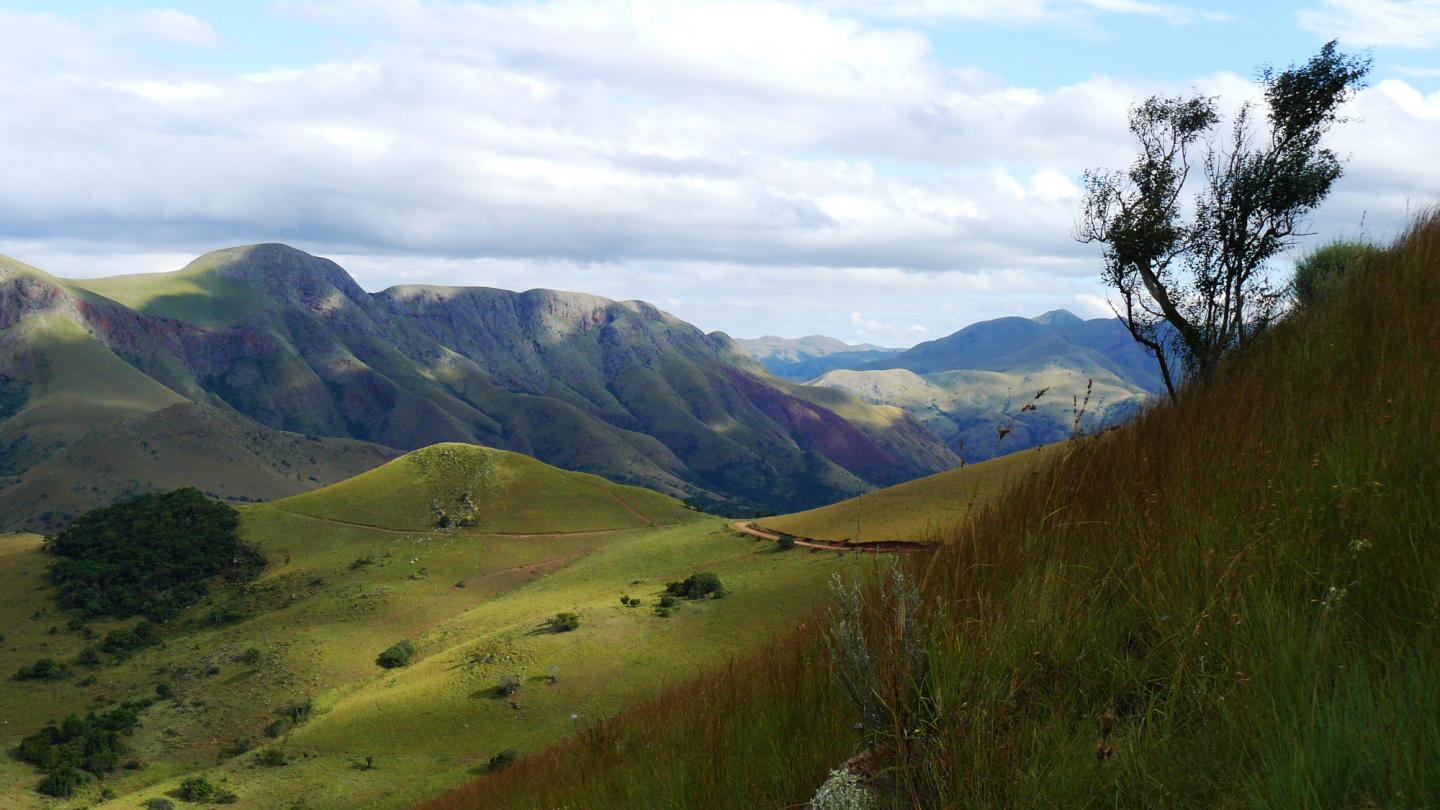
Hidden in eastern South Africa and Eswatini lies one of the most extraordinary geological regions on the planet, the Barberton Greenstone Belt. Often described as containing some of the oldest exposed rocks on Earth, this mountainous area preserves a record of our planet’s surface more than three billion years ago.
For geologists, Barberton is not just a mountain range. It is a natural archive of Earth’s infancy.
What Is a Greenstone Belt
Greenstone belts are ancient zones of volcanic and sedimentary rock formed during the Archean Eon. Over billions of years, tectonic forces folded and uplifted these layers, exposing them at the surface.
The Barberton belt includes:
- Basaltic lava flows
- Volcanic ash layers
- Sandstones and shales
- Early chemical sediments
Together they create a layered geological story stretching back to the dawn of continents.
How Old Are the Barberton Rocks
Some formations date to about 3.6 billion years old. These rocks formed when Earth’s crust was thin, meteorite impacts were common, and the atmosphere lacked oxygen.
Preserved structures such as ripple marks and volcanic pillows suggest the presence of ancient oceans, making Barberton vital for understanding early environments.
Clues to the First Life
Barberton hosts microfossils and chemical signatures that hint at some of the earliest biological activity on Earth.
Scientists examine carbon isotopes and stromatolite like structures to infer:
- Primitive microbial communities
- Shallow marine ecosystems
- Early photosynthesis processes
These clues help reconstruct how life emerged on a young and hostile planet.
Why the Region Survived
Most ancient crust has been recycled by tectonics, but Barberton avoided complete destruction due to relatively stable continental blocks. This geological stability allowed fragile structures to survive for billions of years.
Modern Research and Tourism
The area attracts scientists worldwide and has become a destination for geotourism. Guided tours and museums introduce visitors to ancient lava flows, folded rock layers, and fossil bearing formations.
Conservation efforts aim to protect these irreplaceable geological archives from mining damage or erosion.
The Barberton Greenstone Belt stands as a monument to Earth’s deep time. Its ancient mountains allow humanity to glimpse a world that existed billions of years before complex life evolved.
