




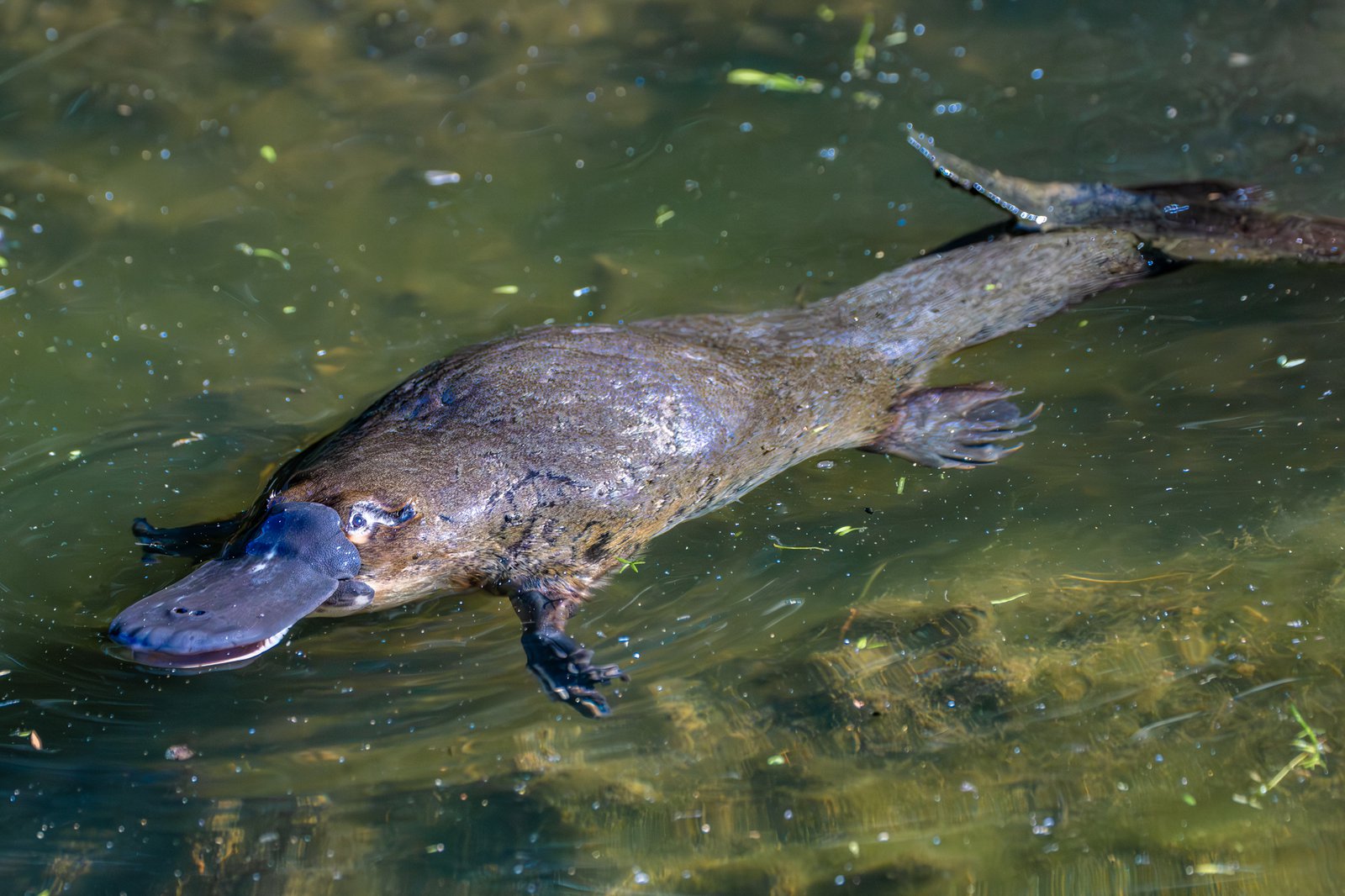
The male platypus is one of the most unusual animals on Earth. Known for its duck like bill, webbed feet, and ability to lay eggs, this Australian mammal has another rare feature that sets it apart from almost all others. The male platypus is venomous. It carries sharp spurs on its hind legs that can inject venom, making it one of the very few venomous mammals in the world.
What Makes the Male Platypus Venomous
Unlike snakes or spiders that use fangs, the male platypus delivers venom through a pair of spurs located on its back ankles. These spurs are connected to venom glands in the thighs. When threatened or during competition, the platypus can swing its hind legs and drive the spur into its opponent, releasing venom directly into the wound.
Only male platypuses possess these venomous spurs. Females are born with spurs as well, but they fall off before adulthood. The venom system becomes most active during the breeding season, suggesting it plays an important role in mating competition rather than hunting.
How Dangerous Is Platypus Venom
Platypus venom is not known to be fatal to humans, but it can cause intense pain and severe swelling. Victims often describe the pain as extreme and long lasting, sometimes resistant to standard painkillers. The venom can also cause muscle damage and heightened sensitivity around the affected area for weeks.
For smaller animals and rival male platypuses, the venom can be far more serious. It is believed to be an effective tool for establishing dominance and defending territory during breeding periods.
The Purpose of Venom in Platypuses
Scientists believe the venomous spurs evolved primarily for competition between males. During the breeding season, male platypuses fight for access to females. The spurs give them a powerful advantage in these encounters, allowing them to injure rivals without causing fatal damage.
This makes the platypus venom system unique among mammals. Instead of being used for predation or defense against predators, it is mostly a tool for reproductive competition.
Anatomy of the Venomous Spurs
The spurs of a male platypus are curved, sharp, and capable of controlled movement. Muscles in the hind legs allow the animal to rotate the spurs outward when needed. When the spur penetrates the skin, venom flows through a groove in the spur rather than being injected through a hollow needle.
The venom itself is a complex mixture of proteins and peptides. Some of these components are similar to toxins found in reptiles, while others are unique to the platypus, making it of great interest to medical researchers.
Habitat and Behavior of the Platypus
Platypuses live in freshwater rivers and streams in eastern Australia and Tasmania. They are semi aquatic mammals, spending much of their time swimming and hunting underwater. They feed on insects, larvae, worms, and small crustaceans, using their sensitive bills to detect electrical signals from prey.
Despite their venomous ability, platypuses are generally shy and avoid humans. Encounters resulting in venom injection are rare and usually occur when an animal is handled or accidentally stepped on.
Evolutionary Significance
The male platypus offers valuable insight into mammalian evolution. As a monotreme, it belongs to a small group of egg laying mammals that split from other mammals very early in evolutionary history. The presence of venom suggests that early mammals may have experimented with a wider range of survival strategies than those seen today.
Studying platypus venom may also help scientists develop new pain treatments and medical therapies, as some venom components interact directly with the nervous system.
Why the Male Platypus Is Truly Unique
The combination of egg laying, electroreception, and venomous spurs makes the male platypus one of the most extraordinary mammals alive. No other mammal combines these features in the same way. Its venomous spurs are a reminder that mammals can still surprise us with traits more commonly associated with reptiles.
Conclusion
The male platypus is far more than a curious looking animal. As one of the only venomous mammals, it represents a rare and fascinating branch of evolution. With its venomous spurs used for competition rather than hunting, the platypus challenges common ideas about how venom is used in the animal kingdom. This remarkable creature continues to capture the attention of scientists and wildlife enthusiasts around the world.
