




The star-nosed mole, a small yet extraordinary mammal, boasts one of the animal kingdom’s most bizarre and efficient sensory organs: a star-shaped nose with 22 ultra-fast tentacles. Native to eastern North America’s wetlands, this creature redefines touch sensitivity. This in-depth article uncovers its anatomy, behaviors, evolutionary advantages, and ecological role, highlighting why it’s a neurological wonder.
Anatomy of the Star: 22 Tentacles and Eimer’s Organs Explained
At the heart of the star-nosed mole’s prowess is its nose, a fleshy star composed of 22 mobile appendages, or rays, encircling its nostrils. Each tentacle, measuring 0.25 to 0.5 inches, is covered in over 25,000 microscopic sensory receptors called Eimer’s organs—tiny domes packed with nerve endings. These organs total more than 100,000 nerve fibers, making the nose five times more sensitive than a human hand. The central tentacles are shortest and most sensitive, while outer ones extend for broader exploration.
The mole’s body complements this: hamster-sized at 6-8 inches long, with large forepaws for digging, tiny eyes for near-blindness, and a long tail for balance. Its fur is water-repellent, aiding aquatic foraging. Neurologically, a large portion of its brain processes touch data from the star, creating a “tactile map” mirrored in neural structures. This setup allows the tentacles to move at blurring speeds, touching up to 12 objects per second.
Hunting and Foraging: The Fastest Eater in the Mammal World
Functionally blind, the star-nosed mole relies on its nose for navigation and predation in dark, muddy habitats. The tentacles writhe constantly, scanning soil or water for prey like worms, insects, and small crustaceans. It holds the Guinness World Record as the fastest-eating mammal, identifying, capturing, and consuming food in as little as 120 milliseconds—faster than a blink. Decisions on edibility occur in 8 milliseconds, pushing neural limits.
In water, the mole exhales bubbles to “sniff” underwater, re-inhaling them for scent traces a unique adaptation among mammals. It consumes 50% of its body weight daily, using the star to detect vibrations and textures. High-speed videos show tentacles pressing against potential food 10 times per second, enabling precise strikes. This efficiency suits its high-metabolism lifestyle, where it digs extensive tunnels up to 270 meters per day.
Evolutionary Adaptations and Survival Strategies
Evolving from typical moles, the star-nosed mole’s nose represents specialization for wetland niches. Eimer’s organs, first noted in 1871, are unique but most advanced here. The star acts like a “hand on the face,” with tentacles functioning as fingers for tactile “vision.” In cold winters, the mole keeps its nose warm to maintain sensitivity, burrowing deeper or swimming under ice.
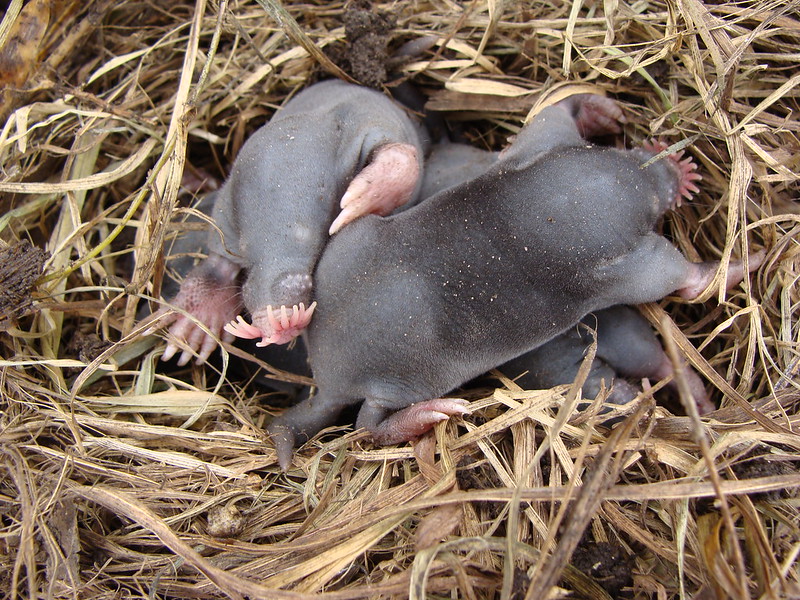
Predator evasion involves rapid burrowing and swimming; it’s an excellent swimmer, using its star to navigate currents. Breeding occurs in spring, with litters of 2-7 young born blind and tentacle-less, developing the star within weeks. Socially solitary, moles mark territories with scents, but share tunnels in winter for warmth.
Ecological Role and Conservation Status
As insectivores, star-nosed moles control pest populations and aerate soil, enhancing wetland health. They bridge terrestrial and aquatic ecosystems, preying on both land and water invertebrates. However, habitat loss from development and pollution threatens them, though they’re currently listed as least concern by IUCN.
Research on their neurology inspires prosthetics and robotics, mimicking the star’s sensitivity for touch-based tech. In captivity, they thrive in moist enclosures, providing data on sensory evolution.
Myths, Fun Facts, and Future Research
Myths portray them as “ugly,” but their star is a beauty of function. Fun fact: The nose’s neural links outnumber those in human fingertips, making it the most acute touch organ. Ongoing studies explore how climate change affects their habitats, potentially altering foraging patterns.
The star-nosed mole exemplifies nature’s innovation, turning a quirky feature into a survival masterpiece. Its 22 tentacles remind us of biodiversity’s hidden gems, urging conservation of wetlands.
