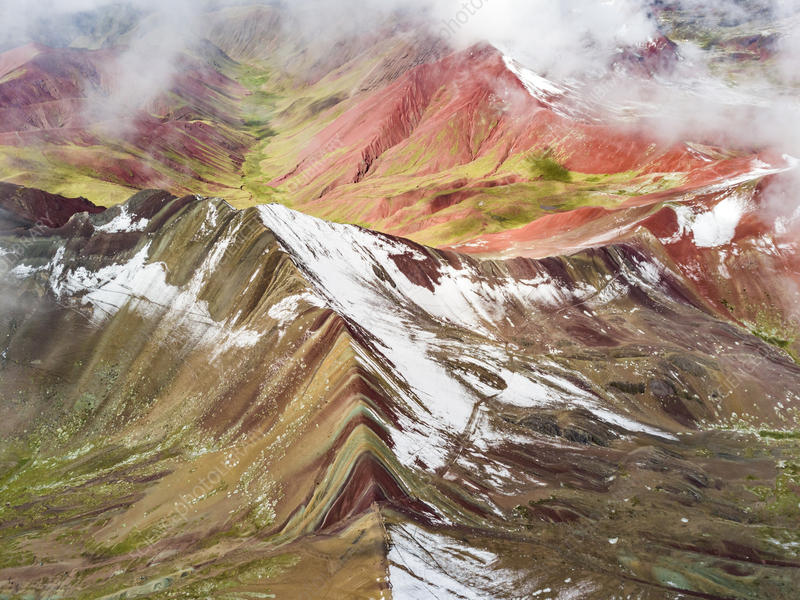
Three Colored Mountain in Peru, widely known as Vinicunca or Rainbow Mountain, is one of the most visually striking natural formations in the world. Located in the Andes near Cusco, this mountain attracts thousands of travelers every year who are eager to witness its layered colors created by minerals in the soil. Its unique appearance, high altitude, and breathtaking landscape make it one of Peru’s most iconic travel destinations.
What Makes Vinicunca Unique
Vinicunca stands out because of its vibrant stripes that appear to paint the mountain in shades of red, yellow, green, blue, and purple. These colors are a result of sedimentary mineral layers that have been exposed over time due to erosion and climate changes.
- Red comes from iron oxide
- Yellow comes from iron sulfide
- Green comes from chlorite
- Brown and purple tones are created by rock and clay mixes
This natural palette gives Vinicunca a surreal appearance that looks almost unreal. No filters or editing are needed because the colors are naturally intense, especially on sunny days.
Location and How to Get There
Vinicunca is situated around 100 kilometers southeast of Cusco, the gateway city to Machu Picchu and other popular Peruvian attractions. Reaching the mountain requires a combination of travel steps:
- A two to three hour drive from Cusco to the trailhead
- A trek that usually takes one to two hours, depending on the route
- An ascent to an elevation of around 5,000 meters above sea level
The high altitude makes the hike challenging for some travelers, so proper preparation and acclimatization in Cusco are highly recommended before attempting the trek.
The Best Time to Visit
The dry season, which lasts from May to September, is the ideal time to visit Rainbow Mountain. During these months, the skies are clear and the colors are more visible. The rainy season can cause cloud cover and muddy paths which may reduce visibility. Early morning visits are also recommended to avoid crowds and enjoy the most dramatic light conditions.
Trekking Experience and What to Expect
Visitors usually start the trek early in the morning. The trail offers views of rolling hills, local alpacas, and snow capped peaks, creating a picturesque environment even before arriving at the colorful mountain. The trek is not extremely steep, but the altitude can make it feel intense. Many travelers take short breaks along the way to adjust to the thin air.
Upon reaching the main viewpoint, the sight of Vinicunca’s striped surface makes the journey worthwhile. The panoramic views of the Andes combined with the colors of the mountain create a memorable experience that keeps visitors taking photos for hours.
Local Culture and Surrounding Communities
The area around Vinicunca is home to traditional Andean communities. Visitors often encounter locals dressed in colorful weaving patterns, herding alpacas, or selling handmade crafts. Their presence adds cultural richness to the trip.
Many tours that include Rainbow Mountain also offer insights into local traditions, such as Andean rituals and weaving demonstrations. This makes the journey both culturally and visually rewarding.
Environmental Protection and Sustainability
Tourism at Vinicunca has increased significantly in the past decade, raising concerns about preserving the fragile mineral layers that create the mountain’s colors. Travelers are encouraged to follow sustainable practices such as:
- Staying on designated trails
- Avoiding contact with the mountain slopes
- Supporting local guides and community operated tours
- Avoiding littering or causing erosion
These simple steps help protect the mountain for future visitors.
Why Vinicunca Should Be on Your Travel List
Three Colored Mountain is not only a visual spectacle but also an adventure that connects travelers with Andean nature and culture. The combination of colorful geology, high altitude excitement, and local traditions makes it a bucket list destination in Peru.
Whether you are a photographer, a nature lover, or a traveler seeking unique landscapes, Vinicunca offers scenery unlike anywhere else on Earth.
