Lebanon’s cultural heritage is a mosaic of ancient crafts and communal traditions that have endured through centuries. In the northern city of Tripoli, traditional soap making stands out as a unique artisanal practice, blending natural ingredients like olive oil with time-honored techniques. Known as “Saboun Baladi,” this craft not only produces high-quality, natural soaps but also symbolizes purity, family legacy, and economic resilience in Lebanese society. For those searching “traditional Lebanese soap making” or “Tripoli Lebanon crafts,” this tradition offers a window into the country’s rich history of handmade goods and sustainable practices.
The Origins and History of Traditional Soap Making in Tripoli
The roots of soap making in Lebanon trace back to ancient times, with influences from the Levantine region where olive oil-based soaps were first developed. In Tripoli, this tradition is believed to have gained prominence in the 14th century, when Egyptian rulers introduced soap production techniques to the area. The city’s strategic location as a trade hub during the Ottoman Empire further boosted the industry, with favorable regulations mandating the transport of alkaline ash from Syrian deserts to Tripoli’s factories. By the 17th and 18th centuries, Tripoli became one of the three historic centers of Levantine soap production, alongside Aleppo in Syria and Nablus in Palestine.
Also See : Tawleh – The Timeless Game of Backgammon in Lebanese Culture
Family-run factories like Masbanat Awaida, established in the late 19th century by Hussein Awaida, exemplify this legacy. Other notable ones, such as Sharkass Soap founded in 1803, have been passed down through generations, with seven generations of the Sharkass family continuing the craft in the same location. Historically, soap was more than a commodity; it symbolized purity and was traditionally given to brides before their weddings. The Crusaders even carried similar soaps back to Europe in the 11th century, spreading the technique across the Mediterranean. In the 19th century, factories like Sadik Adra’s, founded in the 1890s, churned out soaps for over a century, surviving civil wars and economic shifts. Today, only a few remain, like Masbanat Awaida, the last of dozens that once thrived in Tripoli.
This craft’s evolution reflects Lebanon’s resilience, adapting from Ottoman-era state-run factories to modern family businesses while preserving ancient methods. In Sidon, another Lebanese city, soap making has a similar history, showcased in museums that highlight its Phoenician influences. Overall, Tripoli’s soap tradition is intertwined with regional history, from Roman times when Syrian queens like Zenobia bathed with olive oil soaps.
The Process of Traditional Soap Making
Traditional soap making in Tripoli follows a meticulous, hot-process method passed down through generations. It begins with mixing olive oil, water, and sodium hydroxide (derived from alkaline ash) in large cauldrons, heated for hours to create a saponified mixture. Laurel oil or other natural scents are added for fragrance, and the blend is stirred continuously to ensure even consistency. The process occurs between November and March to leverage cooler weather for better setting.
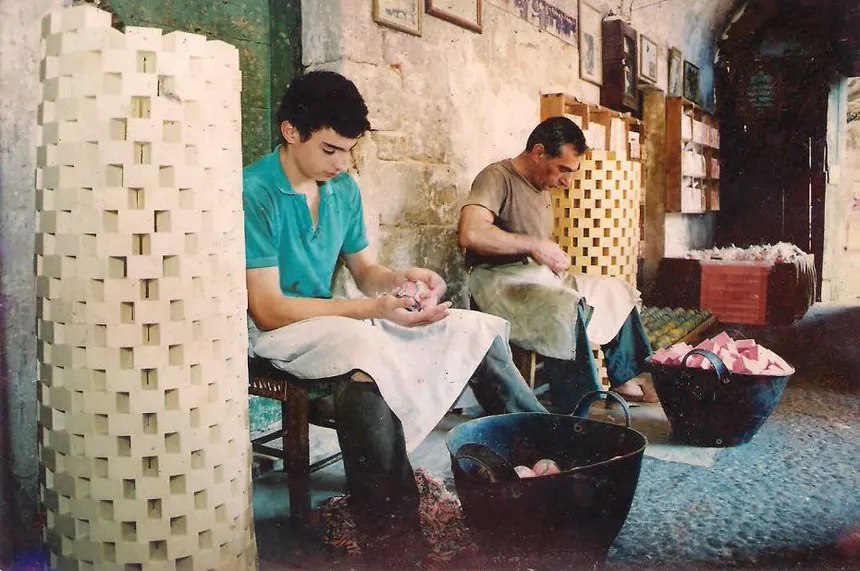
Once thickened, the mixture is poured into molds or spread on floors to cool and harden into large blocks. After days of curing, artisans hand-cut the blocks into bars using simple tools, often stamping them with family seals. In factories like Sharkass, various styles scented with rose, lavender, or plain olive—are produced by hand. The entire process can take weeks, emphasizing natural ingredients without chemicals, resulting in hypoallergenic soaps ideal for sensitive skin. Women often create recipes, while men handle the physical execution, making it a gendered yet collaborative family effort.
Tools include copper pots, wooden molds, and basic cutters, with some factories using historic khans (caravanserais) as workshops. The result is stacked in iconic towers for drying, a visual hallmark of Tripoli’s soap khans.
The Cultural Significance of Soap Making in Lebanese Society
Soap making in Tripoli is more than a craft; it’s a symbol of purity, heritage, and community. Historically tied to rituals like bridal gifts, it represents cleanliness and new beginnings. In Lebanese culture, olive oil soap embodies authenticity and is linked to mythological tales and royal uses, like Queen Zenobia’s baths. It fosters family bonds, with generations working together, preserving knowledge amid modernization.
Economically, it supported trade, with soaps exported alongside silk and sugar. Culturally, it’s part of Lebanon’s intangible heritage, similar to Aleppo soap, and is celebrated in museums like Sidon’s Soap Museum. Amid crises, it represents resilience, as factories like Sad Ein preserve traditions despite building decay.
Traditional Soap Making in Modern Lebanon “Challenges and Revival”
Today, Tripoli’s soap makers face economic crises, competition from industrial products, and building preservation issues. Yet, factories like Masbanat Awaida produce 30,000 bars annually, adapting with aggressive marketing. The focus on natural, organic soaps appeals to global markets, emphasizing sustainability. UNESCO recognition of similar traditions boosts tourism, with visitors exploring historic khans.
Social media and documentaries highlight the craft, attracting eco-conscious consumers. Despite fewer factories, the tradition endures as a beacon of Lebanese pride. For those interested in “Lebanese artisanal soaps,” Tripoli’s soap making invites exploration of this enduring cultural gem.
