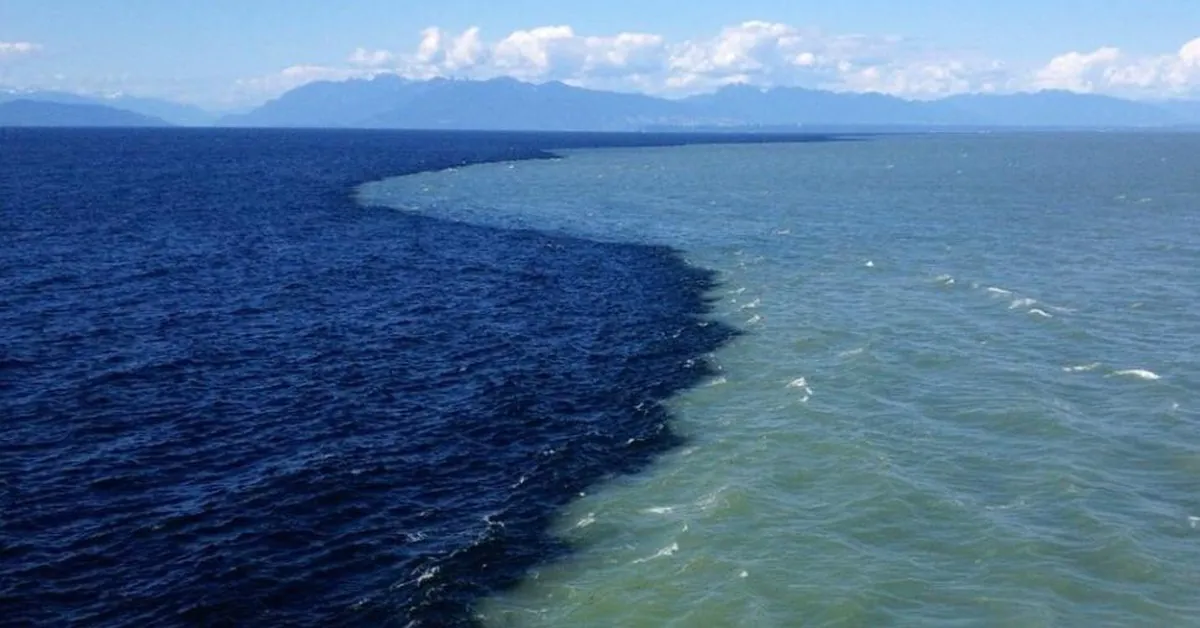
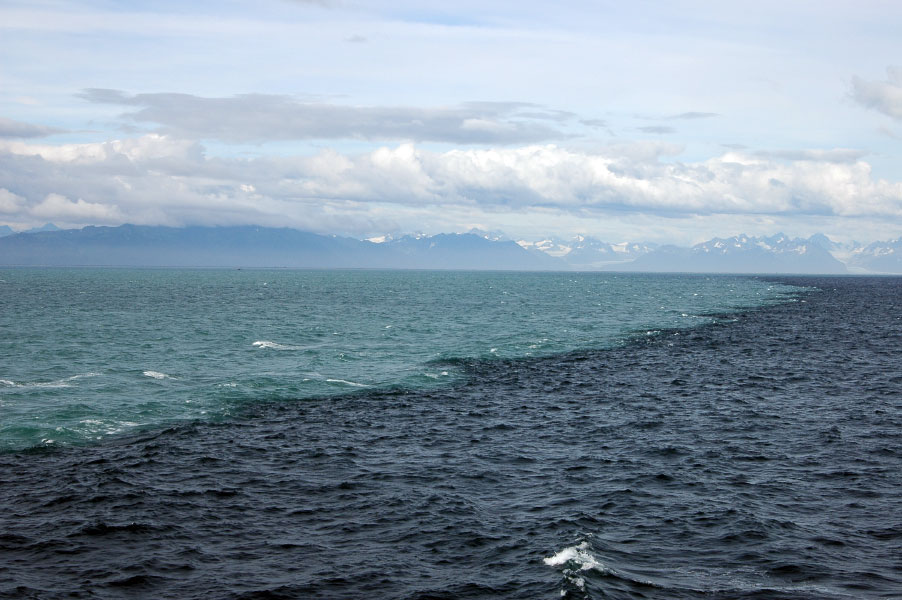
The Gulf of Alaska is home to one of nature’s most mesmerizing sights: a two colored sea where vibrant turquoise or milky glacial meltwater appears to meet the deep blue Pacific Ocean without mixing, creating a sharp, dramatic boundary line. Often mistakenly called the “place where two oceans meet,” this viral phenomenon is actually caused by heavy sediment-laden freshwater from melting glaciers clashing with saltwater.
Why Does the Sea Appear Two Colored in Alaska?
The striking color division occurs when glacial meltwater rich in fine silt known as “glacial flour” (rock ground into powder by glaciers) flows into the ocean via rivers like the Copper River. This lighter, sediment-heavy freshwater is less dense than the salty ocean water, causing it to float on top temporarily and resist immediate mixing.
Differences in density, temperature, salinity, and sediment load create a visible barrier (halocline). Over time, currents and eddies do mix the waters, but the effect can last long enough for breathtaking photos.
Phytoplankton blooms can sometimes enhance the turquoise hues by thriving on iron-rich glacial nutrients.
Location The Gulf of Alaska
This phenomenon is most prominent in the Gulf of Alaska, off southern Alaska’s coast near Prince William Sound and the Copper River delta. It’s visible from cruise ships, ferries, or flights, especially in summer when glacial melt is highest. Strong winds can even blow glacial dust plumes over the sea, adding to the spectacle.
Debunking the Myth Not Two Oceans Meeting
Contrary to viral claims, this isn’t the Atlantic and Pacific (or any two oceans) refusing to mix due to insurmountable differences. It’s all within the Pacific Ocean one side oceanic saltwater, the other glacial freshwater runoff. The “permanent barrier” idea is false; mixing occurs gradually.
Fun Facts About Alaska’s Two-Colored Sea
- The Copper River alone delivers massive sediment loads, turning nearby waters opaque.
- Iron from glacial flour fertilizes ocean areas, boosting phytoplankton and marine life.
- Similar effects occur worldwide (e.g., Amazon River plume), but Alaska’s is iconic for its clarity.
- Best viewed on Alaska Marine Highway ferries or glacier cruises.
If you’re searching for Alaska natural wonders or unique ocean phenomena, the Gulf of Alaska’s two-colored sea is a must-see optical illusion born from glaciers and currents. A true reminder of nature’s raw beauty!
