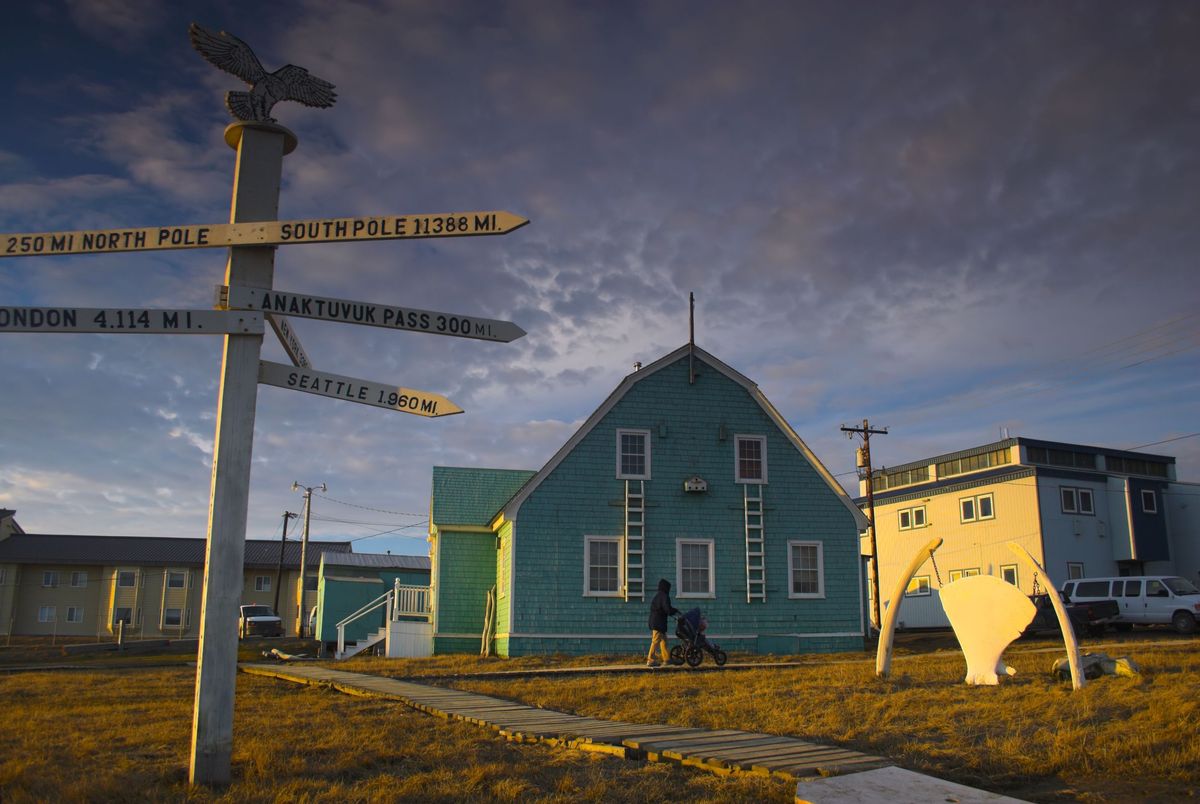
Utqiagvik, formerly known as Barrow, is a small city located at the northernmost point of the United States. This remote Arctic community is famous for a rare natural phenomenon that makes it stand out from cities anywhere else in the world. For part of the year, Utqiagvik never experiences darkness at all. The sun stays above the horizon day and night, creating continuous daylight that lasts for weeks. This phenomenon is known as the midnight sun and it defines life in this extraordinary city.
Where Utqiagvik Is Located
Utqiagvik lies above the Arctic Circle on the northern coast of Alaska, bordering the Arctic Ocean. Its extreme latitude places it in a region where Earth’s tilt has a dramatic effect on sunlight. During summer months, the North Pole is tilted toward the sun, allowing places like Utqiagvik to receive nonstop daylight. The city is isolated from the rest of Alaska, with no roads connecting it to other major towns. Most travel happens by plane or sea.
Despite its remote location, Utqiagvik is home to several thousand residents, many of whom belong to the Iñupiat people. Their culture and traditions have adapted over generations to the extreme Arctic environment, including the long periods of constant light and constant darkness.
Why the Sun Never Sets
The reason Utqiagvik never gets dark during summer is due to the tilt of the Earth on its axis. The Earth is tilted about twenty three degrees, which causes different parts of the planet to receive varying amounts of sunlight throughout the year. When it is summer in the Northern Hemisphere, the Arctic region is angled toward the sun.
From around mid May to early August, the sun never drops below the horizon in Utqiagvik. Even at midnight, the sky remains bright and the landscape is illuminated by sunlight. Instead of sunsets, the city experiences slow circles of the sun across the sky, creating long golden hours that blend day and night into one continuous experience.
Life Under Constant Daylight
Living without darkness can feel strange to visitors, but local residents are used to it. During the summer months, people often adjust their routines by using blackout curtains to help with sleep. The continuous daylight allows for extended outdoor activities, including fishing, hunting and community events that last late into the night.
The never ending daylight also affects wildlife. Birds remain active longer, and plants take advantage of the extra sunlight to grow during the short Arctic summer. This burst of life is essential because the growing season is very limited in the far north.
The Other Extreme Constant Darkness
While Utqiagvik is known as the city that never gets dark, it also experiences the opposite phenomenon. During winter, the sun does not rise above the horizon for about two months. This period is called polar night. From late November to late January, the city remains in twilight or darkness, with only a faint glow during midday hours.
Residents adapt to this long darkness through artificial lighting, community gatherings and cultural traditions. The winter skies often offer a reward in the form of stunning aurora borealis displays, which dance across the dark Arctic sky in shades of green and purple.
Cultural and Historical Importance
Utqiagvik has a long history as a center of Iñupiat culture. For thousands of years, Indigenous communities have survived in this region by understanding the rhythms of light and darkness. Traditional knowledge about hunting seasons, animal behavior and weather patterns is closely tied to the movement of the sun.
The city officially changed its name from Barrow to Utqiagvik in 2016 to reflect its original Iñupiat name. The name means a place for gathering wild roots and it honors the cultural heritage of the local people.
Scientific Research and Climate Studies
Utqiagvik plays an important role in climate and Arctic research. Because of its location, scientists study changes in sea ice, permafrost and atmospheric conditions from this area. The long periods of daylight and darkness provide valuable data for understanding how sunlight affects temperature and ecosystems in polar regions.
Research conducted in Utqiagvik helps scientists track the effects of climate change, particularly the rapid warming occurring in the Arctic. The city serves as a key observation point for understanding global environmental shifts.
A City Like No Other
Utqiagvik is more than just a place where the sun never sets. It is a city shaped by extreme natural cycles, rich cultural traditions and a deep connection to the Arctic environment. The experience of continuous daylight challenges common ideas of time and routine, reminding visitors of how powerful and unusual Earth’s natural systems can be.
As the northernmost city in the United States, Utqiagvik stands as a remarkable example of how humans can adapt to some of the most extreme conditions on the planet.
