




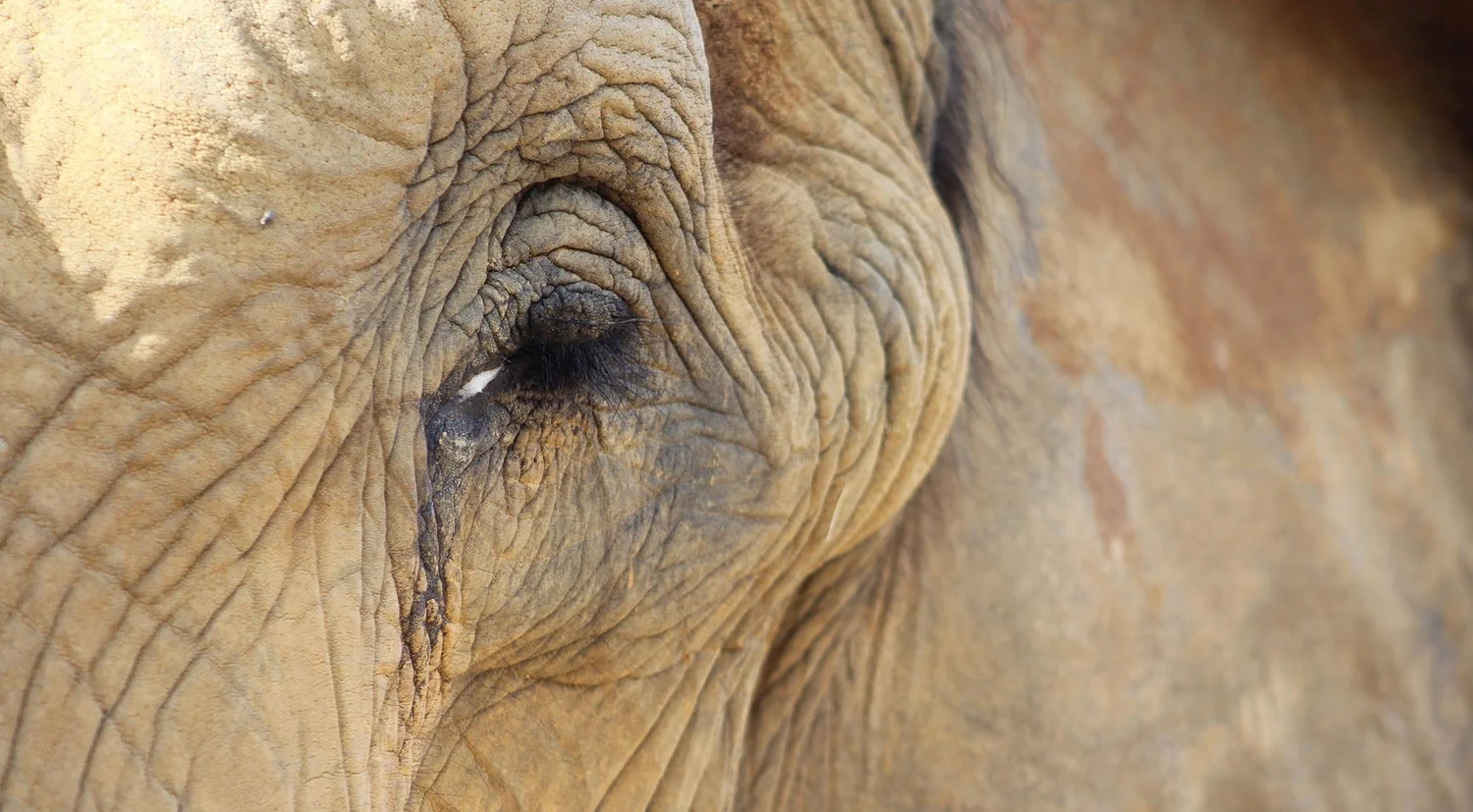
Humans cry to express emotion, but what about animals? Reports of elephants shedding tears or dogs having watery eyes raise an intriguing question: do animals cry emotionally, or is something else happening?
Understanding animal tears requires separating biology from emotion.
The Purpose of Tears
In all vertebrates, tears primarily serve practical purposes:
- Lubricating the eyes
- Removing debris
- Protecting against infection
These are called basal or reflex tears.
Humans are unique in producing emotional tears linked to psychological states.
Elephants and Grief
Elephants are often cited as animals that cry emotionally. They display complex social behaviors, including mourning dead herd members.
Observers have reported moisture around elephant eyes during stressful events. While this appears emotional, scientists believe most of these tears result from physical irritation combined with intense stress.
Still, elephants clearly experience grief-like behaviors.
Dogs and Emotional Bonding
Dogs sometimes develop watery eyes during stressful moments such as vet visits or separation from owners.
Recent studies suggest dogs produce more tears during positive interactions with humans, especially reunions. This may strengthen bonding, triggering caregiving responses in people.
However, this does not necessarily mean dogs cry from sadness like humans.
Other Mammals
Some primates possess tear ducts similar to humans and show emotional expressions. Marine mammals such as seals and dolphins also release eye fluid, though this mainly helps regulate salt balance.
Emotional crying remains uncertain in these species.
Birds, Reptiles, and Amphibians
Birds have tear glands but rarely display visible tears. Stress in birds appears through:
- Feather puffing
- Vocal changes
- Withdrawal
Reptiles and amphibians produce eye secretions for protection, not emotional expression.
Stress Versus Emotion
Scientists distinguish between:
Physiological tears: produced to protect the eye
Emotional tears: associated with complex internal feelings
Humans are the only species known to consistently shed emotional tears.
Animals show stress through body language rather than crying.
Common Signs of Animal Stress
Instead of tears, animals communicate distress by:
- Reduced appetite
- Aggressive or withdrawn behavior
- Repetitive movements
- Changes in posture
- Altered vocalization
These signals are far more reliable indicators of wellbeing.
Do Animals Feel Emotions?
Yes, many animals experience emotions such as fear, joy, and attachment. Mammals and birds have brain structures supporting emotional processing.
However, emotional crying appears to be a uniquely human adaptation.
Helping Reduce Stress in Animals
To support animal welfare:
- Provide stable environments
- Offer enrichment and social interaction
- Minimize loud or unpredictable stimuli
- Maintain consistent routines
Lower stress often leads to healthier behavior and appearance.
While animals produce tears, emotional crying like humans remains rare or unproven. Understanding animal stress requires observing behavior, not just eye moisture. Recognizing these signals helps us care for animals more compassionately.
